Eski Pano
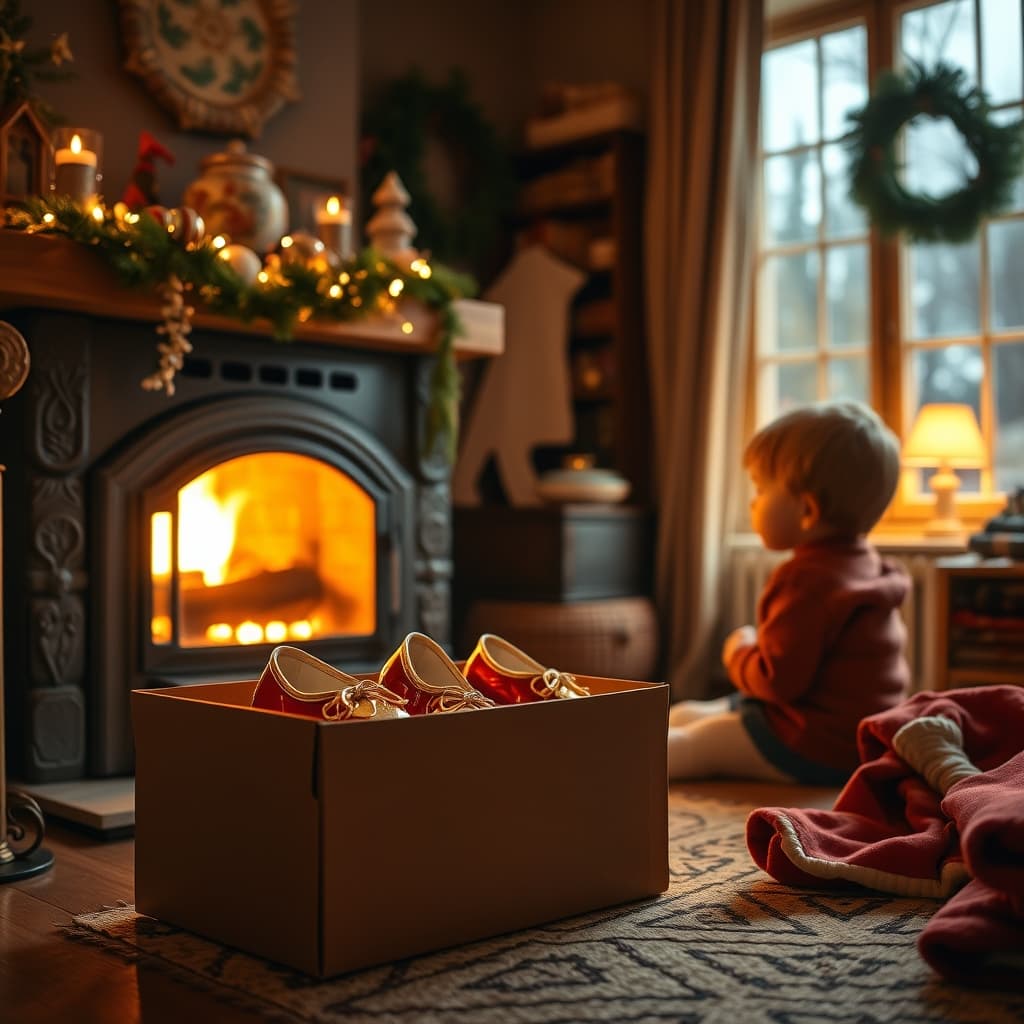
There was a time when holiday shoes were not merely a new item to wear on one’s feet, but the bright promise at the center of a waiting period that began days in advance. Especially when the holiday fell in winter, evening descended early, families gathered around the stove, and the shoe box resting in one corner of the room became in the child’s eyes almost a holiday sign in itself. The lid was not opened often, because the shoes were meant to remain new, clean, and protected for the great day. Yet that very restraint made them grow larger inside memory. The shine of patent leather, the stiffness of the laces, the scent of new material rising from the sole, and the secret thrill of lifting the lid just slightly all turned into a feeling that survived long after childhood itself had passed.
From the perspective of neighborhood culture, holiday shoes held an important place in the collective memory of children because the excitement was never entirely individual. It belonged to a common calendar shared by the entire street. Final fittings were done at the tailor, holiday clothes were ironed at home, candy bowls were prepared, and children quietly compared whose shoes looked how. While the smell of chestnuts drifted above the stove on winter nights, thoughts were already turning toward the coming morning or the next few days. Holiday shoes represented more than looking new when stepping outside. They meant being properly prepared for the social order of the feast. That is why the excitement was not only about the object itself, but about the joy of taking one’s place inside a community ritual.
To understand why the feeling was never erased from a child’s memory, one has to understand waiting. Today many things are bought and immediately used, becoming ordinary within hours. But holiday shoes once waited inside their box, set aside only for the special day. Waiting gave the object emotional weight. A child knew exactly where the box was kept, sometimes lifting the lid in secret, sometimes taking one last look before sleep, sometimes entering into a small argument with a sibling over whose pair was brighter. That box became a kind of silent calendar. How many days remained until the holiday was understood less from the date on paper than from the fact that the shoes were still untouched.
Small domestic details root this memory even more deeply. A father returning from work with the box, a mother placing it high out of reach, children wanting to try the shoes in turn but being warned not to soil them, all belong to the same scene. When the holiday morning finally arrived, putting on the shoes for the first time became almost ceremonial. They were carefully pulled over thick socks, the laces were tied with attention, and the child was asked to take a few steps and say whether they hurt. Once outside, the sound of the new sole striking the stone pavement made the child feel slightly older, more orderly, and more visible. It is no accident that this sound remained in memory.
The reason the excitement of holiday shoes never disappeared is that childhood happiness was often built around small yet ceremonial objects. In homes moving between scarcity and sufficiency, a new pair of shoes could give joy a clear shape. Through them, the child felt that the holiday had truly arrived for them as well. Looking back now, what is missed is not only the shine of the leather or the smell of the box, but the child’s state of mind that knew how to wait, how to feel the gravity of a special day, and how to give great meaning to a small object. The shoe box standing near the stove light on winter nights therefore remains one of the warmest images childhood memory never erased.
The Excitement of Holiday Shoes on Winter Nights: Why Was It Never Erased from a Child’s Memory?