 Eski Pano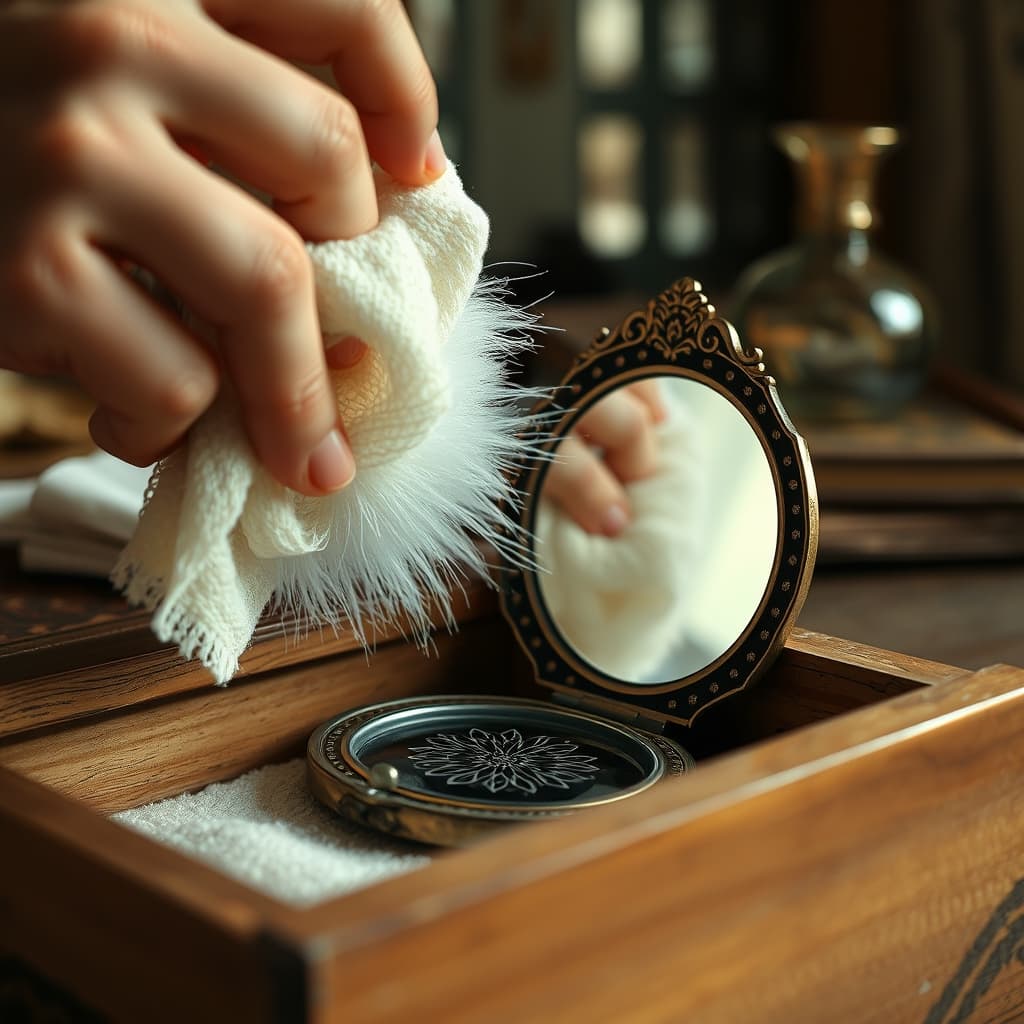
A pocket mirror could reappear during Bayram cleaning when drawers were emptied, cloths shaken and small objects assessed before guests arrived. Its case might look dull until dust was lifted from engraved metal or patterned plastic. When opened, the glass returned a face alongside dark spots, scratches and softened edges accumulated through years of handling.
Small mirrors travelled in handbags, sewing boxes, dressing tables and coat pockets. They supported grooming outside the fixed household mirror and sometimes formed part of a cosmetic set. Their materials varied widely: glass with a reflective backing, polished metal, celluloid-like plastics, leather, fabric, enamel and plated frames all require different identification and care.
The Reflection Depends on a Hidden Layer
A glass mirror works because a reflective coating sits behind the glass. Damage to that backing can appear as black specks, cloudy areas or peeling visible from the front. Scrubbing the face cannot repair missing silvering and may drive liquid into the edges, worsening deterioration. Replacement glass can restore function but changes the original object and should be documented.
Polished metal mirrors behave differently. Tarnish may reduce reflection, yet abrasive polishing removes surface and tool marks. If the frame contains enamel, stones, photographs or adhesives, a cleaner safe for one component may damage another. Material assessment should precede any attempt to make the object shine.
Hinges and Clasps Record Repeated Use
Folding mirrors concentrate stress at a small hinge. Loose pins, bent frames and weakened clasps show thousands of openings. Forcing a stiff hinge can crack the glass. Dust can be removed gently, while mechanical repair belongs with someone experienced in small metalwork and historic objects.
A fabric or leather case protects against scratches but can trap moisture and residues. Powder and cosmetics inside the case may identify use, though old products can irritate skin or contain unsafe ingredients. They should not be tested casually. Contents and stains can be photographed before safe isolation.
Family History Needs More Than a Familiar Face
A relative may remember seeing the mirror on a grandmother's dressing table, but ownership and date should be recorded with the name of the speaker. Manufacturer marks, patents, shop boxes and photographs can narrow the history. Decorative style alone is unreliable because revival designs repeat older motifs.
Stable storage keeps glass supported, hinge pressure low and surfaces separated with suitable archival material. Direct sun and fluctuating humidity can damage cases and reflective backing. The mirror should not be left open where it could focus intense light or fall from a display.
The context of cleaning matters too. Soft daylight reveals dust better than harsh glare, and a padded table reduces breakage if the object slips. Working slowly, with one component supported at a time, turns routine tidying into preventive care rather than cosmetic intervention.
A Digital Nostalgia Archive can photograph the front, back, hinge, markings and reflected image without hiding wear. Cleaning notes should state exactly what was done. The pocket mirror carries craftsmanship through the precision of its frame and mechanism, but patience is visible in restraint: knowing when not to polish, pry or replace. Its renewed brightness during holiday cleaning came from attention, while its historical value survives when that attention protects the traces that make the object more than a generic reflection.