 Eski Pano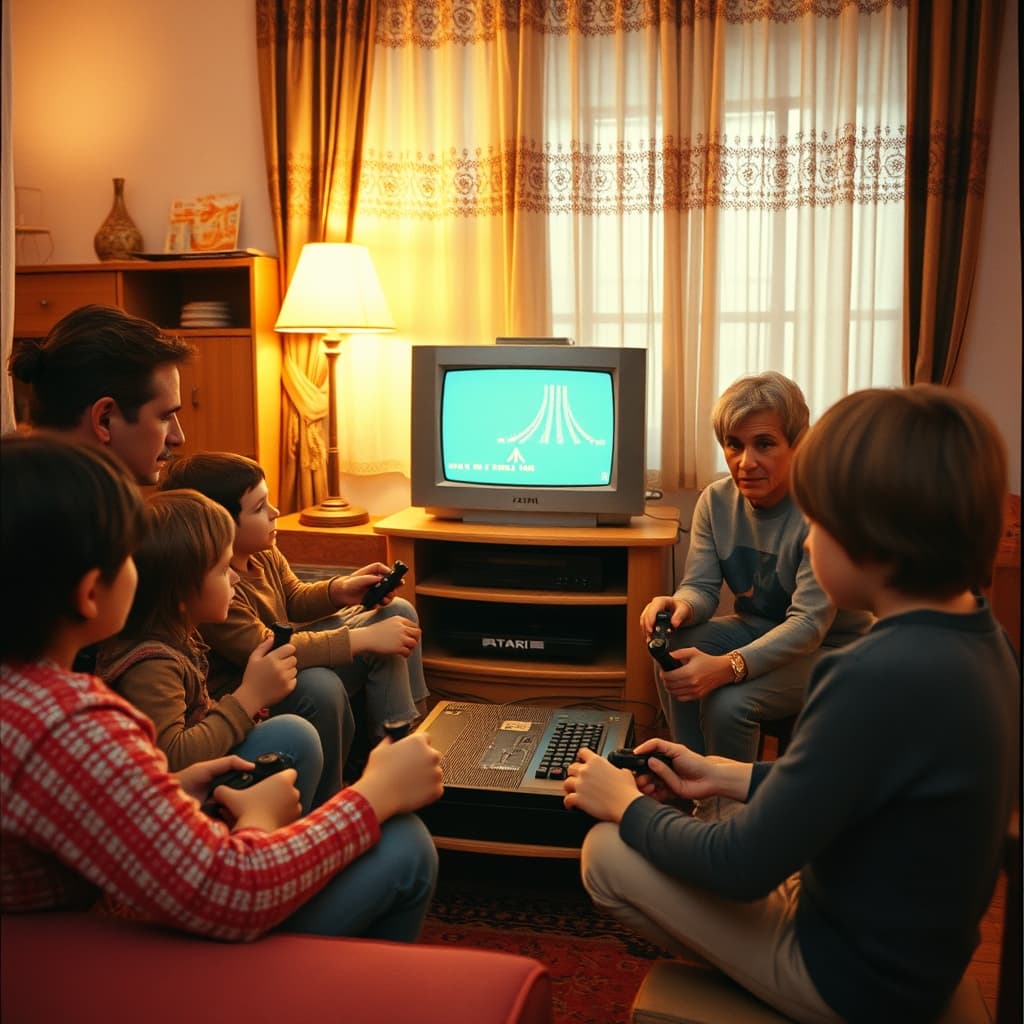
Using an Atari console in the family room began before the game appeared. The television had to be free, cables located and the correct input found. On sets without modern video sockets, the console might share the aerial connection through an RF switch. A screen of snow slowly gave way to colour, sound and a simple moving figure, making successful setup feel like part of the achievement.
“Atari” became a broad household word in Turkey, sometimes applied to different consoles and compatible systems rather than one verified model. An accurate archive should identify manufacturer, hardware version, cartridge and controller wherever possible. Memory may preserve the brand name while merging several machines used across different years.
Connection Turned the Television into Another Machine
The family television normally carried broadcasts chosen according to schedules and household authority. Connecting a console interrupted that role. Tuning an unused channel, adjusting the RF signal and dealing with interference required patience. Loose sockets or damaged cables could produce rolling pictures, static or lost colour.
Power adaptors mattered as much as cartridges. Incorrect voltage or polarity could damage hardware. Original units age: insulation becomes brittle, capacitors fail and connectors corrode. A vintage console should be inspected by a competent technician before prolonged use, especially when its power supply history is uncertain.
The Cartridge Promised Variety but Needed Care
Cartridges made games physically exchangeable. Labels helped selection, while contact surfaces carried data into the machine. Dust or oxidation could prevent loading. Blowing into a cartridge became a familiar habit, but moisture from breath is not good conservation. Dry, appropriate cleaning methods and protective storage are safer.
Scarcity encouraged borrowing and informal exchange. A visiting cousin might arrive with a new game, turning software into a social object. Unlabelled or multi-game cartridges complicated identification. Counterfeit and locally distributed products also formed part of the history and should be documented rather than automatically discarded from the record.
Turn-Taking Organised the Room
One or two controllers meant spectators usually outnumbered players. Families created rules: one life each, winner stays, younger child gets another try or adults take control after dinner. Disputes over fairness, television time and joystick handling were central to the ritual. Watching, advising and laughing were forms of participation.
Controllers carried this intensity physically. Joystick boots split, buttons weakened and cables twisted. Repair could involve cleaning contacts, replacing switches or soldering wires. Rough play shortened life, yet robust design allowed many devices to pass between siblings and households.
Storage rules were part of family ownership. Cartridges returned to boxes, controllers were kept away from feet and the console cooled before being covered. These routines protected scarce equipment and taught children that access to play also carried responsibility for shared property.
A Digital Nostalgia Archive can preserve consoles with serial numbers, connection diagrams, cartridges, controller repairs, shop receipts and oral accounts. Video capture should record original display characteristics without pretending modern emulation is identical. Early console play remains vivid because it reorganised familiar furniture and family authority. For a scheduled hour, the television stopped delivering distant programmes and responded directly to hands in the room, one joystick movement and one negotiated turn at a time.