 Eski Pano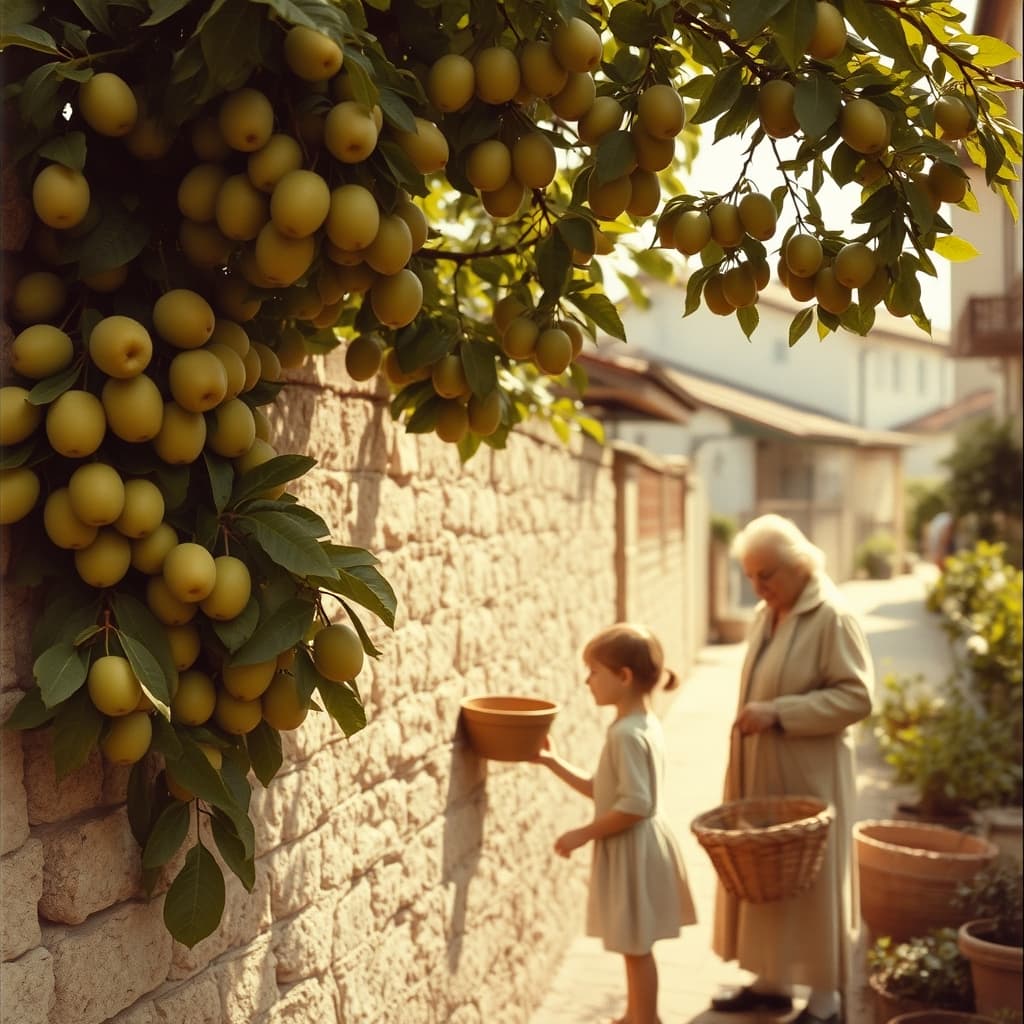
When a plum branch leaned over a garden wall, it turned a private tree into a neighbourhood event. Children judged which green fruit could be reached from the pavement, adults called warnings from windows, and the owner decided whether to offer a bowl or protect the harvest. The branch made summer visible at street level. Its leaves, sour fruit, and shifting shade marked a season more precisely than a calendar.
Such scenes differed from one street to another. Some households freely shared fruit; others depended on the crop for preserves, market income, or winter stores. A branch beyond a wall did not erase ownership. Local custom might tolerate taking fallen fruit, but climbing, breaking twigs, or entering a garden could cause conflict. Warm memories of abundance should therefore include permission, labour, and the limits that neighbours negotiated.
Fruit Created a Seasonal Conversation
The first small plums prompted daily inspection. Children argued over ripeness, dipped sour pieces in salt, or carried a handful to friends. Older residents knew which tree produced early fruit and which needed more sun. A gift passed over the wall could begin an exchange that later returned as herbs, jam, bread, or help. The fruit was modest, yet reciprocity gave it social weight.
Harvesting required knowledge. Branches had to be supported, ladders placed securely, and fruit sorted before bruising. Someone washed bowls, cooked preserves, cleaned fallen leaves, and dealt with insects. Much of this work stayed behind the wall and was frequently domestic labour. The picturesque branch seen from the street represented pruning, watering, soil care, and patient seasonal attention.
The Wall Marked Trust and Risk
For children, the reachable branch invited a dare. Reaching too far could mean falls, cuts, traffic danger, or a broken limb on the tree. Unwashed fruit could carry dust or agricultural residues. Adults' rules were not simply hostility to play; they protected people, plants, and a family's food. Recollection becomes more useful when it includes both the excitement and the reasons behind a shouted warning.
Boundaries also reflected unequal access to green space. One home had a mature garden; nearby apartment residents might have only a balcony. Sharing could soften that difference, but it did not remove it. Tenants, caretakers, owners, and neighbours could disagree over pruning or overhanging branches. Municipal rules and civil law provided formal answers, while everyday relationships often sought a quieter compromise.
A Tree Was Part of Urban Infrastructure
Garden trees cooled walls, held dust, offered habitat, and changed the sound of a street in wind or rain. Their roots and branches could also affect drains, roofs, cables, and pavements. Good stewardship balanced shade and fruit with inspection and appropriate pruning. Severe cutting for convenience might destroy years of growth; neglect could create hazards. The old neighbourhood garden was living infrastructure, not just scenery.
Redevelopment removed many walls and gardens as detached houses gave way to larger buildings. Other trees survived in courtyards, school grounds, and small plots. Mapping their locations through photographs and resident testimony can reveal environmental change that property records alone miss. The date of flowering or harvest also contributes to local climate history when observations are consistent and carefully sourced.
A Digital Nostalgia Archive can preserve garden photographs, household recipes, tree maps, pruning tools, deeds, and interviews with growers and children. Exact addresses may need privacy protection. The plum branch remains a warm neighbourhood image because it crossed a boundary without making that boundary disappear. It invited a question—may I take one?—and turned fruit, permission, care, and restraint into a small lesson in living together.