Eski Pano
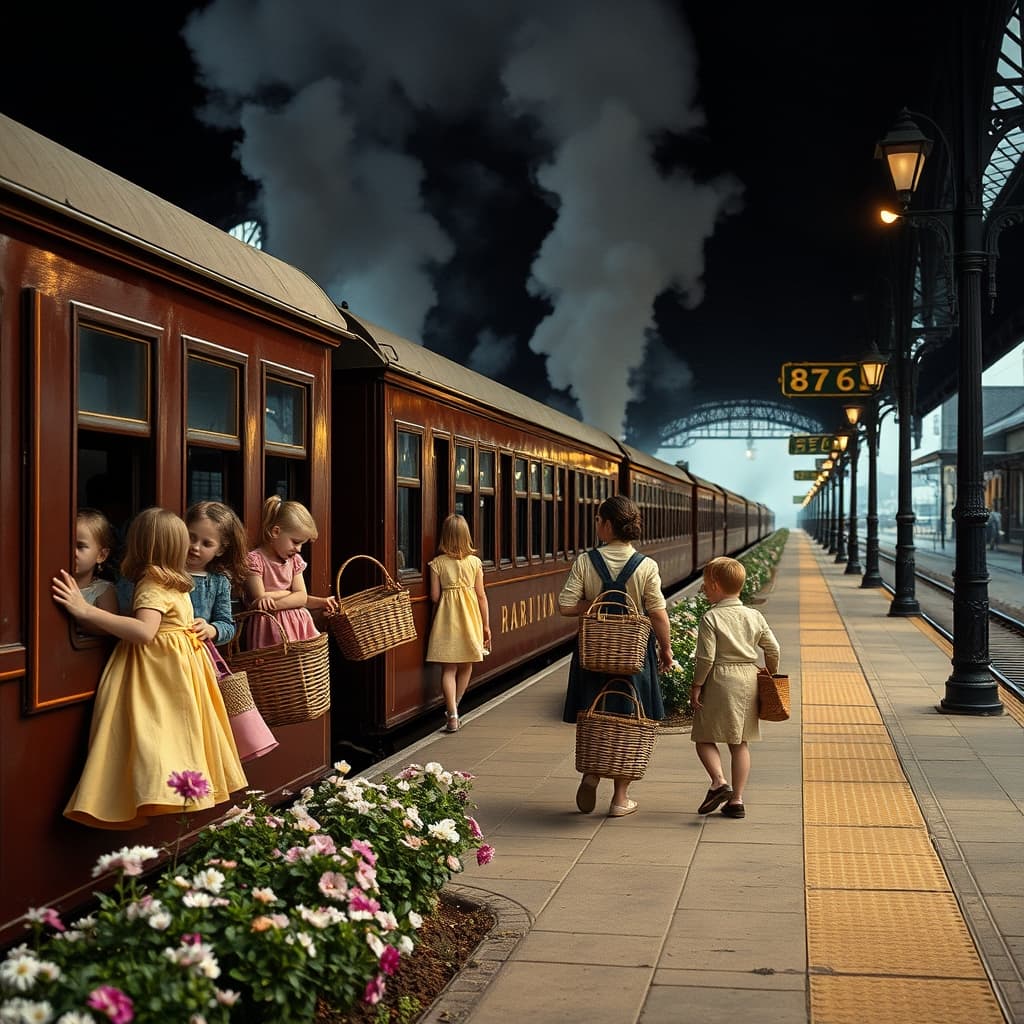
There was a time when a weekend did not simply mean rest. It meant a small mobilization beginning inside the house and stretching all the way to the station. Early on Saturday morning, the sounds of tin lids, enamel plates, and tea glasses would already be heard in the kitchen. Tomatoes were selected for the outing, boiled eggs wrapped in cloth, bottles of lemonade carefully packed in old newspaper. Children searched for their shoes in excitement while running back to the window to check the brightness outside. Catching the picnic train meant more than setting off on a journey. It meant entrusting the family's daylong joy to the rhythm of the rails. And if the streetlights had not yet fully faded on the road to the station, their dim glow over flowerbeds added one more layer of beauty to the hurry.
Seen in the path of time, picnic trains were one of the ways urban families learned to breathe together. After a week compressed by city routines, the suburban or summer excursion lines created not merely transportation, but a shared social stage. Families sitting side by side on wooden benches, mothers carrying baskets on their laps, children counting things through the window, fathers with jackets folded over one arm all carried separate stories within the same carriage. The clatter of wheels entered their conversation like a regular meter, and as the city receded, the hard edge of the week loosened from their faces. Old newspapers often mentioned excursion trains and crowds heading toward picnic grounds for good reason. Those trains carried an ordinary happiness at the heart of a modernizing city.
The forgotten details were what built the real memory of those journeys. The brief mist of steam along the platform, the cheese pastries wrapped in handkerchiefs, the little debates about how far to open the window, the older woman in the next seat warning that the child should not catch cold, all of it was woven into the texture of those days. Once the train moved, children counted poles outside, mothers straightened the baskets, fathers read station names aloud in half-serious voices. Flower-scented streets here describe not only the destination, but the journey itself. Even before reaching the picnic grounds, the smell of honeysuckle, jasmine, or oleaster around the station sealed the atmosphere of the day into family memory. That is one reason those streets remain so vivid in hindsight. Scent is the most faithful witness of happiness in motion.
Picnic trains were also places where family roles softened. The mother who organized order at home joined the children's excitement at the station. The father who often seemed reserved laughed while settling small disputes over who would get the window seat. A grandmother divided pastries from a cloth bag, and cousins began planning their games on the grass before they had even arrived. Inside that carriage, people did not only travel. They quietly rebuilt what it meant to be a family. The rocking motion of the train made conversation more intimate and silence more peaceful. Perhaps that is why today's transport, though faster and more comfortable, rarely leaves the same warmth in memory. The value of the picnic train lay not only in where it took people, but in the shared time it created along the way.
That is exactly what the flower-scented streets still tell us now. The joy of the past was hidden less in grand events than in collective preparation and in small details. The morning coolness under the streetlight, the wicker basket carried by hand, jasmine mingling with the metallic smell of the track, the slight rush felt before boarding: these are not decorative nostalgic touches, but clues to a culture of family life. Picnic trains may no longer hold the same place, yet their trace still reminds us how precious it once felt simply to set out together through the city. If the scent near a station can still summon the past without warning, it is because the rails carried not only passengers, but family cheer itself.
In the Memories Growing Beneath Streetlights, the Weekends When Picnic Trains Carried Family Cheer Along the Rails: What Do the Flower-Scented Streets Tell Us with Their Forgotten Details?