Eski Pano
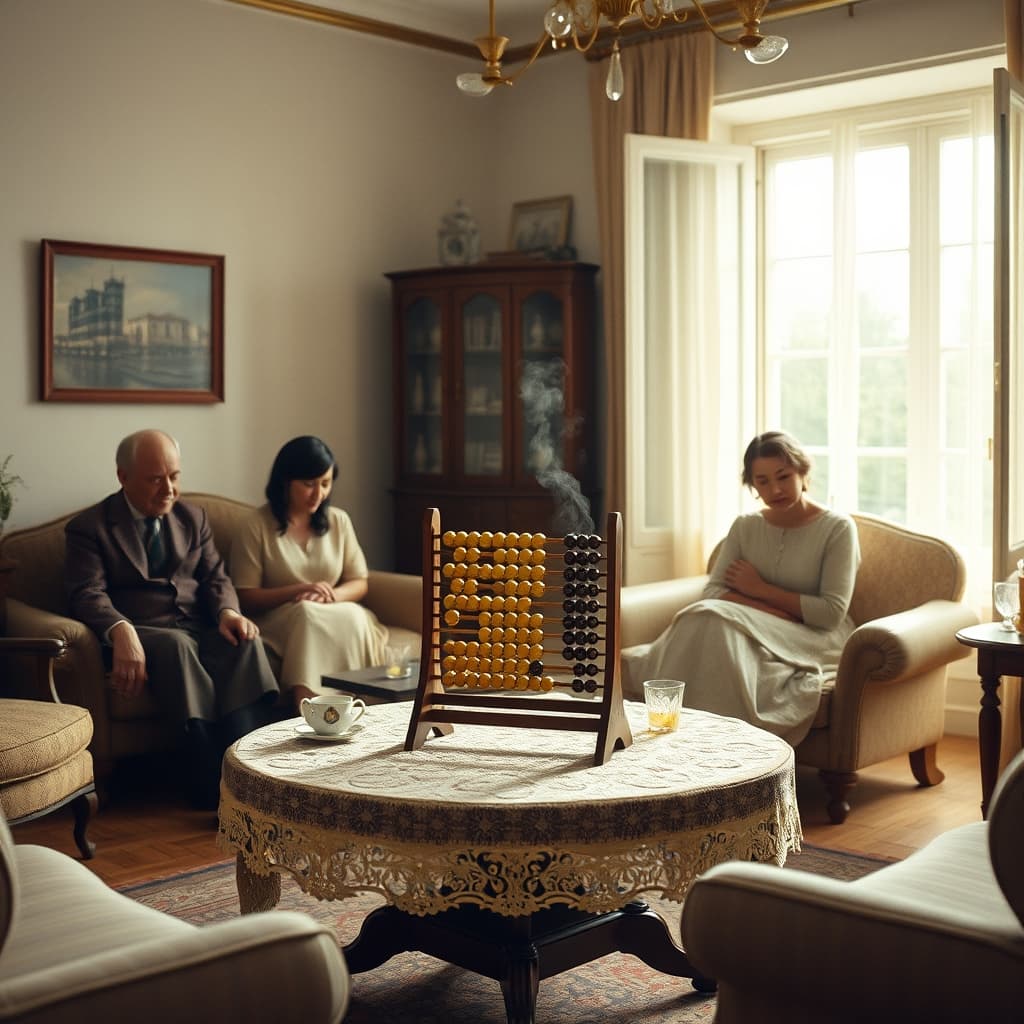
Spring afternoons carry a coolness of their own. When air slips through a half-open window and mingles with the steam of freshly brewed tea, the whole house seems to grow more attentive, more composed. There was a time when, in exactly such hours, a desktop abacus would be placed on the coffee table in the middle of the living room, and family members would gather around it as if called to a small ceremony. The instrument was not used only to add numbers, but to make the rhythm of household order visible. Sometimes it was for accounts a father had brought home from work, sometimes for a mother's market notes, and sometimes for simple arithmetic shown to children. As fingers moved the beads across the rods, the room did not fill with noisy activity, but with a gentle concentration.
As a piece of technological heritage, the desktop abacus was one of the simplest yet most instructive tools of analog intelligence. Before electric calculators became widespread, it served reliably on shop counters, in schoolrooms, and within domestic bookkeeping. Its frame was often wood or metal, the beads polished slightly by long use, and the soft clicking sound of movement along the rods became a familiar domestic note. Today numbers pass silently across screens, but in those years calculation mattered not only as thought, but as touch and motion. The numbers were understood through visible action. In that sense, the abacus did more than teach arithmetic. It introduced patience, order, and attentiveness into household life through a small piece of practical technology.
One reason the habit was never forgotten lies in the fact that it was shared. People gathered in the living room were not always performing formal work. Sometimes monthly expenses were discussed, sometimes a child asked for help with homework, and sometimes the older generation simply wanted to demonstrate the elegance of old methods. Tea moved through the room in tulip-shaped glasses, a few biscuits rested on a plate, and the spring air entering from the open window accompanied the quiet excitement. No one rushed. No one needed to raise a voice. As the beads shifted from side to side, the room filled with a careful kind of peace. For children, the abacus seemed to belong at once to the world of play and to the world of seriousness. For adults, it carried the calm reassurance of a household economy made tangible.
The reason the desktop abacus remains so vivid in memory is also that it shaped an atmosphere rather than merely performing a task. Evening light passing through the curtain drew thin lines over the beads, tea steam softened the window glass, and from outside came birdsong or the faint call of a street vendor. In the middle of all this, the abacus stood like a quiet center where technology gathered people into the same attention. Today's digital tools are certainly faster, yet speed rarely replaces shared focus. What made that old device unforgettable was its ability to bring a family, even briefly, into a common act of thought.
Looking back, it becomes easier to understand why the days of the desktop abacus survived in memory. The habit represented more than working with numbers. It embodied a domestic culture not of pressure, but of thinking together; not of hurrying, but of understanding step by step; not only of counting, but of teaching. The cool breath of spring mixed with tea steam softened those moments not only seasonally, but emotionally. If the sight of a bead-frame still summons living rooms, quiet conversations, and carefully kept small household accounts, the reason is simple. Some technologies do more than function. They bring time, learning, and family into alignment.
The Days of the Desktop Abacus: Why Was a Habit That Grew with the Quiet Excitement of Families Gathering in the Living Room Not Forgotten, Carrying the Cool Breath of Spring in Moments Mixed with Tea Steam?