 Eski Pano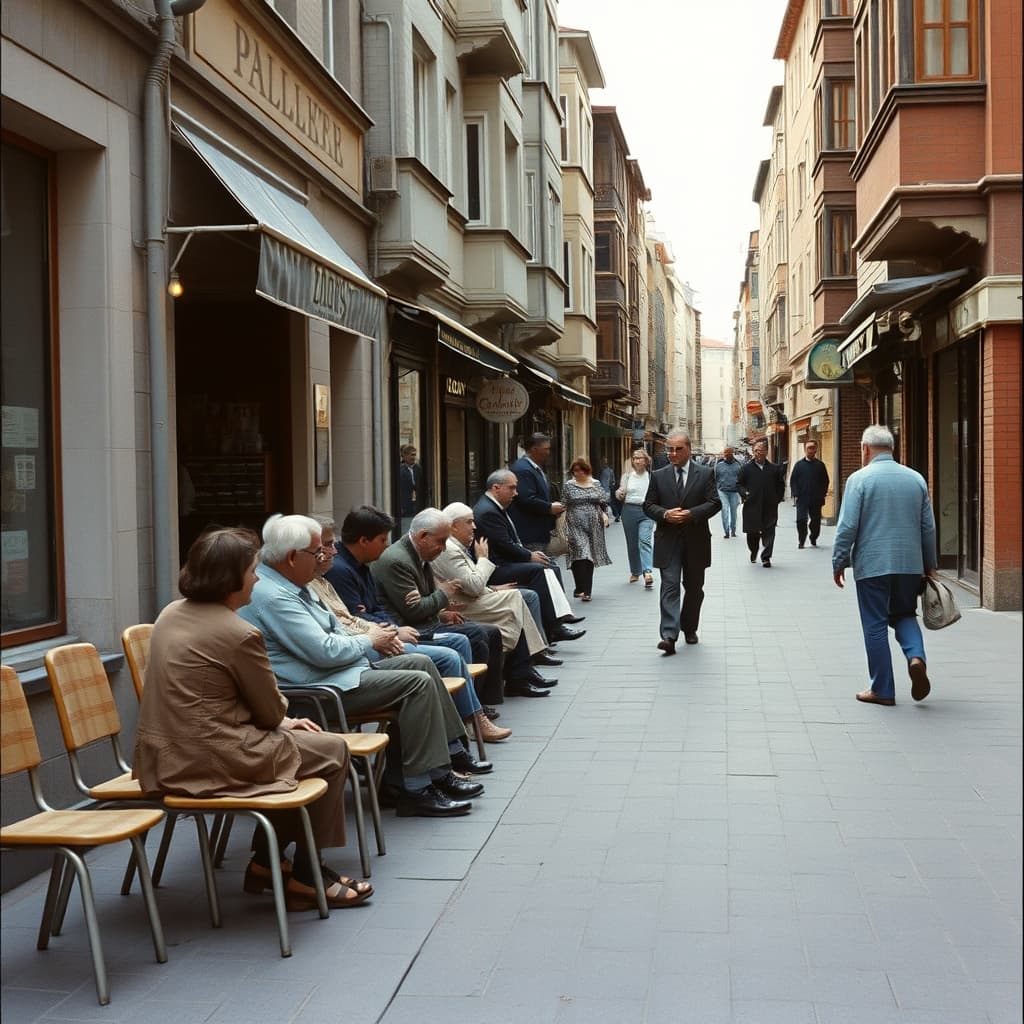
A row of chairs on the pavement could turn the space between door and street into a neighbourhood room. Shopkeepers watched the evening slow, residents brought tea, children remained within sight, and passers-by paused for news. The arrangement felt casual, but its success depended on where each chair stood, who was invited, who had to pass, and when the furniture returned indoors.
Pavement seating varied by town, climate, street width, housing form, trade, season, regulation, and traffic. Stools outside workshops, dining chairs at apartment doors, café tables, folding chairs, and low walls served different groups. One photograph of cheerful neighbours should not imply that every pavement or resident welcomed the occupation.
The Chair Extended the Interior
Small, hot, crowded, or work-filled interiors made outdoor air attractive. A chair allowed conversation without the preparation of a formal visit. Shop workers stayed close to customers, older residents observed movement, and neighbours exchanged practical information. The boundary between private and public became flexible for a few hours.
This visibility could support mutual care. Someone noticed an unwell neighbour, a child near traffic, smoke, a delivery, or a broken streetlight. It could also create scrutiny, gossip, territorial behaviour, and pressure on newcomers. Informal watchfulness becomes care only when it respects privacy, difference, and a person's right not to participate.
A Pavement Is First a Route
Chairs must not force pedestrians, wheelchair users, people with pushchairs, children, or visually impaired travellers into the road. Doorways, ramps, tactile surfaces, crossings, bus stops, shop entrances, and emergency exits need clear width. Municipal rules differ, but public right of way and accessible passage should guide every arrangement.
Uneven paving, unstable chairs, trailing cords, tea glasses, charcoal braziers, heaters, and low light introduce hazards. Furniture should suit the ground and weather. Open flame, carbon monoxide, or improvised electrical heating near crowds and façades is unsafe. Heritage events must meet current fire and accessibility standards rather than recreate a risky appearance.
Belonging Was Negotiated through Sound and Time
Conversation, games, radios, tea spoons, tools, and children's play formed a recognisable soundscape. What felt lively to participants might disturb infants, students, ill residents, or shift workers. Respectful hours, moderated volume, and a genuine response to complaints protect neighbourly relations. Quiet people are not enemies of community.
Gender, age, occupation, ethnicity, tenancy, and income influenced who sat where. Men might dominate chairs outside certain shops, while women formed other networks at doorways or courtyards. Domestic workers and shop assistants could serve the gathering without joining it. A complete history records several overlapping street publics rather than one universal neighbourhood circle.
Weather shaped the arrangement through shade, wind, damp, dust, and seasonal temperature. Trees and awnings helped, but attachments needed structural safety and permissions. Chairs left outside could obstruct cleaning or be damaged. Someone carried, stored, repaired, wiped, and arranged them; that repeated labour should be named.
A Digital Nostalgia Archive can connect chairs with street plans, shop licences, building entrances, accessibility surveys, weather records, photographs, sound recordings, and oral histories from sitters, passers-by, workers, and residents who objected. Pavement chairs became a heart of street life because they made time visible. Preserving that warmth means keeping informal care beside passage rights, noise, exclusion, weather, labour, and the principle that public space must remain genuinely public.