 Eski Pano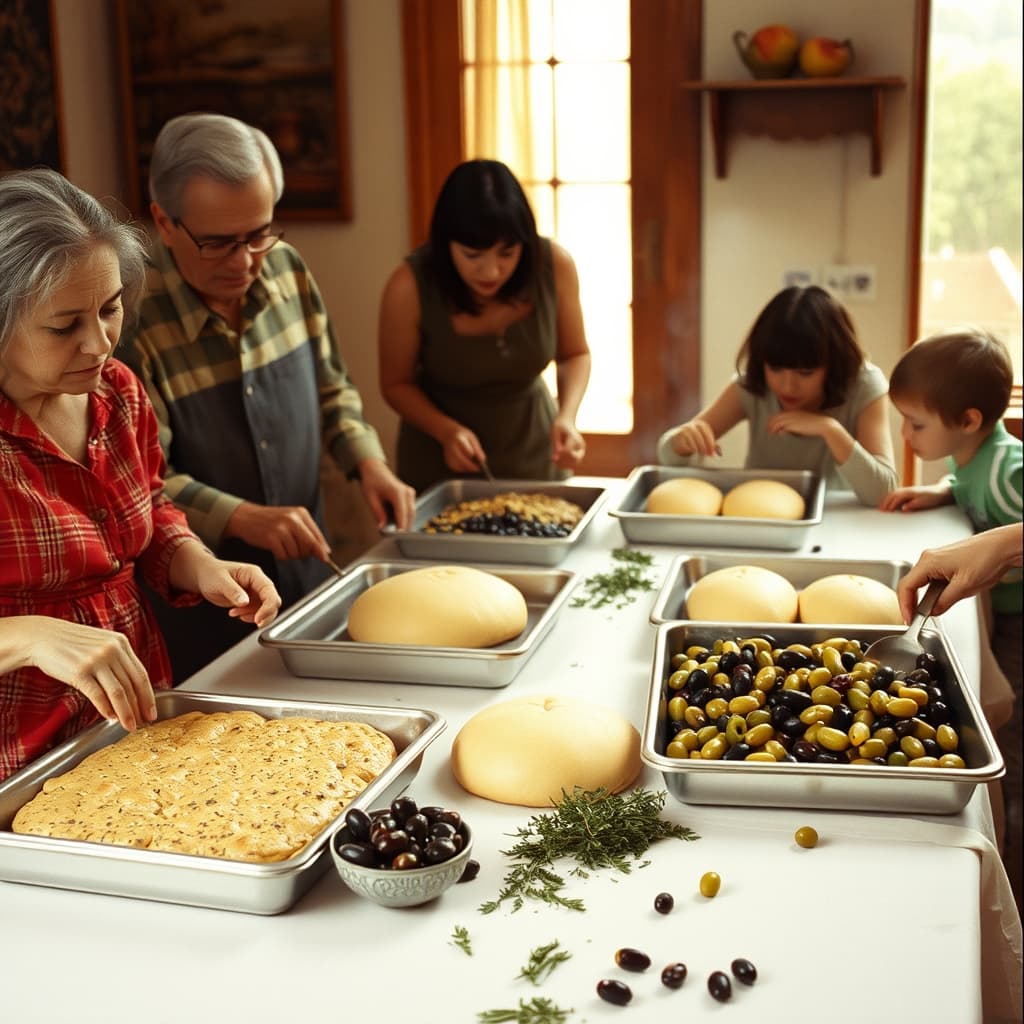
Olive bread can make a spring table feel ready before the plates are arranged. Yeasted dough carries the scent of cured olives, herbs, toasted crust, and oil through the house. A loaf or tray of rolls can be sliced for breakfast, packed for a visit, or placed beside tea during holiday preparation. Its importance comes from adaptability and shared work rather than one fixed recipe.
Recipes vary across regions and families. Some are soft enriched rolls, others lean loaves, layered pastries, rings, or flat breads. Black or green olives may be chopped, crushed, left in larger pieces, or combined with onion, herbs, pepper paste, cheese, nuts, or seeds. Flour, fat, liquid, yeast, and shaping differ. The cook, place, date, and method should be recorded.
The Olive Needed Preparation before the Dough
Olives are cured through brine, dry salt, water, lye, fermentation, or other controlled methods depending on style. Fresh olives straight from the tree are intensely bitter and not simply interchangeable with properly cured fruit. Home curing requires reliable guidance, food-safe containers, correct sanitation, and attention to spoilage. Unknown or mouldy olives should not be rescued through baking.
Cured olives vary greatly in salt. Rinsing or soaking may suit a recipe, but it also changes flavour and texture. Pits must be removed carefully and checked again before mixing; a missed stone can break a tooth or damage equipment. Chopped olives should be drained enough to avoid creating wet pockets in the dough.
Fermentation Set the Pace
Yeast activity depends on temperature, time, hydration, salt, sugar, fat, and flour. A cool spring kitchen may require longer fermentation than a warm room. The dough should be judged by expansion and feel, not only the clock. Excessive heat can weaken yeast or create unsafe improvisation near heaters, while uncontrolled long fermentation can affect structure and schedule.
Folding olives into dough without tearing its structure takes care. Heavy fillings can sink or break gluten development. Some cooks add olives late; others spread and roll the dough. Shaping becomes a family signature, from small buns for visitors to a large loaf for slicing. A written recipe should note dough temperature, approximate rise, yield, pan, and visual cues.
Shared Baking Hid Several Kinds of Labour
Someone sourced olives and flour, prepared filling, kneaded, waited, shaped, heated the oven, watched the bake, cooled bread, packed gifts, served tea, and cleaned sticky bowls. Women often coordinated these stages around caregiving and other holiday work. Naming contributors prevents the finished bread from appearing as a spontaneous symbol of family warmth.
Oven safety includes stable trays, heat-resistant gloves, clear floors, maintained gas or electrical systems, ventilation, and supervision of children. Hot filling and steam can burn. Bread should cool on a clean rack rather than inside a tightly sealed bag, where condensation softens crust and can encourage spoilage during storage.
Allergen information depends on the actual recipe and shared equipment. Wheat and gluten are common; milk, egg, cheese, sesame, nuts, or soy may also appear. Olives contribute salt, and other fillings may add more. Guests need accurate ingredient information and suitable alternatives. Cultural importance does not turn a salty enriched bread into a universal health food.
A Digital Nostalgia Archive can connect olive bread with curing jars, olive varieties, yeast packets, kneading bowls, oven tools, recipe notebooks, holiday menus, gift lists, and recorded bakers. It belongs on the spring table because fermentation, preserved fruit, seasonal visiting, and household labour meet in one aroma. Preserving it means welcoming family variation while respecting olive curing, hidden pits, salt, allergens, oven safety, and the many hands behind the shared loaf.