 Eski Pano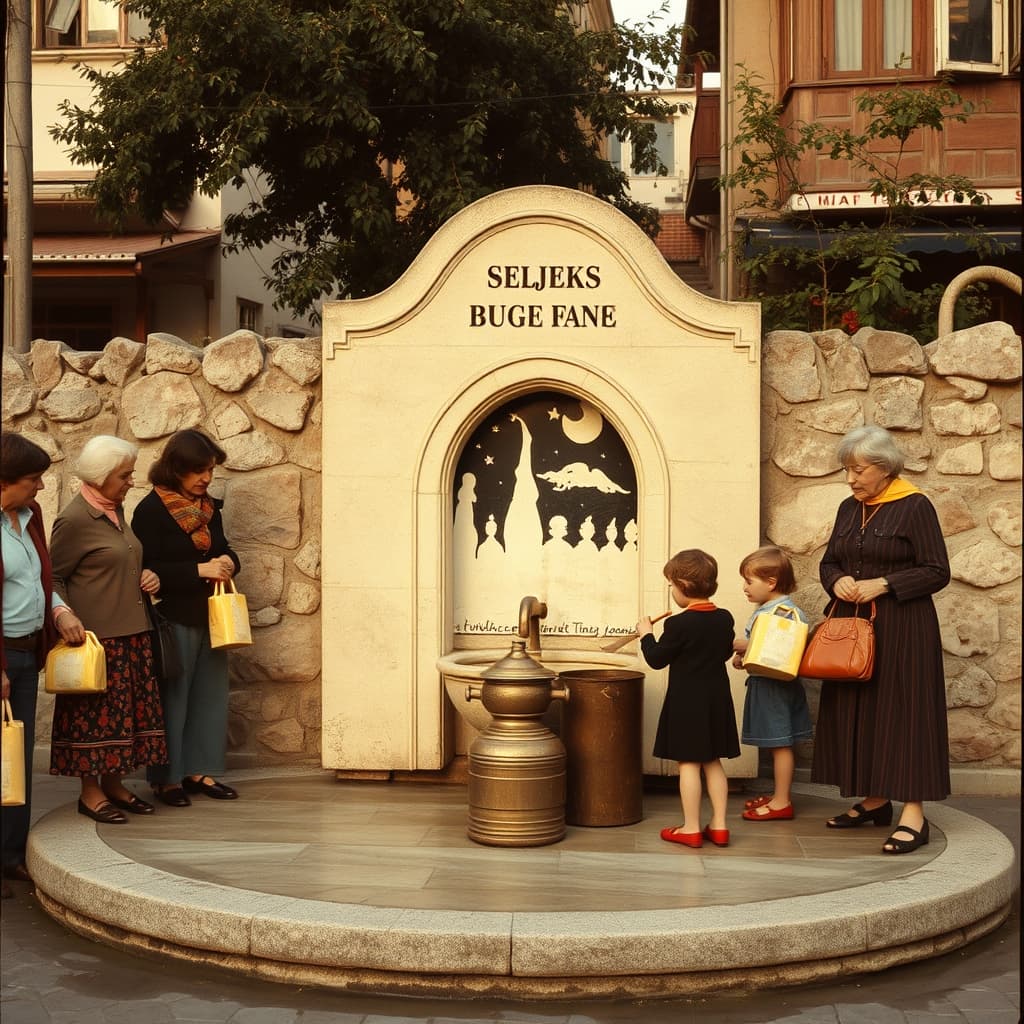
At certain hours, a neighbourhood fountain could become as busy as a small square. Residents arrived with copper ewers, tins, glass bottles, or plastic containers; children carried lighter vessels; and people waiting for the spout exchanged news. The scene is remembered warmly because an essential task created a regular social appointment, especially during the cooler light of late afternoon.
The pattern was never identical everywhere. A fountain might be supplied by a spring, aqueduct, cistern, reservoir, or municipal main. Some flowed continuously, some had taps, and others were unreliable or seasonal. Distance, water pressure, household plumbing, drought, urban growth, and local maintenance determined who came and when. Dates and memories should be checked against maps, water records, inscriptions, photographs, and residents' testimony.
Waiting Turned Collection into Conversation
A queue formed its own temporary etiquette. People marked their place with a vessel, helped a neighbour lift a heavy container, warned children away from slippery stone, and passed along information about illness, work, prices, visitors, or municipal repairs. The fountain made contact possible without the formality of entering a home. Yet a queue could also produce arguments over precedence, wasted water, damaged taps, and outsiders thought to be taking too much.
Children sometimes treated the fountain as play, particularly in hot weather. That memory needs to sit beside traffic, wet paving, broken glass, deep troughs, and the risk of contaminating drinking water. A historic fountain is not automatically safe to drink from today. Current testing, official notices, functioning drainage, and careful container hygiene matter more than appearance or family habit.
The Social Hour Rested on Unequal Labour
Fetching water was physically demanding. A full ten-litre container weighs about ten kilograms before the vessel itself is counted. Repeated journeys, stairs, narrow lanes, winter cold, and summer heat made the task harder. Women and girls often carried much of this work, while older people, disabled residents, and households farther from the fountain faced additional barriers. A nostalgic account should name that effort rather than treating the walk as effortless sociability.
Water collection shaped domestic timing. Cooking, washing, cleaning, bathing, and tea depended on what had been carried home and stored safely. Someone scrubbed vessels, covered them, poured without contamination, and returned when supplies ran low. The fountain hour was therefore linked to a long chain of household labour that continued after the conversation ended.
Piped Water Changed the Meaning of the Fountain
As indoor plumbing expanded, many residents gained safer and more convenient access, and the daily queue diminished. The fountain could remain active for travellers, gardeners, shopkeepers, ritual use, or preference, while others became dry monuments. This change should not be reduced to a simple story of community lost. Reliable household water reduced heavy labour, improved privacy, and could support public health, even as one meeting place became quieter.
Stonework, carved inscriptions, donor names, dates, basins, metal spouts, and later repairs reveal several historical layers. Cleaning with pressure washers, bleach, wire brushes, cement patches, paint, or abrasive tools can erase surfaces and accelerate damage. Conservation needs specialist assessment, compatible materials, controlled drainage, and documentation before intervention. Inscriptions should be transcribed and translated by qualified readers, with uncertainty recorded.
Photographs of a working fountain benefit from date, location, water source if known, names and consent of identifiable people, vessel types, and the direction of the queue. Oral histories should include those who collected water, maintained pipes, tested quality, repaired masonry, or stopped using the site. Competing memories are evidence: one resident may recall friendship while another remembers cold hands and exhausting climbs.
A Digital Nostalgia Archive can connect the fountain with water maps, municipal notices, stone surveys, household vessels, repair invoices, public-health records, and voices from several generations. The evening gathering remains important because infrastructure briefly became a social room. Preserving it responsibly means keeping conversation beside physical labour, unequal access, sanitation, municipal progress, conservation limits, and the continuing right to safe water.