 Eski Pano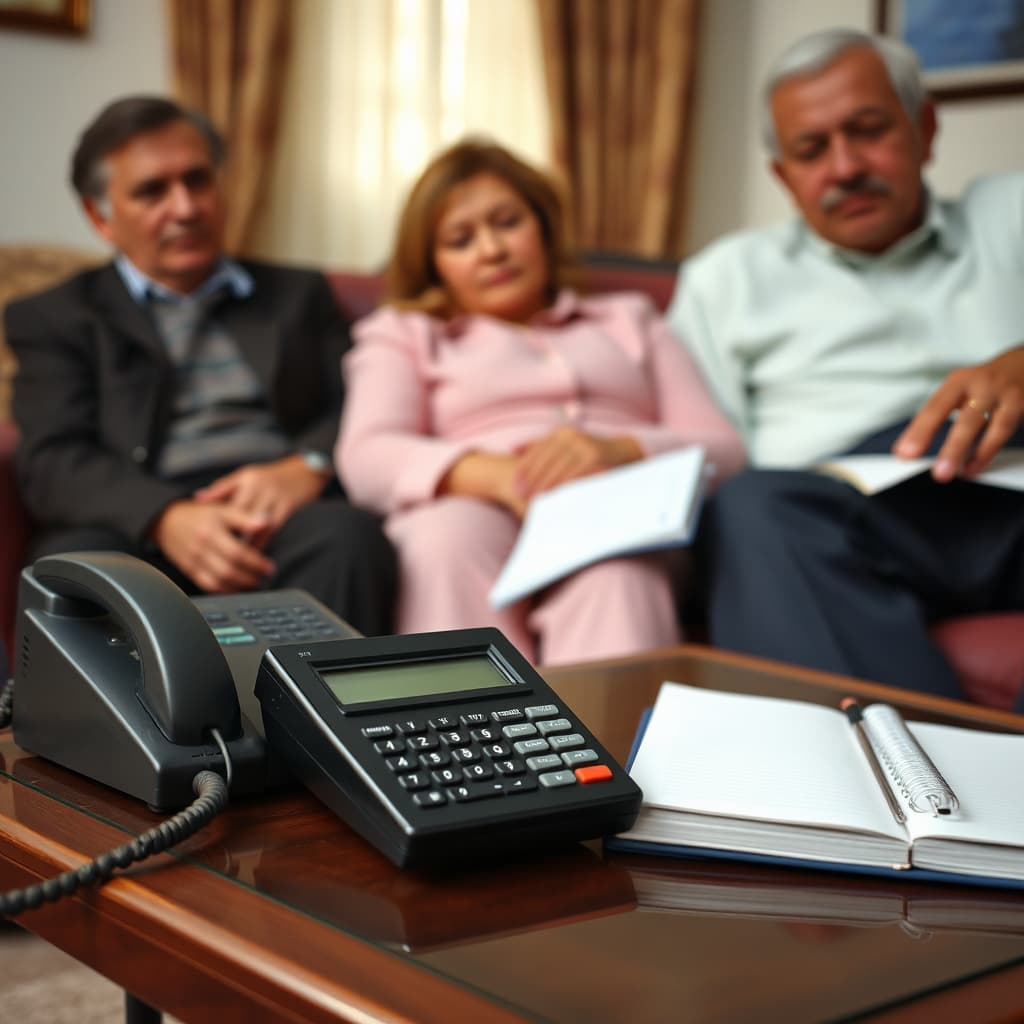
The beep was only the beginning. A pager could alert its owner in the sitting room, but the next step often required another device and another place: the household telephone, a workplace line or a public phone. The family watched not simply because a small machine had spoken, but because its signal began a chain whose meaning was not immediately clear. Someone had to read the alert, identify the caller and decide how quickly to respond.
Pagers differed. Some supplied a tone, others numbers or text, and services and capabilities varied by period and network. They should not all be described as purely analogue machines or as miniature mobile phones. The cultural distinction is more useful: many made a person reachable without giving them an immediate voice conversation. A precise account should identify the actual device and service before claiming how its messages worked.
The Number Needed a Shared Meaning
A displayed number could be a callback number or part of an agreed message convention. Its meaning depended on prior arrangements, not the screen alone. A family might know that one caller signalled urgency while another could wait. Codes could be misunderstood, numbers mistyped or an alert delayed. The machine did not automatically explain why it had sounded, so interpretation remained human work.
In a room shared by several people, the owner’s reaction provided information before any explanation. Standing up, reaching for a notebook or asking for quiet could alter the evening. Children might remember the device as exciting; another relative might remember interruptions to meals or rest. These responses are not contradictory. The same alert joined a person to work or distant contacts while pulling attention away from those nearby.
A Pager Still Depended on a Telephone
Where a fixed telephone was shared, a callback needed negotiation. Someone ended a conversation, fetched a number or moved aside so the recipient could hear. Outside the home, locating a working telephone added time and uncertainty. A pager’s apparent portability therefore rested on an infrastructure that was not portable at all: available lines, accessible places, opening hours and the ability to pay for a call.
That dependency shaped carrying habits. The device might be clipped to a belt, placed near a chair or kept with a notebook of contacts. Batteries and coverage mattered, as did whether its sound could be heard above the radio or street. These details should come from the model’s documentation and testimony, not assumptions based on a photograph. A worn clip may show carrying; it cannot prove a profession or a particular emergency.
Reachability Had Domestic Costs
Being contactable could reassure a household or support necessary work, but it could also blur the boundary between duty and time off. An owner might feel unable to ignore an alert even during a visit. Other family members supplied the quiet, telephone access and practical help that made a response possible. Describing the pager solely as personal convenience overlooks this shared labour.
Not every alert should enter a public archive. Screens, notebooks and saved messages can contain telephone numbers, workplace details or private information. Photograph identifying data only for controlled documentation, and redact it from public copies where needed. Ownership of the plastic device does not settle permission to publish messages involving other people.
An inactive pager can still be documented meaningfully. Record its controls, clip, display, battery compartment and associated papers without implying that an obsolete service is operating. If a demonstration is staged, identify it as such. Separate what the device could do from what this household actually did, and keep uncertainty about service dates or message conventions visible.
The sitting room’s quiet excitement came from an unfinished exchange. The pager announced contact, but the family still had to make space for an answer elsewhere. For a Digital Nostalgia Archive, that callback chain is the device’s most revealing inheritance: a pocket-sized promise of availability built on telephones, shared interpretation and the rearrangement of ordinary domestic time.