 Eski Pano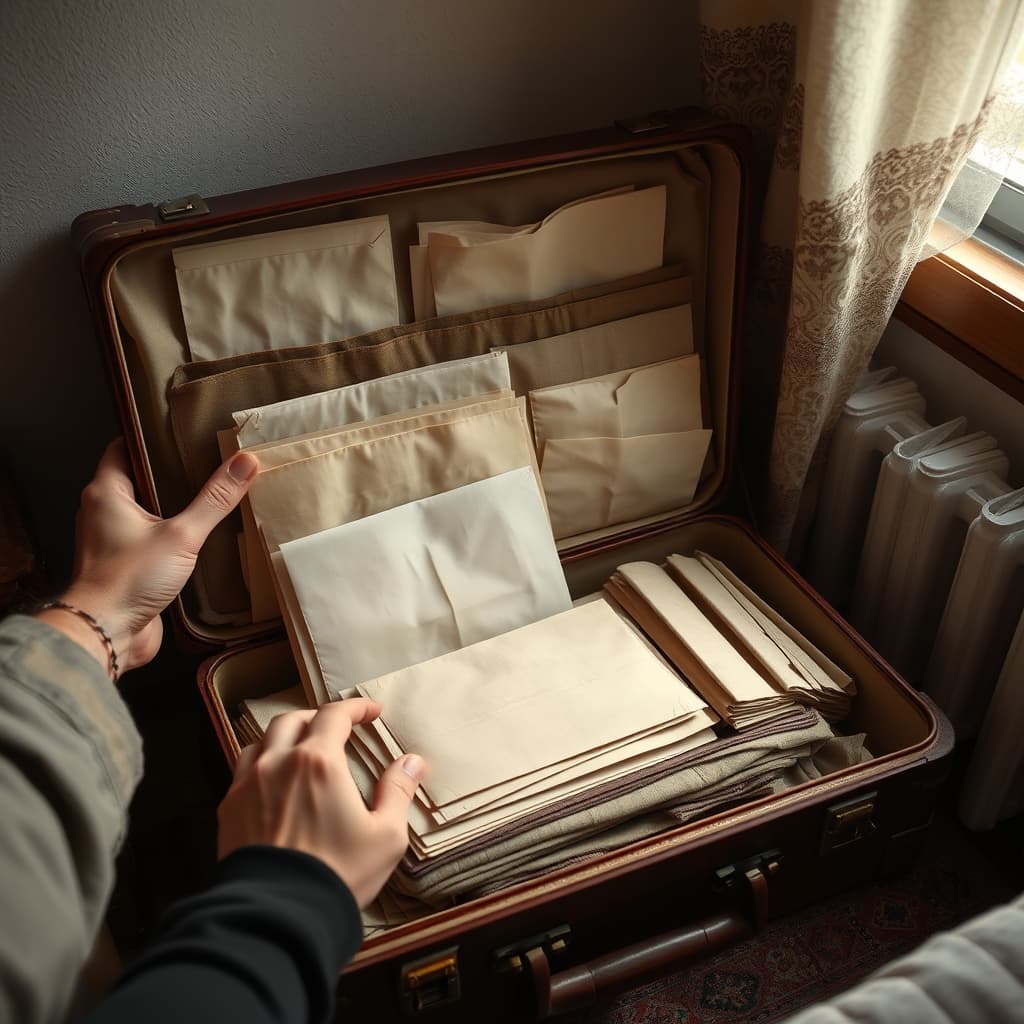
The old suitcase in grandmother’s corner did not have to travel to remain useful. Once its journeys became fewer, its lid could cover a different kind of movement: clothes kept for another season, papers awaiting a decision or small objects saved for a future relative. The case became a room within the room. Its place looked unchanged, but its contents and the reasons for keeping them could shift quietly over years.
This second life is distinct from the romantic image of luggage as freedom. A suitcase might stay because it fitted under a bed, closed against dust or offered storage when cupboards were limited. Sentiment and necessity could coexist. The archive should not invent an original journey from scuffed corners or assume that every stored cloth belonged to a wedding chest. Meaning comes from the object and the household account together.
The Lid Established a Boundary
Opening the case could require permission even when it sat in a shared room. Children learned that some corners were not simply available for play. An adult might lift the lid only to retrieve one item, keeping the rest arranged. That small rule distinguished ownership and privacy within a crowded home. Remembering it should not turn every closed suitcase into a mystery; sometimes it held ordinary things whose order mattered to their keeper.
The order inside could be practical rather than ceremonial. Frequently used cloth lay near the top, papers stayed in an envelope, and fragile items were tucked between softer layers. A label or remembered position reduced searching. Such arrangements reveal domestic knowledge, but they can be disrupted easily when descendants empty the case for photographs. Record the layers before separating them and keep associations that are supported by testimony.
Contents Could Outlive Their Original Purpose
A garment no longer worn might remain for its fabric, a repair, a remembered wearer or the possibility of reuse. Papers could survive because nobody wanted to decide which were expendable. The suitcase therefore held deferred choices as well as treasured keepsakes. An honest inventory allows “reason unknown” and does not decorate every button or receipt with a sentimental story.
Mixed contents also bring conservation problems. Damp cloth, metal fastenings and acidic papers do not necessarily benefit from staying together indefinitely. Photograph the original arrangement, then seek appropriate advice for unstable materials or mould rather than opening them repeatedly in a living space. Preserving the relationship does not always require preserving harmful contact between objects.
A Familiar Corner Was Part of the Object’s Biography
Location changed how the case was used. Under a bed, on a cupboard or beside a wall, it affected reach, lifting and the frequency of opening. A photograph of the empty suitcase on a studio background loses that domestic geography. When possible, record the original position and nearby furniture without exposing private addresses or personal documents. Do not claim the corner was literally unchanged unless the evidence supports it.
The exterior deserves its own description. Record material, handles, hinges, lining, locks, labels and repairs without forcing a latch or lifting by a weakened handle. A leather-looking covering may be another material; identification should remain cautious. Avoid polishing away wear for display. A replacement handle can show continued service more clearly than a flawless surface.
When the keeper dies or the home is cleared, the suitcase may become an archive in the eyes of the next generation. That transition needs discussion. Who may read the papers? Which objects should remain together? Can photographs be shared publicly? Physical inheritance does not eliminate the privacy of people named in letters, nor does it require one relative to keep everything forever.
Digital records can preserve both the whole and its parts: the closed case in its corner, each layer as found, individual items and accounts of opening it. Give uncertain dates and unidentified objects honest labels. If the arrangement is reconstructed later, say so. The difference between “as found” and “as remembered” is essential.
For a Digital Nostalgia Archive, the suitcase’s stillness is not the end of its story. It marks a change from carrying possessions across distance to managing them across time. The lid, layers and permission to open show how a household organised usefulness, delay and attachment in one portable container that eventually stayed in place.