 Eski Pano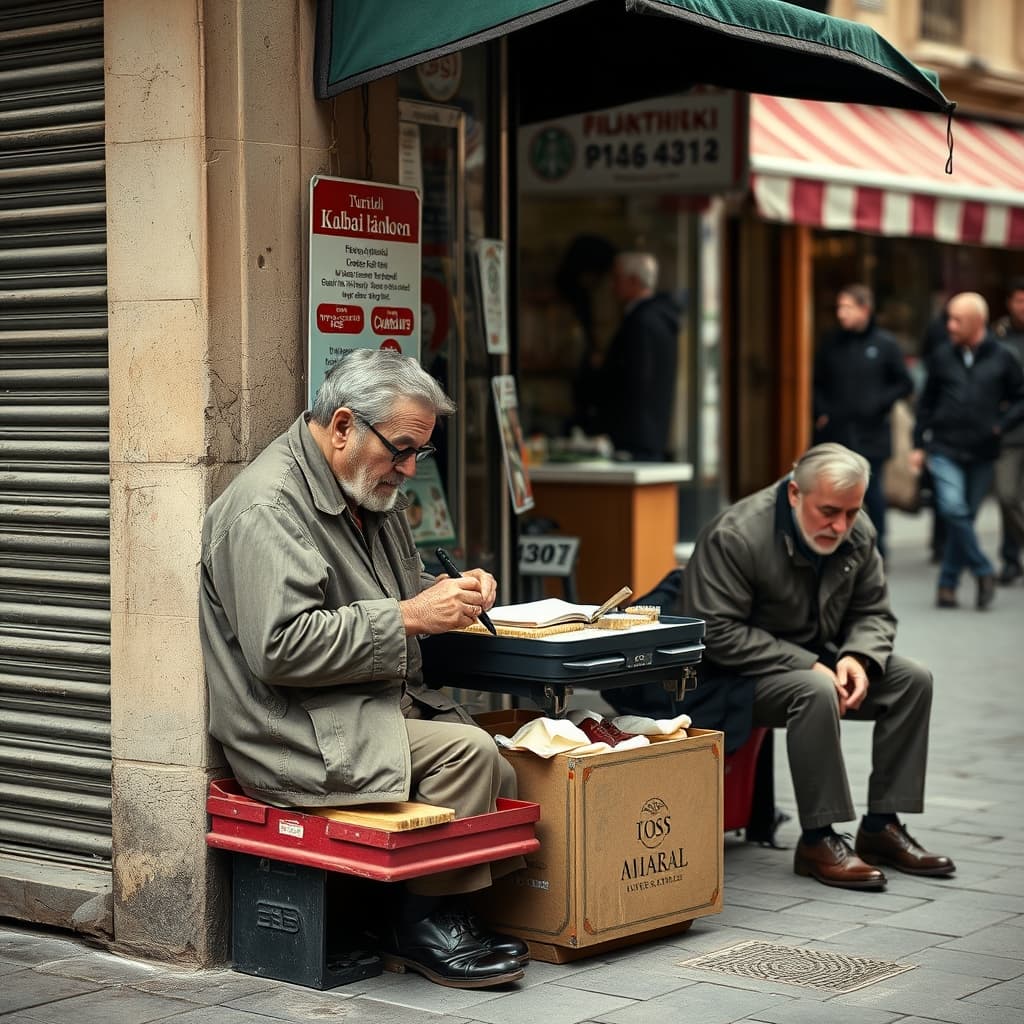
A shoe shiner’s corner was a workplace before it became a nostalgic image. The box, stool and footrest occupied a small patch of pavement where customers could stop without disappearing from the street’s flow. The worker needed visibility, enough room for the service and a position people could find again. A familiar corner connected craft to repeated foot traffic; it did not guarantee a steady income or an easy day.
The pitch’s value depended on its surroundings. Offices, transport stops, markets or cafés could bring different customers at different hours. Weather altered both demand and working conditions. Dust might send a customer towards the box, while rain could interrupt the service or spoil a newly finished shoe. Describing the worker simply as keeping watch misses these calculations about where and when work was possible.
The Box Organised a Sequence
Brushes, cloths, polish containers and the footrest belonged to a sequence rather than a decorative collection. The worker assessed the shoe, removed loose dirt, selected an appropriate treatment and worked towards a finish. Materials and methods varied; not every leather, coating or textile could receive the same product. An archive should document a practitioner’s actual tools and explanation instead of treating one ornate box as a universal kit.
The customer also participated. Raising a foot, holding still and waiting while one shoe was finished made the encounter physically coordinated. The service could fit into a break or delay a journey. Conversation grew within that interval, but the worker’s concentration mattered. A joke or greeting did not make the labour effortless, especially when posture, repetitive movement and exposure to the street continued for hours.
Recognition Was Commercial Trust
A regular customer could return because the finish was dependable, the worker knew the shoes or the location was convenient. Nearby shopkeepers might refer someone, provide change or recognise the worker’s usual place. These exchanges tied the pitch to local commerce. They should not automatically be described as friendship: fair payment, reliability and respect were material parts of the relationship.
Negotiating price and deciding when payment occurred also shaped the encounter. Practices differed, and a photograph cannot reveal them. Ask workers and customers separately when collecting testimony. Keep disagreements visible rather than choosing the most flattering account. The worker’s dignity is better served by accurate attention to livelihood than by praise that leaves income and conditions unnamed.
A Small Pitch Required Public Space
Permission, pavement access, street regulation and competition could determine whether a worker remained at a corner. A picturesque photograph may hide displacement or precarious arrangements. Avoid assuming that a long presence meant secure ownership of the place. The ability to work could depend on official rules, informal tolerance or changing relationships that need local evidence.
Accessibility matters in the description too. A box or stool could narrow a pavement; the worker also needed protection from passing vehicles and crowds. There is no reason to romanticise unsafe conditions as authentic street life. The archive can recognise the craft while acknowledging that a dignified workplace requires space, reasonable conditions and the freedom not to be treated as scenery.
Photograph tools with permission, and ask whether the practitioner wishes to be named. Do not request unpaid demonstrations or position a customer’s foot merely for atmosphere. A box’s wear, repairs and compartments can be recorded without inventing the maker or an owner’s biography. If the worker explains a method, preserve that explanation as their practice, not a prescription for every shoe.
The corner is remembered partly because it made maintenance visible. Instead of buying a replacement or hiding care indoors, a customer stopped in public while another person restored a working surface. The encounter exposed the time and skill behind a polished appearance. A Digital Nostalgia Archive should keep that labour in the foreground: the pitch mattered not because its occupant silently watched the city, but because they worked within its movement.