 Eski Pano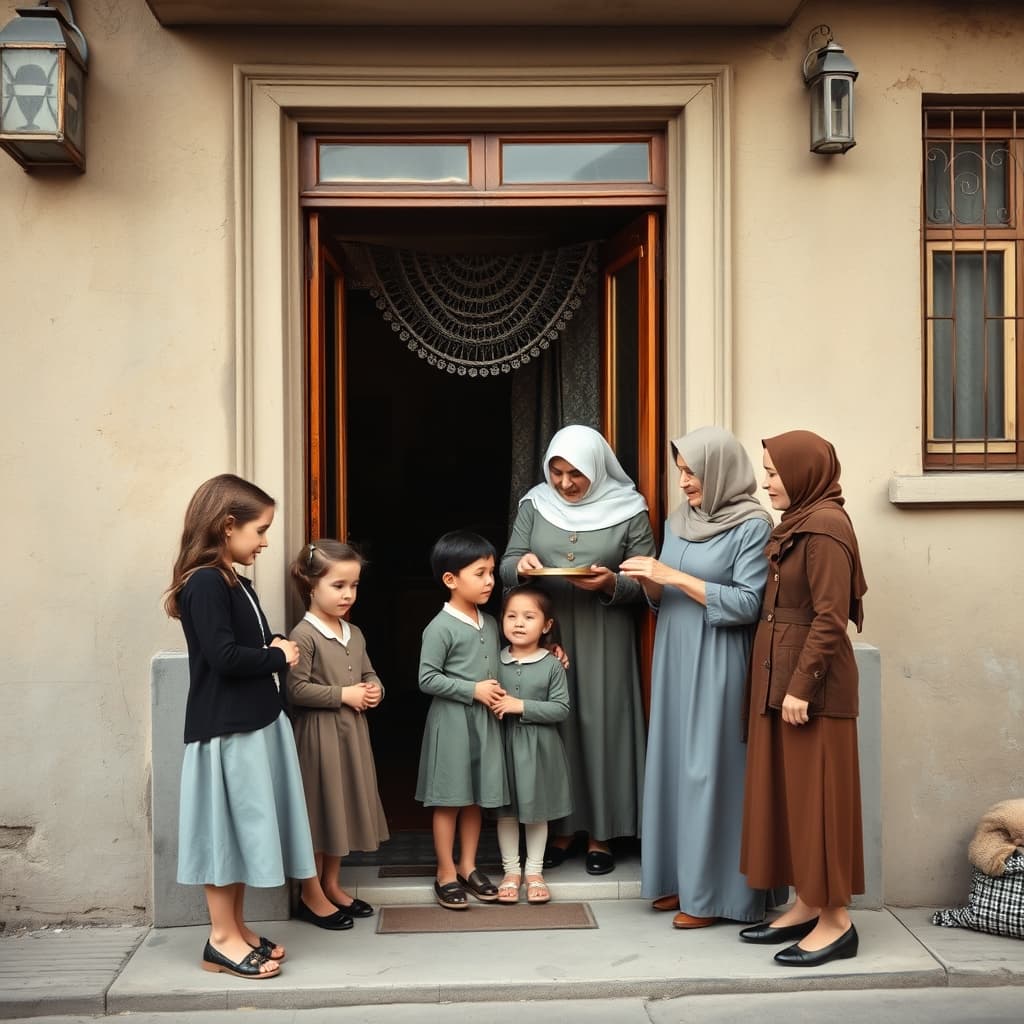
The city woke early on Bayram morning, but households did not all wake for the same task. Some prepared to receive visitors; others gathered children and checked who should be visited first. Beyond the fresh clothes and familiar greetings lay a small geography of obligation. A short walk to an older relative, a journey across town and a neighbour waiting at the doorway could pull the morning in different directions. The order of visits gave the holiday its shape.
In Turkish family life, visiting elders is a recognisable Bayram practice, although the sequence and meaning vary. It is misleading to describe one universal itinerary. Distance, health, household size, religious observance, work and disagreements all affected decisions. Some people left after communal prayer; others began with breakfast or welcomed early callers. What looked like a city moving together was assembled from many private timetables.
The First Door Carried Particular Weight
Being visited first could communicate respect, closeness or concern. It could also be a practical choice: an older person tired easily, a relative lived nearby, or a longer journey had to begin before traffic increased. Children might remember the first house because its sweets or greeting were distinctive, while adults remembered the negotiation that made the sequence possible. Both memories describe the same morning from different positions.
The route changed as families changed. A marriage added another household; a move made a once-casual walk into a planned trip; a death removed a door without removing the expectation of turning towards it. This is one reason an old holiday morning can return with an ache. The remembered map still contains people who no longer answer, and the present journey passes places whose role has altered.
Receiving Visitors Was Work
An open door depended on preparation inside. Cups, plates, sweets, seating and coats had to be managed as callers arrived at uneven intervals. Someone kept the room ready while others visited elsewhere. That labour should not disappear beneath a description of effortless hospitality. A household could enjoy company and still find the long sequence tiring, particularly when cooking, cleaning or care fell repeatedly to one person.
Informal timing helped prevent collisions. A greeting at the gate, a message through a neighbour or a brief telephone call could establish whether a family was home. Yet these arrangements were imperfect. People missed one another, waited, returned later or accepted that every obligation could not fit into one day. The holiday city included closed doors as well as welcoming ones; a closed door was not automatically a refusal.
Children Learned a Map of Relationships
Walking between homes taught children who belonged to which branch of the family and how different greetings were received. They learned when to stand close, when to wait and when the adults were preparing to leave. Small gifts or pocket money might accompany the visit, but not every household could offer the same things. Remembering the practice honestly means avoiding a competition of abundance or a claim that every child experienced it happily.
Photographs often preserve the pause rather than the movement: relatives assembled by a sofa, children in new clothes or a tray on a table. To understand the morning, place those images beside recollections of the route. Ask which house came before and after, who stayed home and who was missing. Keep uncertain dates uncertain, and do not attach a family scene to a particular Bayram merely because the clothing looks seasonal.
Contemporary visits may be shorter, spread across several days or joined by telephone and video. These changes do not automatically mean respect has disappeared. They show families arranging care and recognition under different distances and schedules. The enduring question is who is remembered and how that remembrance becomes an action.
For a Digital Nostalgia Archive, the old Bayram morning is most revealing as a route rather than a postcard. Its early rhythm came from the first door, the host who stayed behind, the journey postponed and the person whose absence changed the sequence. Preserving those relationships explains both the warmth of the memory and the quiet pain that can accompany returning to it.