 Eski Pano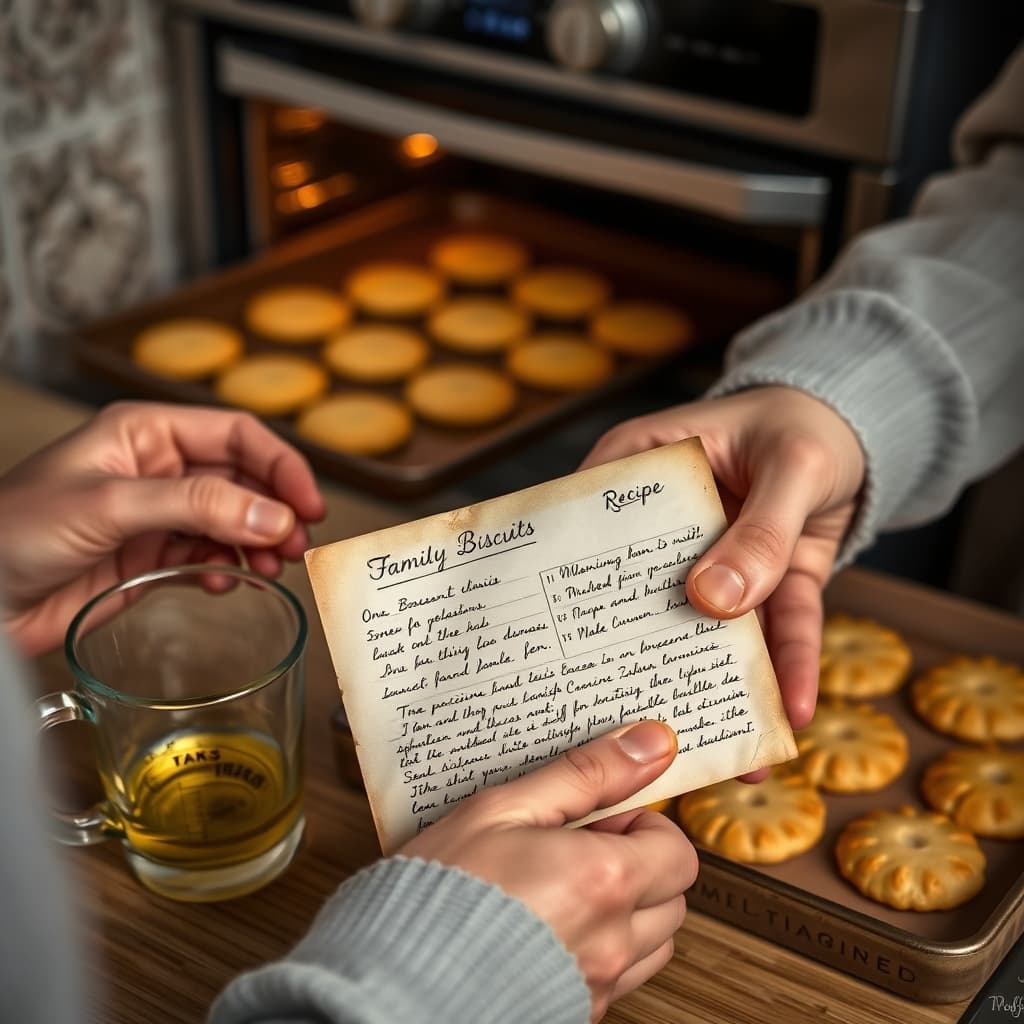
A grandmother’s biscuit recipe may fit on a small card and still leave the next baker uncertain. “One glass,” “as much flour as it takes,” or “until lightly coloured” worked because the original cook knew the glass, dough and oven. When the method moves to another kitchen, those familiar references change. Preserving it across generations means documenting judgement, not replacing every flexible cue with invented precision.
Start by digitising the written source before cooking. Photograph front, reverse, stains, folds and corrections in neutral light. Transcribe exactly, marking uncertain words rather than guessing. Record who wrote it, when it was first seen and whether the card describes the grandmother’s own practice or somebody else’s version. Handwriting and paper can carry provenance, but they do not prove the origin of the dish.
A Tea Glass Was a Tool, Not a Universal Unit
If the cook used a particular glass, cup, spoon or bowl, measure its capacity separately without writing the modern value over the original instruction. Photograph the utensil with a scale and link it to the recipe record. A household measure can vary depending on whether an ingredient is level, heaped, packed or poured by eye. Video may capture the motion more faithfully than a single number.
“Flour as needed” often responds to egg size, fat temperature, flour behaviour, humidity and the desired shape. Ask the experienced baker to describe the stopping point: whether the dough clings, cracks, shines, springs back or releases from the hand. Record these cues before asking for a weight. A test batch can include measured quantities while preserving the original sensory language alongside them.
A New Oven Changes an Old Timing
Older and modern ovens distribute heat differently, and even two current ovens can disagree. A remembered minute count is not a guarantee. Record rack position, tray material, preheating, batch size and actual observations. Colour on the base and edge, surface firmness and aroma may have guided removal. Current appliance instructions and food-safety advice should take priority over reenacting an unsafe setting.
Do not use a historic oven, damaged cable or uncertain gas appliance merely to make the photograph look authentic. A safe modern oven can test the method. If the family tray, rolling pin or cutter is stable and suitable, it may appear in documentation; fragile, rusty, painted or unknown materials should remain display objects. Clearly caption any reconstruction.
Variations Are Evidence of Transmission
One relative may add citrus zest, another change the fat, and another reduce sweetness or alter the shape. Keep each version under the contributor’s name and date rather than combining them into a supposedly definitive recipe. Ask why the change occurred: ingredient availability, allergy, budget, a new oven or simple preference. The answer shows how kitchen culture adapts.
Credit the labour around baking. Someone bought ingredients, cracked nuts, watched children, washed trays or packed biscuits for a visit. “Grandmother’s” can honour a central cook without erasing assistance. It is also worth asking who was taught directly and who learned later from observation or a card. Different learning routes explain differences in technique.
Ingredient and allergen records matter for present-day sharing. Flour may contain gluten; eggs, dairy, nuts, sesame or other additions may require clear notice. Prevent cross-contact where necessary and do not assume a familiar family biscuit is safe for every guest. Store and serve the finished food according to current guidance, especially when fillings or toppings are perishable.
For a tasting record, date each batch and note every departure from the source. Photograph the dough before shaping, the tray before and after baking, and the broken interior of one cooled biscuit. Invite family comments without turning preference into objective proof. “Too crisp for our memory” is useful testimony; it may point toward thickness, heat or storage.
Keep the archival card away from flour, grease and steam during reconstruction. Work from a facsimile and return the original to a stable enclosure. Do not laminate it, apply tape or scrub away food stains. A conservation folder can protect the physical record while high-quality digital copies make it available to relatives.
The special place of a grandmother’s biscuit lies in the chain of decisions that made the written words work: which glass, how the dough felt, when the tray left the oven and how the result was shared. A Digital Nostalgia Archive preserves that chain by holding original wording, measured experiment and family variations together. The recipe remains alive not because it is frozen, but because each change can be seen and understood.