 Eski Pano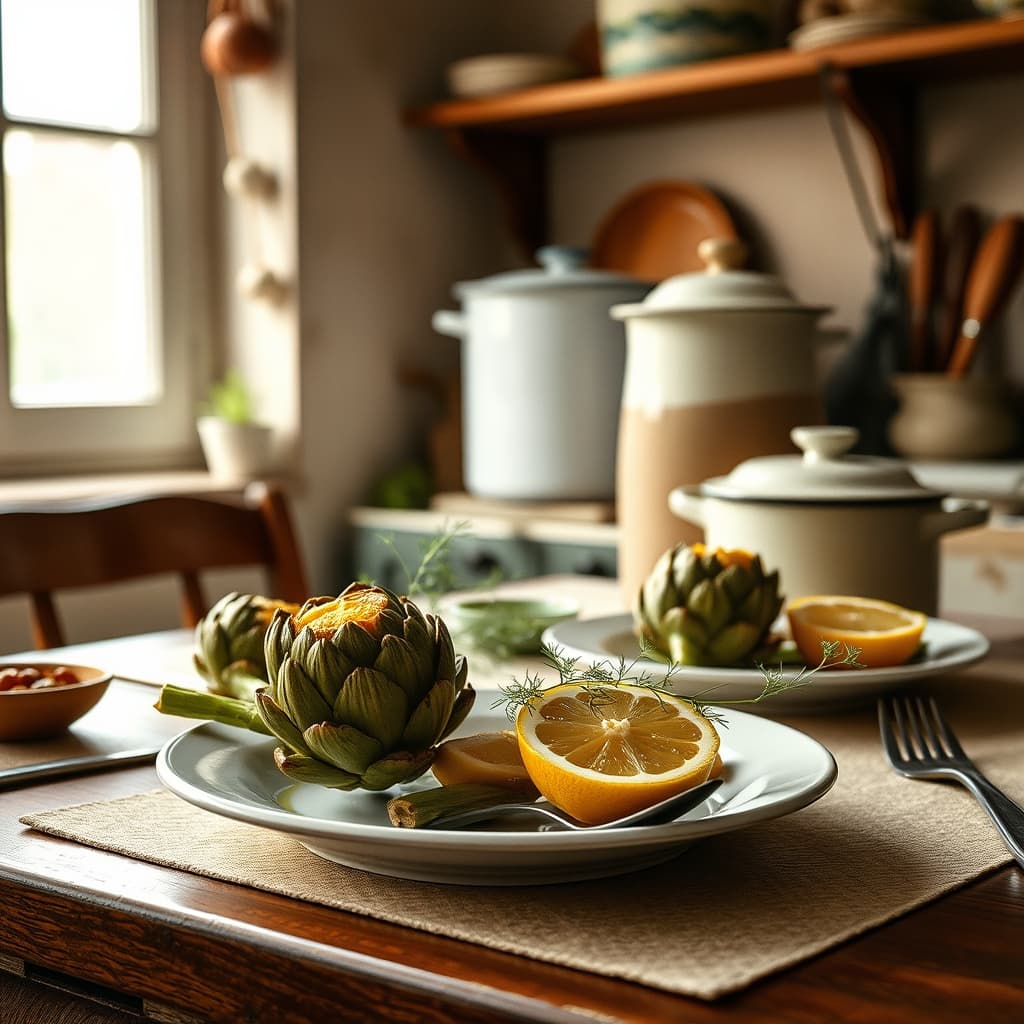
Olive-oil artichokes bring seasonality to the table in a form that looks calm only after demanding preparation. At the market, buyers judged freshness through weight, firmness, leaves, cut stems, and local knowledge of variety. At home, the cook protected trimmed surfaces from darkening, prepared vegetables and aromatics, and arranged the pot so delicate artichoke bottoms would hold their shape. The final dish often cooled before serving, allowing lunch or dinner to be planned in advance.
There is no single household formula. Artichokes may be cooked with peas, carrots, potatoes, broad beans, onions, dill, lemon, or other combinations. Whole heads, quarters, or prepared bottoms require different handling. Sweetness, acidity, cooking liquid, and olive oil vary by region and family. One table’s familiar garnish may be absent from another. Sharing culture is preserved by keeping these differences visible, not by selecting one authentic plate.
Trimming Was Skilled Kitchen Work
Fresh artichokes contain tough leaves, fibrous sections, and a choke that may need removal depending on maturity and preparation. Knives and hands work close together, so a stable board and careful technique matter. Purchased prepared bottoms reduce labor but create another history involving market vendors who cleaned large quantities and knew how to minimise waste.
The discarded leaves and stems also raise questions. Some edible parts can be used in other preparations when the variety and condition are suitable, while other material belongs in compost or waste. Romantic claims that older kitchens wasted nothing should be treated cautiously. Resourcefulness existed, but so did limits of time, fuel, knowledge, and food safety.
A Cool Dish Changed the Timing of Hospitality
Because the dish could be served at room temperature or cool, it allowed work to be completed before guests arrived. Plates could be arranged without last-minute frying, and portions travelled to a neighbor or relative. A covered dish sent across a landing carried care without requiring the recipient to host immediately. The returned plate later continued the relationship.
Sharing did not make labor equal. Shopping, trimming, cooking, serving, and washing often belonged to one person. Guests praised the tenderness without seeing the cut fingers, stained board, or time spent at the market. A fair food memory credits the cook and any vendor or family member who participated.
Preserving Season, Recipe, and Safety
An archive can record variety, market source, preparation stage purchased, ingredients, pot, timing, and how the cook judged tenderness. Photograph raw and trimmed forms as well as the finished plate. Ask whether migration, price, frozen vegetables, or changing family size altered the recipe. Avoid claiming ancient continuity without documented evidence.
Cooked vegetables and garnishes still require clean handling and suitable refrigeration. Acid and olive oil do not automatically make a dish safe indefinitely. Current guidance should determine storage and discard decisions. Olive-oil artichokes keep old kitchen culture alive because they unite seasonal judgement, skilled hands, adaptable recipes, and deliberate sharing. Their value rests in this network of work and exchange, not in a polished plate detached from the people who prepared it.