
🇹🇷 Türkçe | Dikiş Makinesi Sesinin Sokağı Birleştirdiği Günler
Mahallede bir evin penceresinden dikiş makinesi sesi yükseliyorsa, o ses yalnızca bir odadan değil bütün sokaktan duyulurdu. Pedalın ritmik vuruşu, kumaşın kayışı ve ara ara söylenen “bir prova yapalım” cümlesi, gündelik hayatın sıradan fon müziğiydi. Dikiş bilen komşuya uğramak, bugünkü hızlı terzi hizmetinden farklı bir anlam taşırdı; bir eksikliği giderirken aynı anda ilişki kurmanın, haber almanın ve dayanışmayı tazelemenin yoluydu.
Evler arasında dolaşan kumaş torbaları bu kültürün en görünür simgesiydi. Kimi çocuk için okul önlüğü kısaltılır, kimi genç için nişan elbisesine son dakika dokunuşu yapılır, kimi yaşlı için yıpranan pazen etek yeniden toparlanırdı. “Vaktin olursa bakarsın” denilse de herkes bilirdi ki bu işler aceleyle değil özenle yapılırdı. Dikiş bilen komşu, yalnızca teknik beceri sunmaz; kumaşın hikâyesini, bedenin ihtiyacını ve ailenin bütçesini birlikte düşünürdü.
1970’lerden 1990’lara uzanan dönemde hazır giyim erişimi bugünkü kadar yaygın değildi, olanlar da her bütçeye uygun değildi. Bu nedenle ev içi üretim ve tamir bilgisi kadınlar arasında güçlü bir sosyal sermaye haline geldi. Mahallede “eli dikiş tutan” kişi, yerel bir uzmanlık merkezi gibi görülürdü. Yerel gazetelerdeki ev ekonomisi köşeleri, eski kadın dergilerindeki kalıp ekleri ve pazar kumaşçılarının sözlü önerileri bu ağın bilgi kaynaklarıydı.
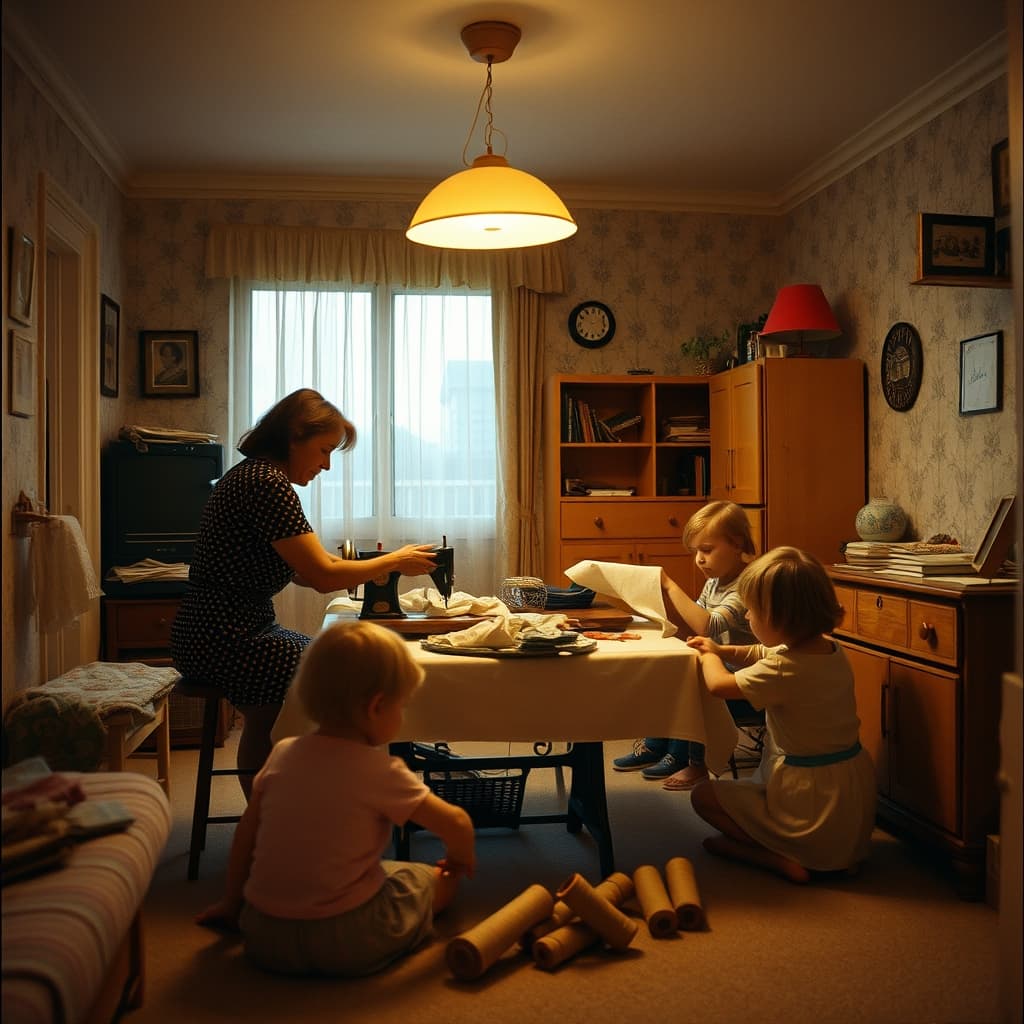
Bu pratik, sokağı gerçekten ortak bir eve dönüştürüyordu çünkü kapılar yalnızca misafirlik için değil, üretim için de çalınıyordu. Kimi evde ütü hazır olur, kimi evde ilik açma ayağı ödünç verilir, kimi evde çocuklar yere yayılmış iplik makaralarıyla oynarken büyükler model konuşurdu. Bir eteğin boyu konuşulurken aynı masada okul masrafı, mahalledeki düğün tarihi, hasta komşunun durumu da konuşulurdu. Dikiş işi böylece maddi tasarrufla sosyal bakımın kesiştiği bir alana dönüşürdü.
Dikiş bilen komşuya uğramanın görgü kuralları da vardı. İş getiren kişi çoğu zaman yanında küçük bir ikram götürür, deneme sırasında sabırla bekler, “eline sağlık” cümlesini eksik etmezdi. Bu dil, emek görünmezleşmesin diye kurulmuş ince bir nezaketti. Yapılan işin değeri yalnızca sonuçla değil, ayrılan zamanla ölçülürdü. Bu yüzden bir fermuar değişimi bile bazen uzun bir sohbetin bahanesi olurdu.
Bugün hazır giyim, online sipariş ve hızlı tadilat seçenekleri hayatı kolaylaştırıyor. Yine de bu pratiklerin çoğu ilişkiden arındırılmış durumda: işlem var, ama hikâye yok; sonuç var, ama birlikte geçirilen zaman az. Eski mahalle düzeninde ise dikiş, ihtiyaç listesinin bir maddesi olmaktan çok komşuluk ekonomisinin canlı kalma biçimiydi.
Sokağı ortak eve dönüştüren şey tam da buydu: herkesin aynı çatı altında yaşamaması ama aynı emeğe, aynı bilgiye, aynı güvene erişebilmesi. Dikiş makinesi sesinin aramızdan çekildiği yerde yalnızca bir teknik beceri değil, gündelik dayanışmanın ritmi de azaldı. Hafızada kalan o ses, bu yüzden geçmişe değil, birlikte yaşamanın mümkün olduğuna dair bir hatırlatmaya dönüşüyor.
🇬🇧 English | When a Neighbor’s Sewing Skills Turned the Street into a Shared Home
When the sound of a sewing machine came from one window, it seemed to belong to the whole street. The rhythmic pedal, the movement of fabric, and occasional lines like “let’s do one fitting” formed part of everyday neighborhood soundscape. Visiting the neighbor who could sew meant more than getting a repair done. It was a way to solve a practical need while renewing relationships, exchanging news, and sustaining mutual support.
Fabric bags moving between houses became a symbol of that culture. One child’s school uniform was shortened, one young woman’s engagement dress adjusted at the last minute, one elder’s worn skirt repaired for another season. Even when people said “only if you have time,” everyone knew such work required care, not speed. The skilled neighbor did not offer technique alone; she considered the garment’s story, the body’s needs, and the family budget together.
From the 1970s to the 1990s, ready-to-wear fashion was less accessible and often less affordable than today. Home production and repair knowledge therefore became a strong form of social capital among women. In many neighborhoods, the person “good with sewing” functioned like a local expertise center. Household economy columns in local papers, pattern inserts in magazines, and advice from fabric-market sellers fed this knowledge network.
This practice truly turned streets into shared homes because doors were knocked not only for visiting, but for making. One house had an iron ready, another lent a buttonhole foot, another hosted children playing with thread spools while adults discussed fit and style. While talking about hem length, people also discussed school costs, wedding dates, and a sick neighbor’s condition. Sewing became a point where economic thrift and social care met.
There were etiquette rules, too. People bringing work often arrived with a small treat, waited patiently through fittings, and never forgot to say “thank you for your hands.” This language preserved the visibility of labor. Value was measured not only by the final result, but by time offered with attention. Even replacing a zipper could become the beginning of a long, meaningful conversation.
Today, fast fashion, online orders, and quick alteration services make life easier. Yet many of these transactions are relationship-free: the task is done, but no shared story remains; the result arrives, but little shared time is created. In older neighborhood life, sewing was not a checklist item but a way community economics stayed alive.
That is what made the street feel like a common home: not living under one roof, but sharing access to the same labor, knowledge, and trust. As the sound of sewing machines faded, more than a skill disappeared; a rhythm of daily solidarity faded with it. That remembered sound now points not only to the past, but to the possibility of living together differently.
🇧🇷 Português (Brasil) | Quando a Costura da Vizinha Transformava a Rua em Casa Coletiva
Quando o barulho da máquina de costura saía de uma janela, parecia ecoar por toda a rua. O ritmo do pedal, o tecido correndo e o “vamos provar mais uma vez” faziam parte da trilha sonora do cotidiano. Ir à casa da vizinha que sabia costurar não era apenas resolver um ajuste; era também manter vínculos, trocar notícias e renovar a solidariedade de bairro.
As sacolas de tecido circulando entre casas eram um símbolo desse modo de viver. Ajustava-se o uniforme de uma criança, acertava-se o vestido de noivado de uma jovem, recuperava-se a saia gasta de uma senhora. Mesmo com o “faz quando puder”, todos sabiam que aquele trabalho pedia cuidado, não pressa. A vizinha costureira não oferecia só técnica: ela considerava a história da peça, a necessidade de quem vestia e o orçamento da família.
Entre os anos 1970 e 1990, o acesso ao pronto-para-vestir era menor e muitas vezes caro. Por isso, o saber de costurar e consertar virou capital social importante entre mulheres. Em muitos bairros, quem “tinha mão para costura” funcionava como um centro local de conhecimento. Colunas de economia doméstica em jornais, moldes de revistas e dicas de vendedores de tecido alimentavam essa rede.
Esse costume transformava a rua em casa comum porque as portas eram batidas não só para visita, mas para produção. Em uma casa havia ferro ligado, em outra se emprestava peça da máquina, em outra as crianças brincavam com carretéis enquanto as adultas falavam de modelagem. Ao discutir barra de saia, falava-se também de gasto escolar, data de casamento e saúde do vizinho. A costura reunia economia e cuidado social no mesmo espaço.
Existia também uma etiqueta do gesto. Quem levava serviço costumava levar um agrado, esperar com paciência e agradecer com respeito. Essa linguagem ajudava a não invisibilizar o trabalho. O valor estava no resultado, mas também no tempo dedicado. Até a troca de um zíper podia virar início de conversa longa.
Hoje, moda rápida, pedidos online e ajustes express facilitam a rotina. Ainda assim, muitas dessas soluções eliminam relação: o serviço acontece, mas sem história compartilhada; a peça volta pronta, mas sem convivência. No arranjo antigo, costura era mais do que utilidade; era engrenagem da economia afetiva da vizinhança.
Foi isso que fez a rua parecer uma casa coletiva: não morar sob o mesmo teto, e sim ter acesso comum ao mesmo trabalho, saber e confiança. Quando o som da máquina diminuiu, não se perdeu apenas uma habilidade técnica; enfraqueceu também um ritmo de apoio cotidiano. Esse som, lembrado hoje, aponta para o passado e para a possibilidade de voltar a conviver com mais proximidade.
