Eski Pano
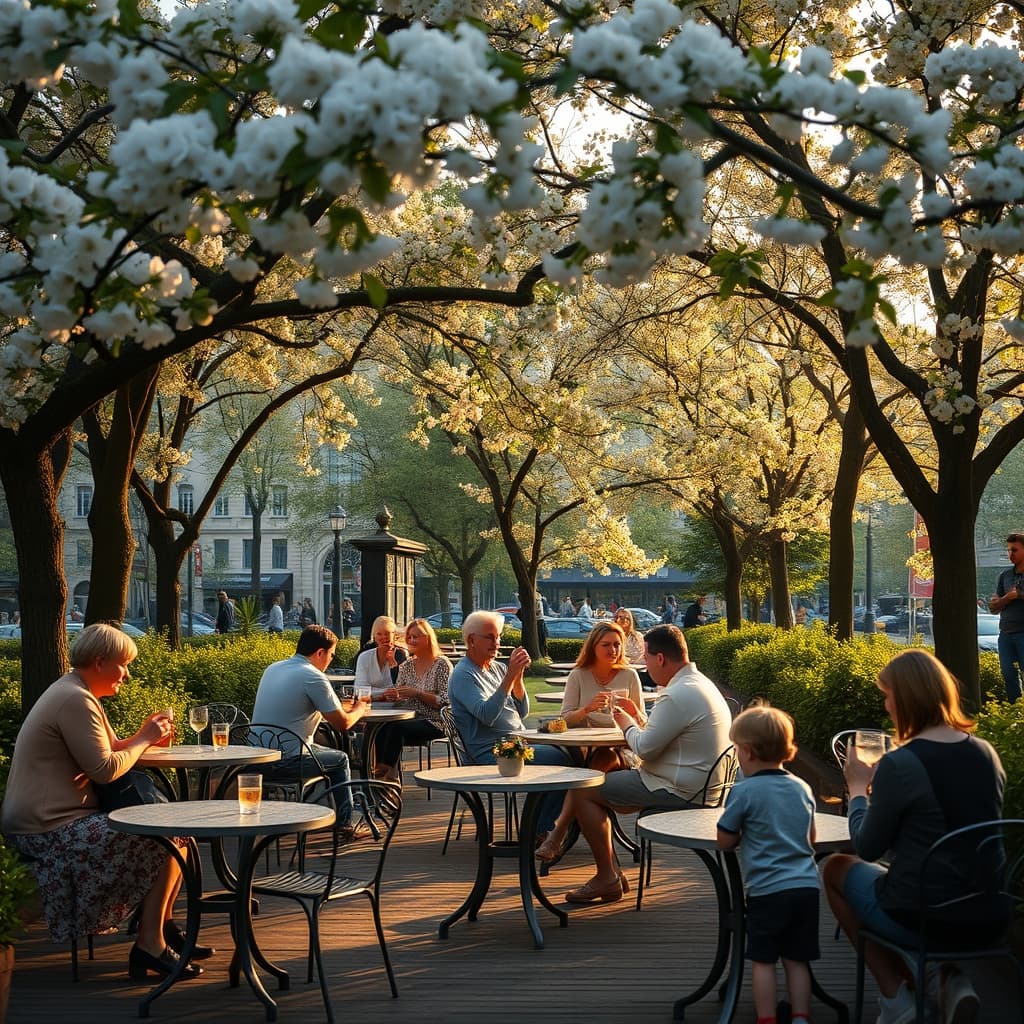
There was a time when summer afternoons took on a language of their own just as the sun grew tired and the shadows began to stretch. The rush of the city loosened a little, metal chairs in roadside tea gardens brushed softly against the cooling ground, and the chime of slender tea glasses mixed with conversation. What touched people most was the scent of linden drifting above all those sounds. It seemed to rise not only from the trees, but from the slow pace of summer itself, from friends finding one another again around the same table, from the unhurried temperament of late afternoon. That is why, when we look back, those gardens seem not merely beautiful, but somehow brighter.
Seen in the context of lived history, tea gardens were more than simple places of rest. Old newspapers spoke of summer outings, family strolls, seaside promenades, and municipal parks, yet between the lines one could always feel a shared discipline of the afternoon hour. The tea garden was a public space that never demanded attention loudly, yet allowed everyone to see one another. Clerks stopped by after work, families sat a few tables apart with their children, and even conversations about engagements sometimes matured beneath those shaded trees. What stored up friendship was not only frequent meetings, but the repeated gathering under the same hour of day, the same rising steam of tea, and the same canopy of leaves.
The small details of ordinary life explain why those afternoons remain unforgettable. Glasses of strong tea carried on aluminum trays, ice slowly dissolving in lemonade, paper napkins lifting slightly in the breeze, children running toward the swings nearby, and older men opening old stories between rounds of cards or backgammon all deepened the scene layer by layer. Friendship in tea gardens was not built through grand declarations, but through calm offers such as “let’s order one more tea” or “let’s wait until the sun drops a little more before we leave.” Even silence between people felt comforting there. It did not disturb the table; it arrived like evening coolness and settled among them.
What made those gardens so revealing of their era was the social measure they carried. They were neither the privacy of home nor the loud estrangement of today’s crowded venues. There might be no tablecloth, yet the coasters were neatly placed; the chairs might be simple, yet people sat in them for long stretches without impatience. Young people learned how to lower their voices in the presence of elders, children understood from their mothers’ glances that the evening chill had begun, and generations that did not speak their affection openly maintained closeness through modest gestures. For that reason, the tea garden was not only a place to rest, but also a stage on which the gentle manners of urban life were rehearsed and preserved.
The reason those linden-scented gardens look brighter in memory today does not come only from the distortions of nostalgia. Their brightness belongs to a time when people sat more broadly within time itself and regarded the late afternoon not as an empty interval to consume, but as a threshold to share. Tea drunk before it cooled, familiar greetings moving between tables, little conversations accumulating all summer, and the scent of trees resting in the air continue to shine like a form of cultural inheritance. Perhaps what makes those gardens feel so precious now is not merely the beauty of the past, but the calm and courteous world in which friendship once had time to form.
Those Old-Hour Tea Gardens Whose Summer Afternoons Gathered Friendship and Revealed the Spirit of the Era: Why Do Linden-Scented Gardens Look Brighter in Memory?