Eski Pano
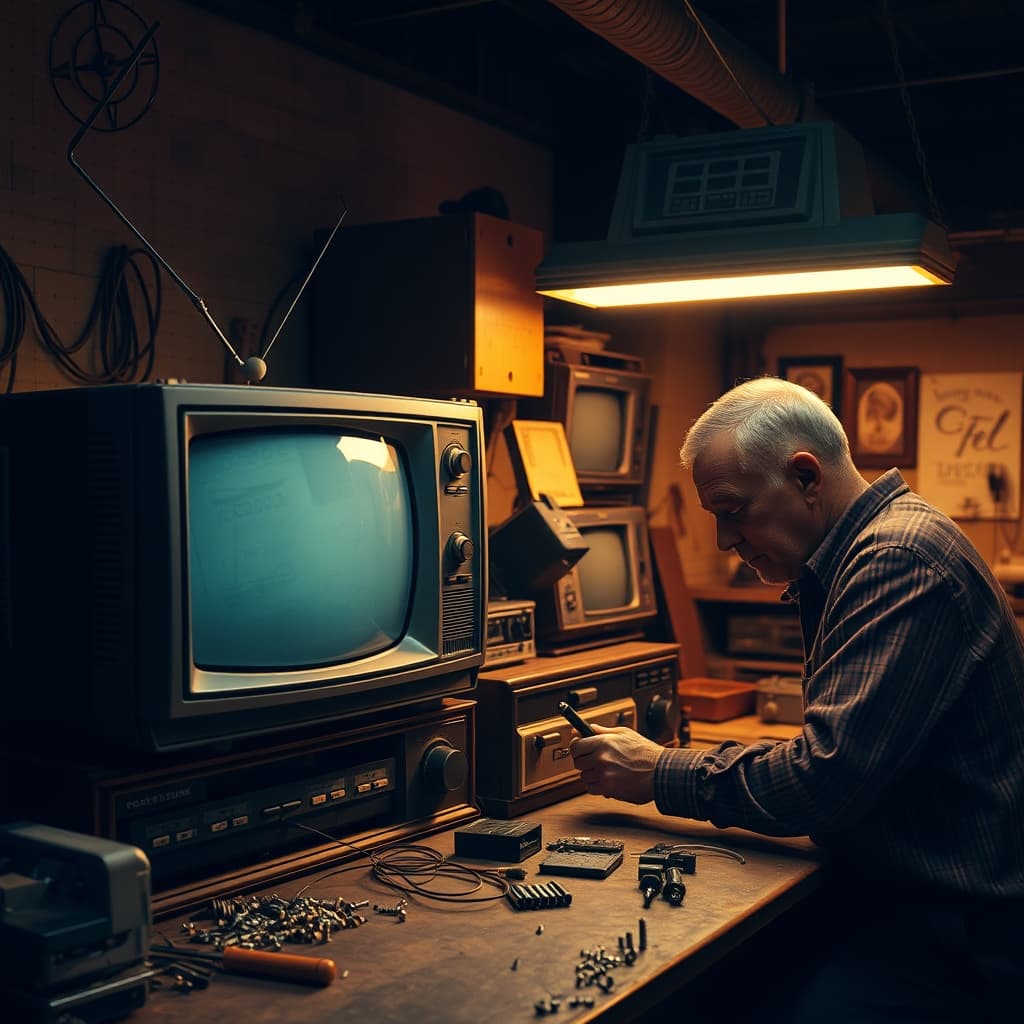
There was a time when a device was not considered finished the moment it broke; that was often when it entered a new phase of life. The antenna on top of the television would be turned a little further, and the snowy image might suddenly gather itself into clarity. An overhead projector taken from a school cabinet could recover its light despite the dust settled on its surface. The technology of those years was not flawless, yet precisely for that reason it maintained a closer relationship with people. Every malfunction suggested a small intervention, every crackle called for an adjustment, and every fading picture held the possibility of becoming clear again. The hope that sharpened as the antenna turned, and the second life an overhead projector found in a repairman’s hands, both belonged to the patient logic of the analog age.
From the perspective of technological heritage, the lifespan of old devices was completed not only in the factories where they were made, but in the neighborhood repair shops that kept them alive. Old newspapers carried tiny advertisements for television service, radio mechanics, electricians, and school equipment maintenance. Between those lines one can see a different understanding of technology: not to replace an object immediately, but first to understand it, open it, clean it, and preserve it. On the repair bench, the smell of solder, the click of screwdrivers, and the neat order of spare-part boxes conveyed more than technical knowledge. They described a moral bond with objects. Even when a machine failed, it was not abandoned, because its function could still be called back through effort.
The act of turning the antenna was one of the era’s most familiar household rituals. One person watched the screen in the living room while another stood near the window or stair landing, rotating the antenna little by little until a voice from inside called out, “stop there.” That scene was not only about improving a broadcast. It was a moment of domestic cooperation. Children paused and waited, while adults gave directions without losing patience. The overhead projector belonged to another setting, the classroom or the meeting hall. Transparent sheets carefully lettered by hand, the lamp warming under use, giant letters appearing on the screen, and the occasional bulb that burned out without warning all made technology feel both visible and vulnerable.
What found a second life in repairmen’s hands was not only the device itself, but the habits attached to it. When a television worked again, the rhythm of family evenings returned. When the overhead projector was repaired, the teacher’s order of preparation continued. Spare fuses kept in drawers, yellowing instruction manuals, and parts wrapped in newspaper before being taken to the electrician were all pieces of that repair culture. The repairman was not merely someone who fixed what was broken. He quietly prevented the daily flow from being interrupted. For that reason, his shop functioned as a hidden engineering memory of the analog age.
The reason old antennas and overhead projectors still attract attention today is rooted here. They represent a period when technology was not disposable, but adjustable, understandable, and repairable. The relationship between person and machine was close enough that one thought of the back panel before giving up on the screen. As the picture cleared, hope itself seemed to clear; when the repaired object returned home, so did a certain work ethic of the past. That is why the antenna and the overhead projector remain more than nostalgic objects. They are remembered as old technological forms of patience, skill, and the belief in second chances.
Hope Sharpening as the Antenna Turned and the Overhead Projector: It Explains Why They Found a Second Life in Repairmen’s Hands