Eski Pano
There was a time when summer afternoons were remembered through a cool preparation that began in the kitchen just as the sun grew heavy. Lemon peels gathered on the counter, sugared water rested in a glass pitcher, and a fresh scent spread through the room while slices of cake, cookies, or simple fruit desserts were carried to a shaded table. A summer afternoon with lemonade was not merely a pause to quench thirst. It was the household’s way of answering heat. For a child, that hour meant being called in from play, reaching toward a glass with dusty and sweaty hands, and tasting the cool kindness of home in the first bite. That is why a similar flavor can still bring childhood back at once today. The taste belongs not only to the tongue, but to the emotional atmosphere of the whole hour.
From the perspective of taste memory, afternoons with lemonade reveal the simple yet attentive character of old kitchen culture. Before packaged drinks, ready-made snacks, and quickly assembled tables took over, the home kitchen created small seasonal rituals. When summer arrived, pitchers of water were kept cool, lemon zest was saved for jam or dessert, glasses were chilled in advance, and the accompanying afternoon foods were prepared according to what the house already had. The richness here did not come from abundance, but from thoughtful simplicity. To build a refreshing table with modest ingredients was one of the strongest skills of the old kitchen. Lemonade was the drink-form of that skill.
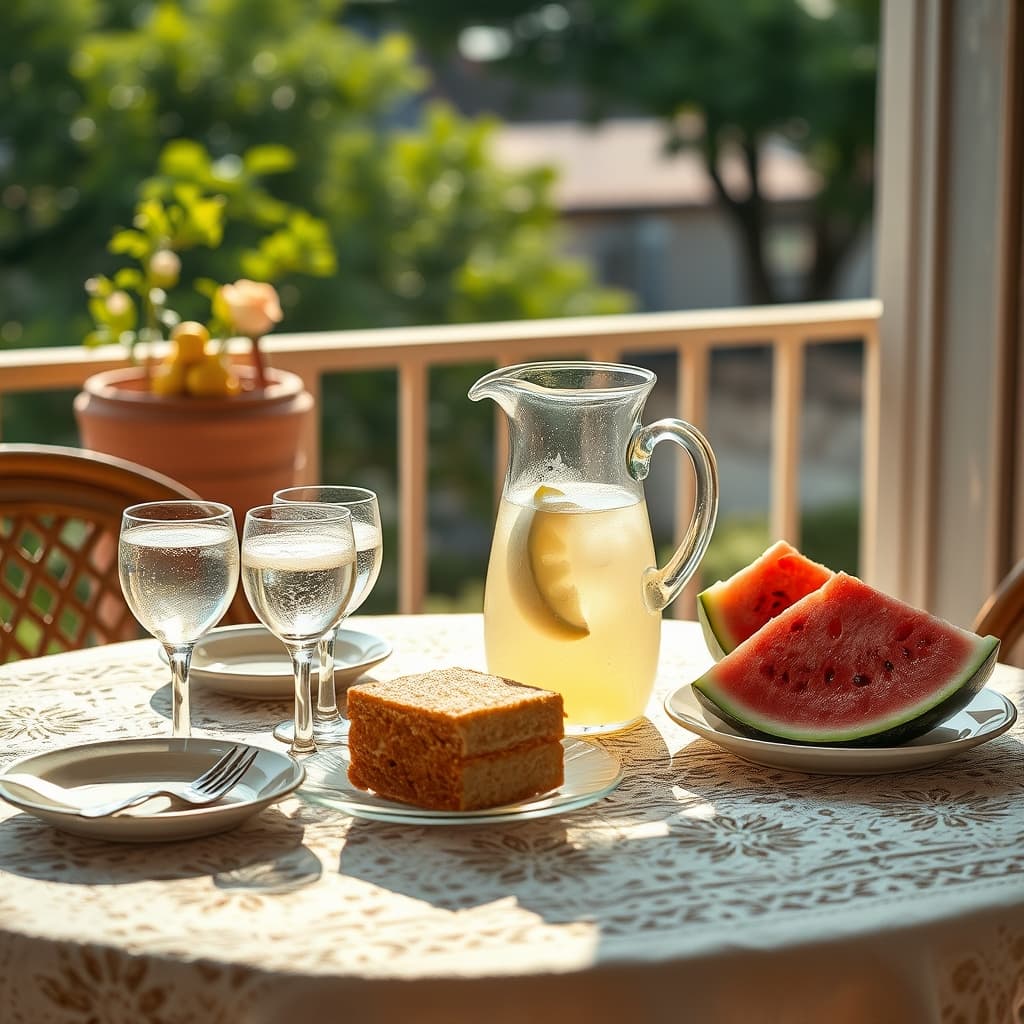
What recalls childhood in the first bite is therefore not taste alone, but the atmosphere surrounding it. The misted glass of lemonade, the warm breeze through the balcony door, the sound of a fan working in the kitchen, the lace cloth on the table, and the slice of cake or thin-cut watermelon waiting beside the glass all settle into memory together. At that hour the child returns briefly from the world of play, still carrying its dust on the knees, sweat on the forehead, and urgency in the hands. Yet the moment the glass touches the lips, the day softens. The first bite and the first sip become a passage from the speed of the outside world into the cooling shelter of home. That feeling of transition rises unexpectedly even years later when the same taste appears again.
The details of everyday life show very clearly how old kitchen culture stays alive in this memory. In some homes the lemonade was served with mint leaves; in others a few drops of rose water were added. One table offered savory pastry beside it, another placed jam-filled cookies nearby. Ice was not always plentiful, yet a thin cloth wrapped around the pitcher tried to preserve the coolness. Mothers and grandmothers saying, “eat something first, then you can go back outside,” were not managing hunger alone, but the balance of the day itself. The kitchen treated afternoon not as an empty gap between hours, but as a moment to gather everyone again. For that reason, a summer afternoon with lemonade carries the memory of a domestic order as much as it carries flavor.
The answer to why a similar drink or first bite can still recall childhood so strongly lies exactly here. Some tastes are stored not merely as recipes, but as ways of living. Lemonade survives together with seasonal knowledge, domestic care, hospitality traditions, and the kitchen intelligence that anticipates the child’s return. What keeps old kitchen culture alive today may not be recreating the exact same table, but preserving the logic of that care: cooling, welcoming, making something graceful from what is already at hand, and softening the day around a small table. That is why the summer afternoon with lemonade recalls childhood in the first bite while also carrying an older kitchen discipline gently into the present.
Summer Afternoon with Lemonade: Why Does It Still Recall Childhood at the First Bite and How Does It Keep Old Kitchen Culture Alive?