Eski Pano
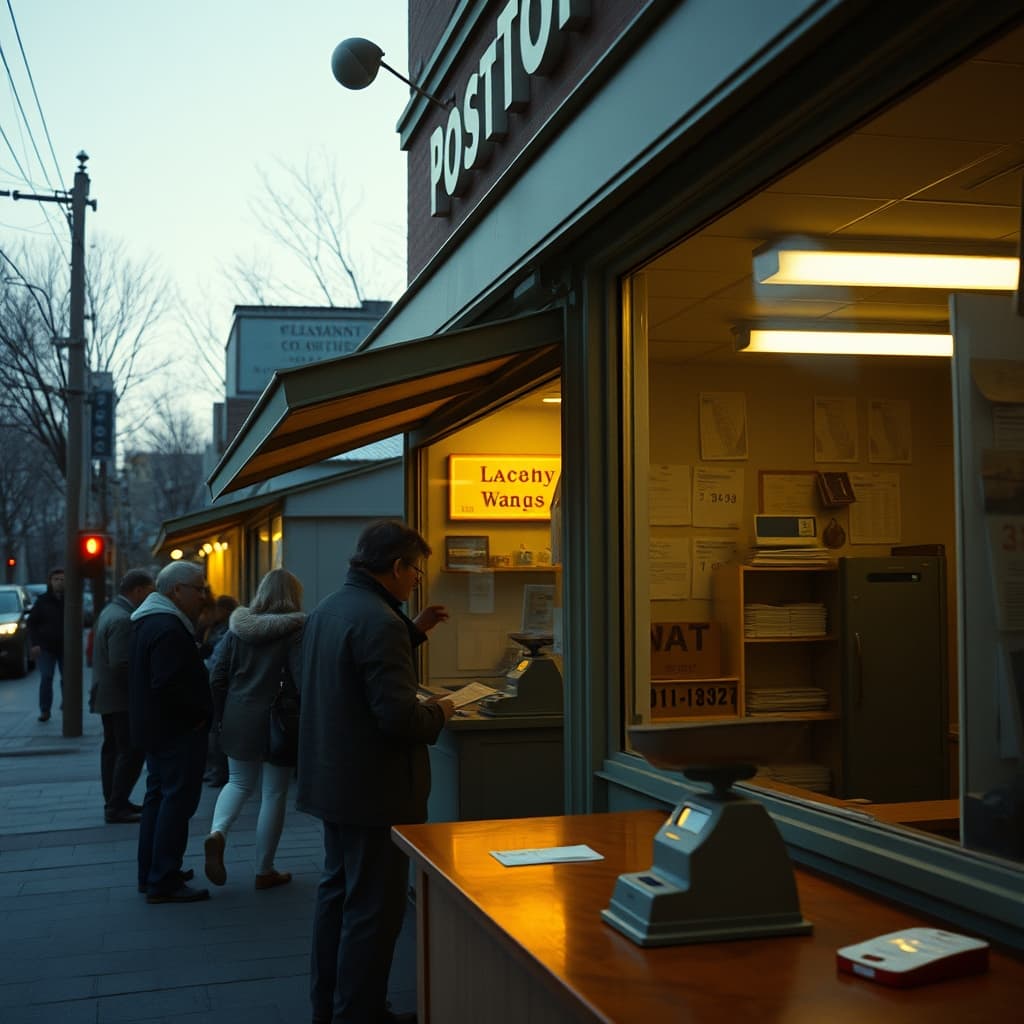
In earlier decades, the first evenings of spring were not just a seasonal shift on the calendar; they were an invisible call that reset the rhythm of the neighborhood. The air turned lightly cool, school bags were left behind doors, stools appeared outside small shops, and movement began on the post-office street. In front of the yellow-lit building, a line formed: collars raised, envelopes in hand, people waiting quietly. One person wanted to send money to a son in another city, another came to ask whether a letter from a nephew in military service had arrived, another checked if a greeting card could still make it on time. From outside, the queue looked calm. Inside, it held a dense and silent urgency.
Old post offices measured distance not in kilometers but in emotional weight. The scale on the counter, the ink pad, the date stamp, the thick ledgers in front of the clerk were not just office tools; they were part of a communication order built on patience. An address written carefully on an envelope could become the only bridge a family had for weeks. “Do I need one more stamp?”, “Will this arrive by tomorrow?”, “Should I register it?” became ordinary neighborhood language. Sending a letter was never a purely technical act. It carried a collective responsibility: making sure words did not vanish on the road. That is why a few minutes at the counter occupied far more emotional time than its actual duration.
The ache of those spring evenings is also tied to light. As daylight lowered, fluorescent brightness from the post-office windows spilled onto the street and created an early-night mood before streetlamps turned on. Inside, number calls, stamp strikes, and low voices giving directions blended together. Outside, children standing on hopscotch squares watched adults waiting in line. On busy days, local shopkeepers carried tea trays to the door, saying, “At least warm up while you wait.” In moments like these, the cold idea of a state institution softened through local solidarity. An official building became a warm room in shared memory.
That routine also made news feel heavier. Messages that arrive in seconds today once had to be written, folded, stamped, submitted, and then awaited. Waiting increased value. When an envelope finally reached a home, it brought not only familiar handwriting but also the emotion accumulated across passing days. The post office was therefore not merely a center of document circulation. It was a threshold where longing was measured, patience was tested, and family ties were refreshed. The spring-evening ache lives exactly there: in walked streets, kept receipts, stamp fragments pressed in a palm, and the hope hidden in the sentence, “I’ll check again tomorrow.”
Many old buildings have now been renovated or repurposed, yet that evening crowd in front of post offices remains vivid in memory. What circulated there was not only mail, but a social tempo: trying to arrive without panic, trusting an unfamiliar address, finding human warmth inside formal procedure. If the first evenings of spring still feel like a gentle pain, it is because people miss not only the past itself, but also the shared rhythm that shaped it. While old post offices brought distant places near, they quietly brought people nearer to each other as well.
As an Unforgettable Scene on the Neighborhood Calendar, the Quiet Rush of Old Post Offices That Made Far Places Feel Near: Why Are the First Evenings of Spring Still Remembered as an Ache Today?