 Eski Pano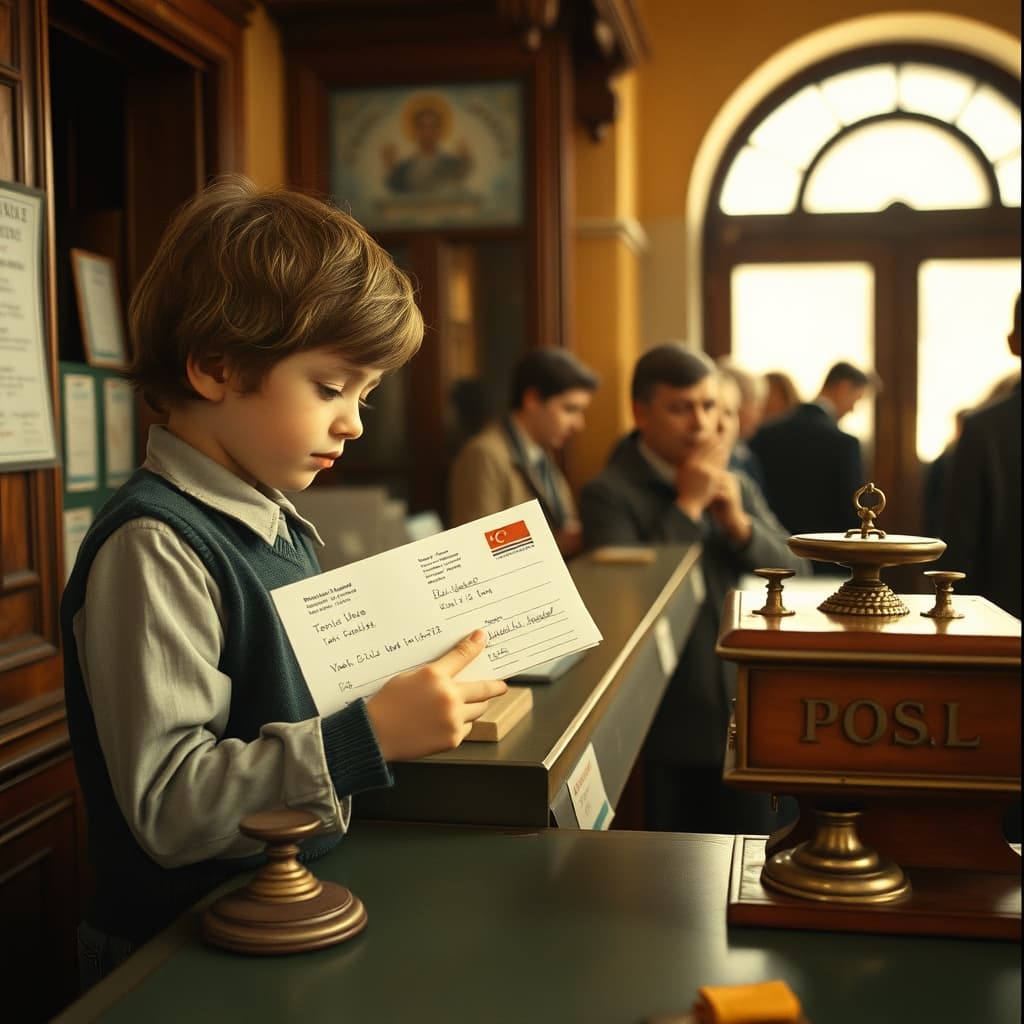
An old post office did more than make distant places feel close. It turned a private message into a sequence of public, practical decisions. The letter had to be written, folded, placed in an envelope and addressed clearly enough to survive a journey beyond the sender’s sight. At the counter it might be weighed, stamped and accepted; afterwards, the family could only wait. For a schoolchild asked to post an important envelope, that short errand could feel like a serious commission.
Postal arrangements differed by country, period and type of item. A letter, registered item, parcel or telegram did not follow one universal routine, and rates changed. A useful memory therefore begins with what can actually be established: the post office, approximate date, destination, service requested and any surviving receipt or envelope. The broader atmosphere matters, but it should not replace those details.
Before the Counter Came the Address
Addressing was a form of practical literacy. Names, street information, district and destination had to be arranged so that people and sorting systems could interpret them. Adults sometimes wrote the address for a child; at other times the child copied it carefully from a notebook. A crossed-out line or corrected number shows responsibility rather than failure. It records the moment when family knowledge had to become legible outside the home.
The envelope also carried choices about privacy. The message was sealed, yet the names and destination remained visible. Return details could offer a route back if delivery failed. None of these features guarantees that a particular item arrived, but together they show how a household prepared news to enter a much larger network.
The Counter Made Distance Measurable
At the counter, weight and service translated distance into a fee and a procedure. The clerk’s questions could reveal a missing detail or clarify whether the sender wanted an ordinary or traceable service. Stamps were not merely decorative souvenirs; their value and cancellation belonged to the working life of the letter. A child watching the process learned that communication depended on accuracy, payment and people doing linked tasks.
Queues had their own quiet rhythm. Customers arrived with different needs, some quickly resolved and others requiring forms or explanation. The apparent bustle was therefore not a single ritual. A careful account remembers uncertainty as well as order: the wrong queue, insufficient postage, an illegible address or a return visit were part of postal life too.
Posting Was an Act of Trust
Once accepted or placed in the correct box, the envelope disappeared from family view. Collection times printed nearby might set expectations, but they were not a live tracking screen. The sender trusted clerks, sorters, transport workers and delivery staff they would never meet. A receipt, when issued, narrowed uncertainty without eliminating the emotional wait for a reply.
For children, being sent to the post office could mark growing independence. The task involved keeping the envelope clean, holding money safely, listening at the counter and returning with change or proof. Not every child experienced the errand as pleasant or safe, and distance, disability, weather and crowded premises shaped access. Nostalgia is more accurate when it includes that practical effort.
Preserve the Journey, Not Just the Stamp
A surviving envelope can be documented front and back, with dimensions, postmarks, handwriting and damage recorded before any intervention. Personal addresses and private correspondence require care when digitised or published. Stamps should not automatically be detached, because their position and cancellation may help explain the item as a whole. Conservation advice is preferable to household cleaning or adhesive repair.
Oral history can add the errand around the object: who wrote the address, which branch was used, why the letter mattered and how long the reply seemed to take. These recollections should be attributed and uncertainty retained. A child may remember the seriousness of the task more clearly than the exact postal rate, and that distinction strengthens rather than weakens the archive.
For a Digital Nostalgia Archive, the old post office is most revealing when followed step by step. Its quiet bustle joined handwriting, clerical knowledge, transport and family trust. The small figure carrying an envelope after the school bell did not control the whole system. Yet for a few careful minutes, the family’s connection to someone far away rested in that child’s hands.