 Eski Pano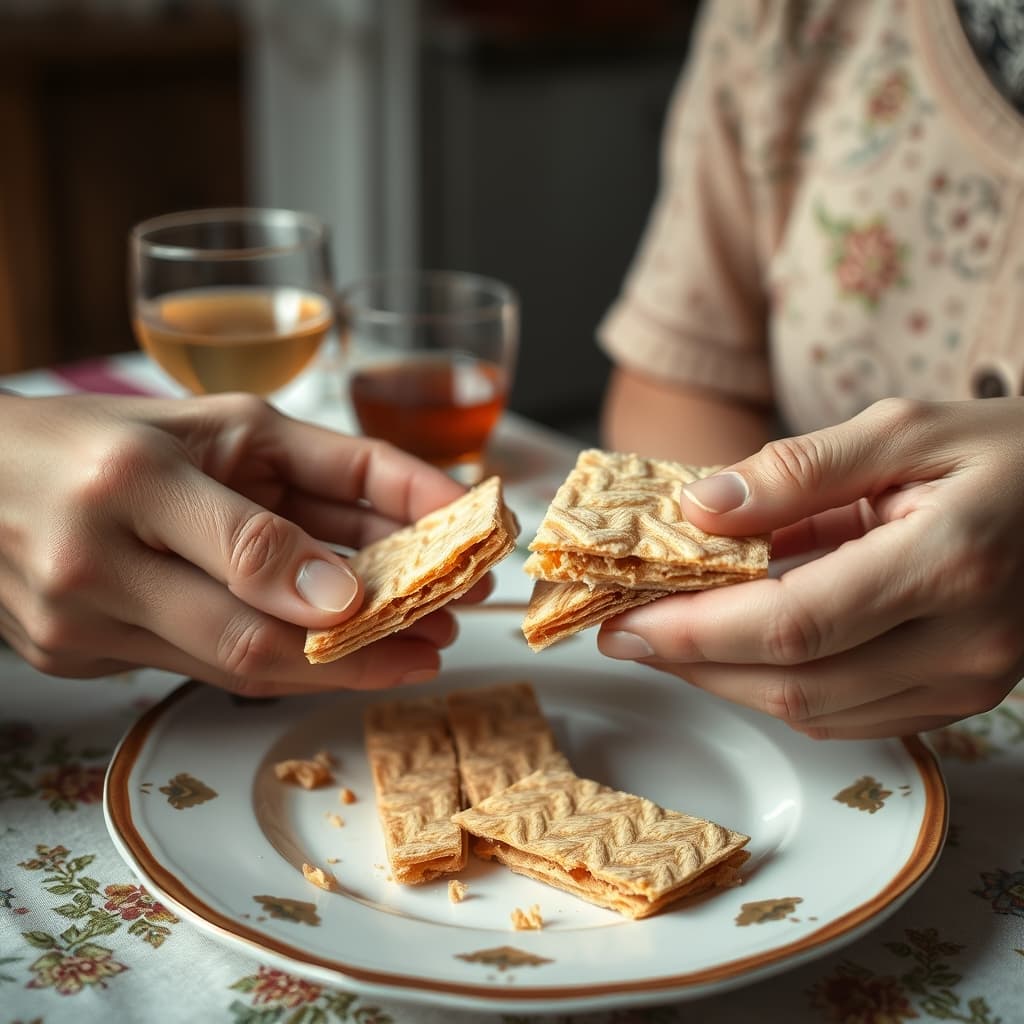
Kağıt helva announces itself as much through handling as through taste. The light wafer can crack when lifted, scatter crumbs when divided and soften as it is eaten. On a shared table, breaking it becomes a small event: someone holds it carefully, another waits for a piece and the last fragments collect on the plate. Its presence need not fill a whole house with powerful aroma to make the moment memorable.
The Turkish name belongs to a familiar wafer confection rather than literal paper. Products and household ways of serving it vary, so a cultural account should describe the example being remembered instead of claiming one universal composition. Its thin layers, lightness and sweetness give enough sensory substance for an article without inventing an origin story or a precise recipe.
The Break Was Rarely Perfect
A large piece could resist tidy division. One portion broke wider, another thinner, and small fragments escaped the intended line. The person distributing it decided how to make the portions feel fair. Children might follow the largest piece with their eyes, while an adult took the broken end. These are possible patterns of sharing, not evidence that every family performed the same ritual.
That unevenness distinguished it from a dessert already cut into equal servings. The table adjusted as the wafer broke. A plate or cloth caught crumbs, and a hand protected a piece from further damage. The confection’s fragility made cooperation visible: moving, dividing and passing required attention even though the food itself seemed almost weightless.
Texture Carried More Than a Claim About Scent
The initial crispness could be followed by a softer mouthful as thin layers met moisture. Sweetness and a mild baked character might be noticed, depending on the product and its condition. An article should not turn a faint or remembered smell into a dramatic room-filling phenomenon. Taste memory can be strong because touch, sound and expectation arrive together, not because aroma is unusually intense.
Storage and time changed the experience. A wafer kept in humid surroundings could lose crispness; a crushed package changed how it was served. These details matter when relatives disagree about what the remembered confection felt like. They may be recalling different products, conditions or accompaniments rather than one person having an unreliable memory.
The Accompaniment Changed the Occasion
Kağıt helva might be eaten alone or with another food, including ice cream in some serving traditions. Such combinations change handling, temperature and texture. They should be attributed to the household or seller concerned. Do not replace the original Turkish setting with an unrelated local dessert in translation; the name and material character are part of what the archive preserves.
At home, sharing could be casual rather than ceremonial. A packet opened after an outing, a treat brought by a visitor or something placed beside tea could create the same attention around dividing. The reason for its arrival should come from testimony. A modest snack does not need to be promoted into a major holiday custom to deserve documentation.
Packaging offers evidence about product, seller and period, but dates and claims need verification. Photograph it separately from the food and record readable information accurately. Avoid presenting a modern package in a reconstructed scene as historic. Ingredients and allergens vary, so current labels matter for anyone recreating the serving; a remembered confection is not automatically suitable for every guest.
Photographs can show the intact wafer, the first break, the unequal portions and the crumbs left behind. These stages tell more than a flawless styled plate. Ask permission before identifying family participants, and distinguish a present-day demonstration from a genuine historic photograph. The archive can retain both without blurring their status.
A Digital Nostalgia Archive finds kağıt helva’s sharing culture in these small material decisions. The sound of the break, a piece protected between fingers and the redistribution of fragments explain why it stayed in memory. Preserving that specific texture is more convincing than giving the confection an exaggerated perfume or an idealised family story. The light wafer mattered because people made room for one another while passing something that would not divide neatly.