 Eski Pano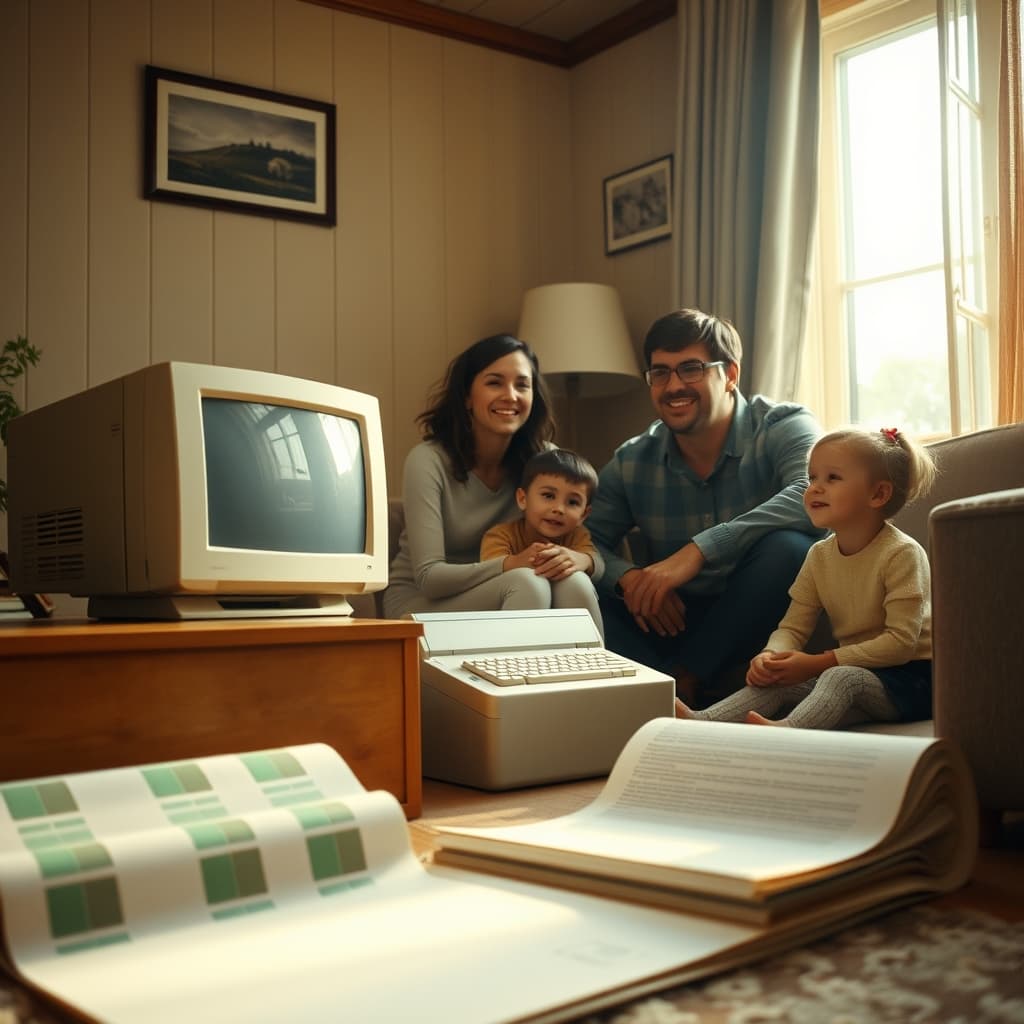
There was a time when technology did not whisper; it sang, screeched, and demanded the attention of the entire household. In the late 1980s and early 1990s, the arrival of a personal computer in the living room was a monumental event, but nothing crowned this digital revolution quite like the dot-matrix ribbon printer. It was a heavy, beige box that did not merely output documents; it performed them. To print a single page was to initiate a sacred family ritual, a shared experience of anticipation that bound us together in a way modern instant technology never could.
The Mechanical Symphony of the Living Room
The process began with a collective gathering. When a school report, a pixelated banner, or a simple greeting card was ready to be brought into the physical world, the family would assemble in the living room. The printer sat on a sturdy wooden desk, connected by a thick, grey parallel cable. The paper was not a stack of loose sheets, but a continuous, fan-folded ream with green-and-white stripes and perforated margins lined with holes. Feeding this paper into the tractor mechanism was an art form in itself. One wrong alignment, and the entire print run would jam.
Once the print command was sent, the magic began. The printer did not glide silently. It roared to life with a rhythmic, high-pitched *zzzt-zzzt-zzzt* as the print head struck the ink-soaked ribbon against the paper. It was a mechanical symphony that echoed through the hallways. We would stand around the machine, watching the text emerge line by line, pinprick by pinprick. There was a quiet, breathless excitement in watching digital thoughts materialize into physical reality.
The Tactile Ritual of the Ribbon
What made those days truly unforgettable was the sensory richness of the experience. The smell of a ribbon printer is a memory etched deeply into the minds of a generation. It was a unique blend of warm plastic, ozone, and the distinct, slightly sweet aroma of fresh typewriter ink. When the print head grew faint, we did not simply buy a new cartridge; we took out the black plastic ribbon cassette, wound it manually with a small wheel, or even sprayed it with WD-40 or re-inked it to squeeze out a few more precious pages.
Tearing the paper was the grand finale. Once the printing was complete, the continuous sheet had to be carefully detached along the perforated lines. The real joy, however, lay in stripping away the perforated side strips. Zipping those hole-punched margins off in one smooth, satisfying motion was a tactile pleasure that modern touchscreens can never replicate.
Finding Refuge Under the Plane Tree
In our hyper-fast, silent, and instantly gratifying digital age, remembering the era of ribbon printers is like seeking refuge under the cool shade of an ancient plane tree amidst the suffocating noise of a crowded market. Today, we print wirelessly from our phones in a fraction of a second, barely glancing at the result. The magic is gone, replaced by sterile efficiency.
The memory of those slow, loud printers acts as a sanctuary. It reminds us of a time when technology required patience, when we had to wait for things, and when that waiting was done together. The plane tree represents that slow, rooted connection to the physical world—a place to pause, breathe, and appreciate the craftsmanship of creation.
Why We Cannot Forget the Slow Hum
We have not forgotten the days of ribbon printers because they represent the childhood of our digital lives. They belong to an era when technology was not an isolating screen in our pockets, but a communal hearth around which the family gathered. The quiet excitement of those living room sessions taught us the value of patience and the beauty of tangible things. As we navigate the overwhelming rush of the modern digital bazaar, the rhythmic hum of the dot-matrix printer remains a comforting echo, reminding us of the sweetness of a slower, shared journey.