 Eski Pano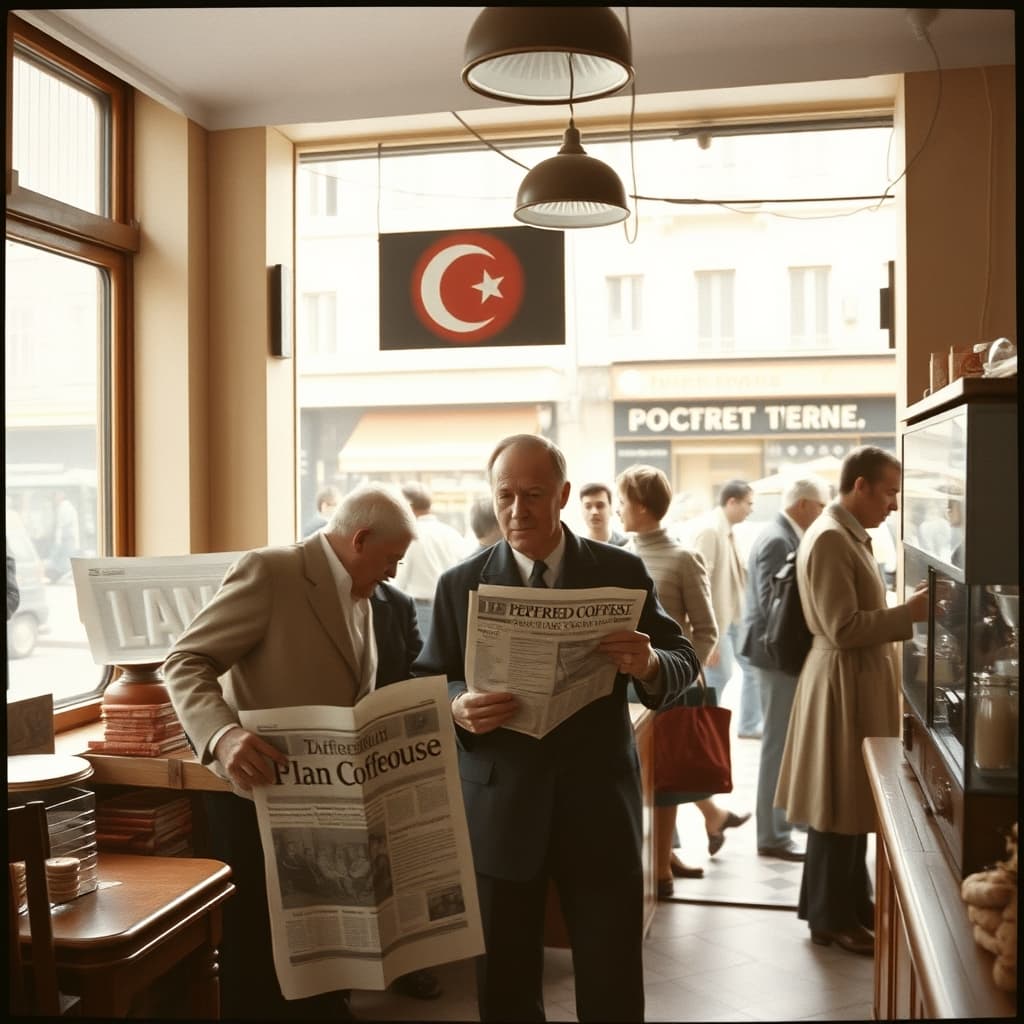
News rarely remained inside a neighbourhood coffeehouse. A radio bulletin, newspaper headline, traveller's account, job lead, match result, price change, or municipal notice moved from table to shop, workshop, home, and street. By evening, the information might have gained explanation, correction, exaggeration, or a new audience. The coffeehouse functioned as one node in a wider local communication network.
Coffeehouses differed by town, clientele, decade, ownership, political climate, and nearby trades. Some served workers, drivers, craftspeople, retirees, migrants, or players of particular games. Others hosted reading, music, association meetings, or informal hiring. Treating every venue as the warm heart of a neighbourhood erases conflict, surveillance, debt, exclusion, and the many residents who rarely entered.
Several Media Met at One Table
A newspaper might be read aloud or passed between customers. Radio supplied scheduled news and sports, while television later changed the room's attention. Handwritten notices advertised rooms, work, goods, funerals, or meetings. Personal testimony added information faster than formal media could, especially about a local illness, broken water pipe, missing person, or employer seeking labour.
Speed did not guarantee accuracy. A repeated statement could sound reliable because it came from a familiar speaker. Headlines could be misunderstood, broadcasts partially heard, satire treated as fact, and political pressure shape what was safe to say. Good historical work compares date, outlet, original document, other witnesses, and later corrections. Nostalgia is not a substitute for media literacy.
Information Could Become Practical Aid
A job opening, affordable room, funeral announcement, blood request, transport disruption, or family emergency could mobilise help. Customers collected money, found a vehicle, contacted a relative, or directed someone to a skilled repairer. Such support was meaningful, yet it depended on reputation and belonging. People outside the dominant circle might receive less information or assistance.
Coffeehouse access was often gendered. In many places and periods, men occupied the tables while women exchanged news through homes, doorways, markets, workplaces, salons, associations, and family visits. Children, minorities, newcomers, and political outsiders also experienced the venue differently. Calling one male-dominated room the whole neighbourhood's voice makes other communication networks disappear.
Warmth Came with Boundaries
Smoke, noise, gambling, unpaid tabs, political argument, and long absences from home shaped some coffeehouse memories. Workers faced late hours, hot equipment, cash handling, and conflict management. Tea service, cleaning, newspaper subscriptions, heating, and rent sustained the apparent spontaneity. The social atmosphere was produced through labour and rules.
Today's gated residential sites organise contact differently through security desks, messaging groups, management offices, lifts, car parks, and private amenities. Their design may reduce spontaneous street encounters, but residents still create networks. Digital groups spread urgent information rapidly while also enabling misinformation, harassment, and exclusion. The comparison should examine architecture and governance rather than declare one era morally warmer.
Privacy expectations have changed. A coffeehouse announcement about debt, illness, address, or family conflict could travel without consent; a digital message can now persist and reach far beyond its intended group. Responsible community communication verifies urgent claims, limits personal data, obtains permission, corrects mistakes visibly, and provides routes for residents who do not use the dominant platform.
A Digital Nostalgia Archive can connect coffeehouses with licences, newspapers, radios, noticeboards, account books, association files, street maps, photographs, and oral histories from owners, workers, customers, women, neighbours, and people who felt excluded. News felt warm when it arrived with a known face and practical help. Preserving that warmth requires keeping rumour, unequal access, labour, privacy, and today's different forms of connection in the same honest frame.