 Eski Pano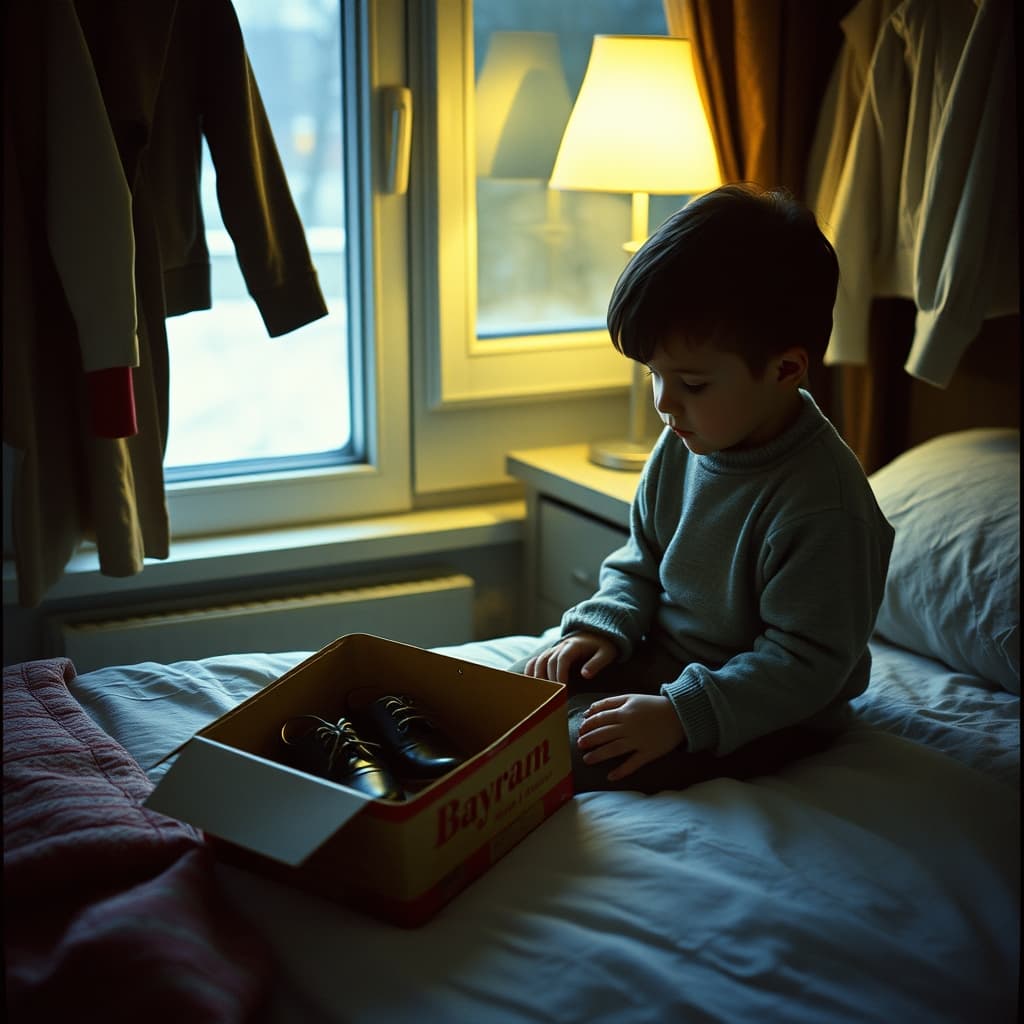
New shoes bought for Bayram could wait beside a child's bed for days, still holding the smell of leather, polish, rubber or cardboard. Their importance came partly from postponement. They were not worn out of the shop and immediately absorbed into ordinary life. The family saved them for a morning of visits, greetings and carefully chosen clothes, turning footwear into a marker of time.
The purchase began with a household budget. Children looked at shop windows, but adults calculated price, durability and how quickly growing feet might make the pair too small. Winter added another concern: soles needed grip, uppers needed to resist rain, and socks altered the fit. A beautiful shoe that pinched or slipped could spoil a long day of walking between relatives.
The Shop Fitting Was a Practical Negotiation
Shoe sellers measured, pressed the toe area and asked the child to walk. Families sometimes preferred extra room for growth, though excessive space caused friction and instability. Width mattered as much as length. Laces, buckles and stiff seams had to suit the wearer, especially for children who would spend hours standing and moving.
Choice also reflected gendered expectations and available stock. Patent surfaces, dark leather, boots or formal styles carried different ideas of neatness. Not every child received a new pair, and hand-me-down shoes were common. Shared excitement should not be used to hide the embarrassment or exclusion that unequal purchasing power could create.
Waiting Increased the Value of the Object
At home, the shoes might be tried again, polished and returned to their box. Children imagined the route they would take and resisted, or failed to resist, wearing them indoors. This controlled delay made Bayram distinct from an ordinary Sunday. The object became a promise held in reserve.
On the morning itself, new shoes joined washed faces, pressed clothes, sweets and visits. Adults warned children away from puddles and muddy streets. The first crease or scuff could cause distress because it seemed to damage more than material; it marked the end of perfect anticipation. Soon, however, the pair became part of play and daily travel.
Footwear Records Both Celebration and Labour
Behind the polished pair were manufacturing, retail and maintenance. Leather cutting, stitching, lasting, gluing, transport, display and sales all contributed. At home, cleaning and repair extended life. A cobbler could replace a heel, reinforce a sole or adjust a fastening, allowing festive shoes to become school shoes and later pass to another child.
Preserving old children's footwear requires accurate provenance. Size, material, maker, repair marks, owner, location and date should be recorded. Shoes should not be filled with newspaper that may transfer acids, nor coated with household products without conservation advice. Stable support helps retain shape while allowing existing wear to remain readable.
A Digital Nostalgia Archive can connect a pair to receipts, shop photographs, family albums, cobbler tools and testimony about the first day of use. The emotional force of Bayram shoes lies in a compact sequence: desire at the window, negotiation in the shop, restraint at home and movement through crowded streets. The memory persists because children experienced time through the object. A closed box meant “not yet”; the laces tied on the holiday morning meant the long-awaited day had finally begun.