 Eski Pano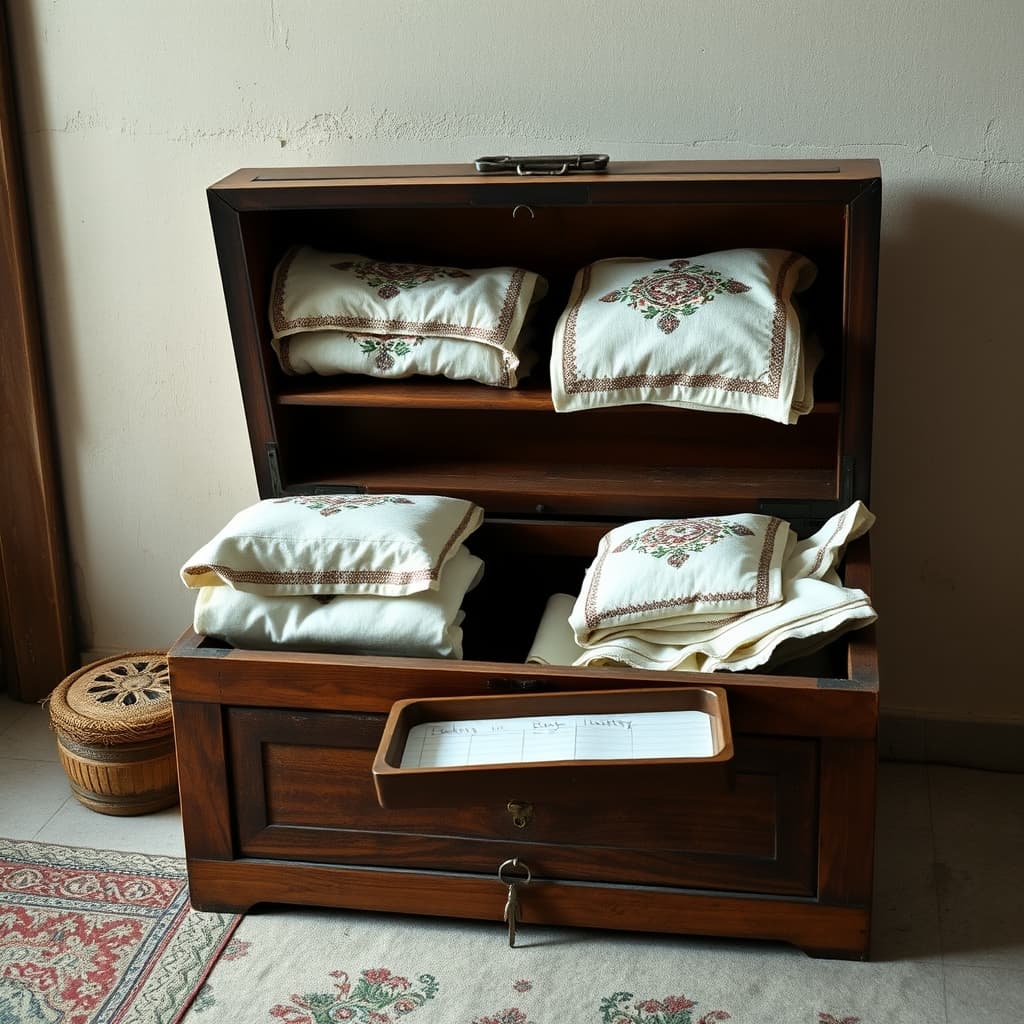
A dowry chest often appears to contain one story until its layers are lifted. Folded textiles occupy the top, smaller bundles settle into corners, and papers or fragments survive beneath a removable tray. At the bottom, dust and scent mingle with clues: a tailor's note, a name written in pencil, a key that no longer fits, or the pale outline left by an object removed long ago.
Interest in these chests has returned through interior design, collecting and family-history research. Their visual appeal is understandable, but a chest should not become a generic symbol of “the past.” Turkish dowry customs varied greatly by region, community, income and generation. Reliable interpretation begins with the particular household rather than a ready-made romantic story.
Construction Can Reveal Place and Use
Wood species, joinery, hinges, lock plates, feet and interior trays offer evidence. Some surfaces were painted, carved or covered; others relied on strong boards and iron fittings. Repairs can show how long the chest remained useful. A replacement hinge or patched base is not automatically damage to erase; it may record transport, marriage, relocation and reuse.
Hidden compartments attract attention, yet not every narrow space was designed for secret treasure. Trays organised jewellery, documents and sewing tools; false bottoms require careful confirmation. Forcing panels in search of a story can destroy both structure and evidence. Examination by a furniture conservator is safer than amateur probing.
Textiles Need Different Care from Wood
Linens, embroidery, wool and silk respond differently to humidity, insects, light and pressure. Keeping fragile textiles tightly folded in an untreated wooden box may expose them to acids, staining and permanent creases. Clean hands, archival tissue, suitable support and periodic condition checks are preferable. Mothballs and strong fragrances can be hazardous and may leave persistent residues.
The chest itself also needs a stable environment. Damp encourages mould and corrosion; extreme dryness can open joints. Aggressive polishing may alter original finishes and transfer products to fabric. Dust should be removed cautiously, and any active insect damage isolated and assessed before the object enters a collection.
A List Can Restore Separated Relationships
Dowry inventories, letters, photographs and oral accounts connect objects that later became scattered among relatives. A list can identify who embroidered a cover, when a blanket was purchased or which item was intended for daily use. Even crossed-out entries reveal changing plans and budgets. Digital copies allow relatives to contribute information without repeatedly handling fragile originals.
Oral history should record uncertainty. “Probably made by an aunt” is different from a dated statement by the maker. Names, maiden names, locations and the identity of the speaker matter. The archive gains credibility when it distinguishes evidence, memory and inference rather than blending them into one polished legend.
A Digital Nostalgia Archive can photograph the chest from every side, map the position of contents and link each item to testimony and conservation notes. The renewed appeal of the dowry chest then becomes more than decoration. It offers a structured way to examine unpaid labour, household aspirations, marriage expectations, craft and mobility. What survives at the bottom is rarely a complete secret. More often it is a set of modest relationships waiting to be recorded before the people who can explain them are gone.