 Eski Pano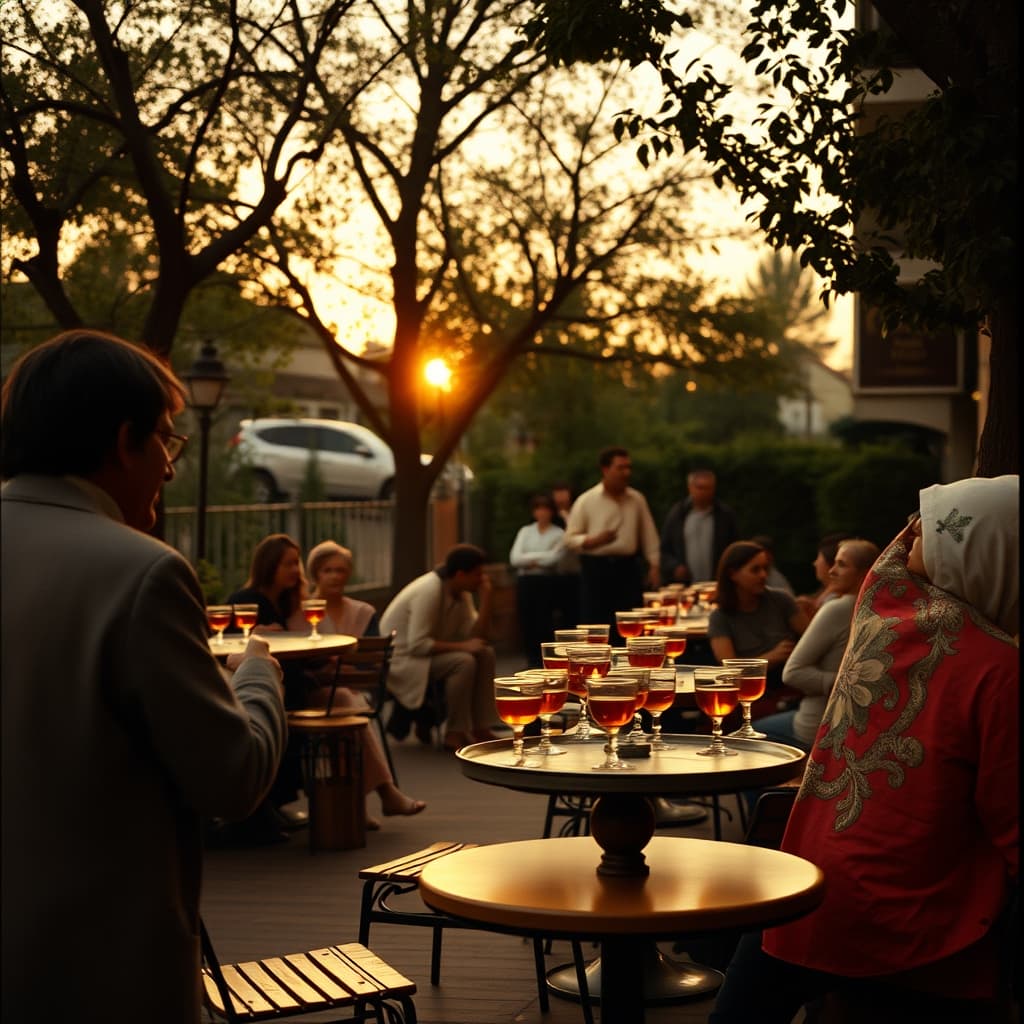
A neighbourhood tea garden became most itself in the late afternoon, when shade reached the tables and the heat began to release the pavement. Chairs were pulled into small circles, tea glasses caught the remaining light and familiar faces arrived without requiring a formal invitation. Friendship accumulated through repeated visits rather than a single memorable event.
Tea gardens differed by city, district and period. Some occupied municipal parks or seaside promenades; others belonged to private businesses, associations or family-run establishments. Trees, canvas awnings and proximity to water shaped comfort. Their apparent simplicity depended on rent, permits, water, electricity, furniture and a reliable supply of tea, sugar and clean glassware.
The Table Offered a Semi-Public Room
A group could remain together while still observing the wider neighbourhood. Children moved between chairs, older visitors greeted passers-by and newcomers joined when space allowed. Unlike a private salon, the table sat within public view. Conversation therefore followed informal rules about volume, politics, family matters and how long a seat could be occupied after the last order.
Affordability mattered. A glass of tea could make social time possible without the cost of a full meal. Yet even a modest price excluded some people, and gender, age or local custom affected who felt comfortable sitting alone. Nostalgia should not assume that every resident had equal access to the same table.
Service Work Sustained the Leisure
While guests relaxed, workers carried loaded trays across uneven ground, refreshed boiling water, washed glasses and managed accounts. Tea required correct strength and temperature. Outdoor service added dust, wind, insects and sudden rain. A dropped glass or unstable chair created hazards that staff had to address quickly.
Seasonal workers and family members often absorbed long evening hours. Their names rarely appear in photographs, although their pace determined the experience. A history of the tea garden should include wages, shifts, kitchen arrangements, sanitation and closing work, not only stories told by customers.
The Garden Followed the Summer Clock
Daylight, ferry or bus schedules, evening breezes and neighbourhood routines influenced arrival and departure. Radios or live music sometimes contributed to the atmosphere, but sound could disturb nearby homes. Lighting extended service after sunset while attracting insects and changing the character of the space.
Furniture itself shaped the social arrangement. Light chairs could be moved when another friend arrived, while small tables kept groups close enough for conversation. Repairs, paint layers and mismatched sets recorded years of use. Accessibility depended on level paths, stable seating and space between tables, features that were not always provided in older gardens.
Many gardens disappeared through redevelopment, traffic growth, changing leisure habits or new commercial formats. Others survived with plastic furniture, screens and expanded menus. Change does not automatically make them less authentic; it shows how public sociability adapts to new costs and expectations.
A Digital Nostalgia Archive can map tea gardens through menus, receipts, staff photographs, municipal records, oral histories and ambient sound. Dates, ownership and exact location should be verified because fond memories often merge several places. These summer evenings appear bright in retrospect because they offered a repeatable pause between work and home. Their value came from an infrastructure humble enough to seem invisible: shade held in place, water kept hot, glasses returned clean and a table left open for the next conversation.