 Eski Pano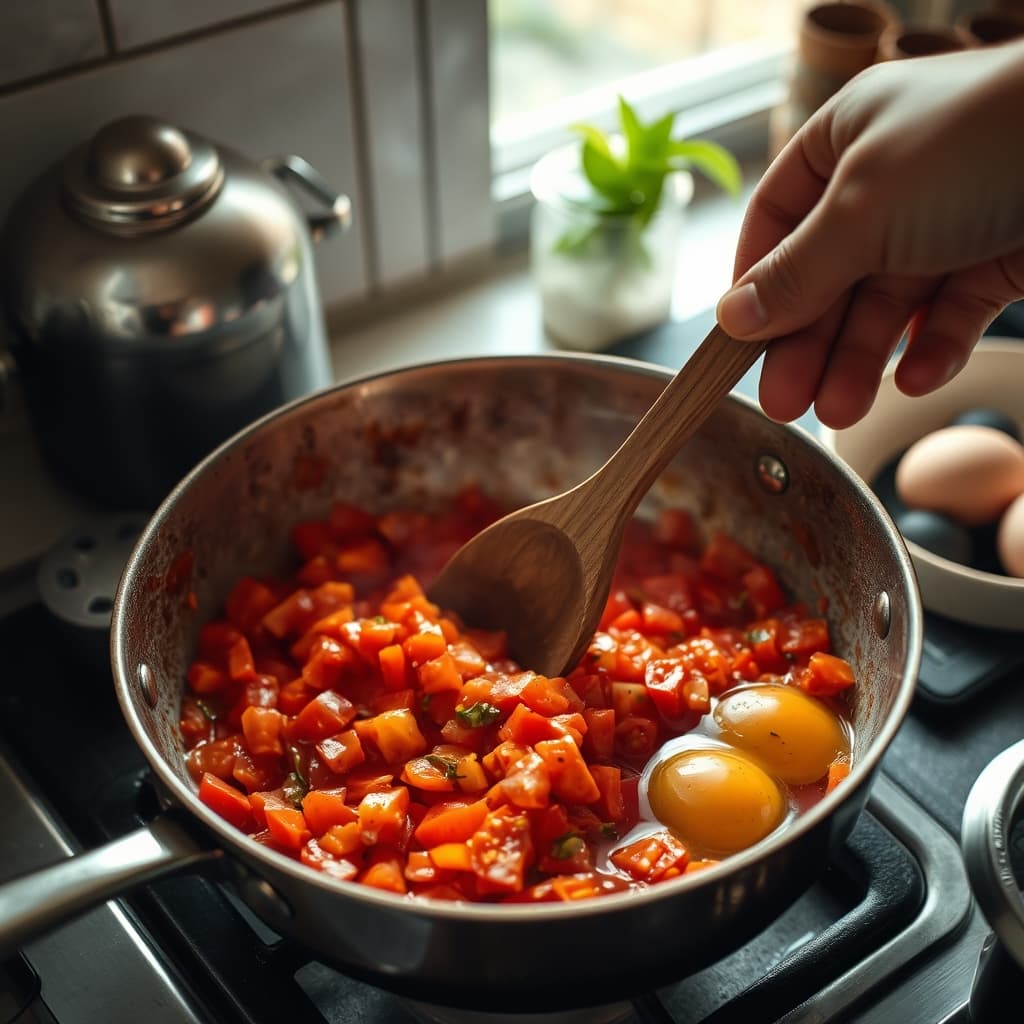
Before eggs changed the texture of summer menemen, the cook watched the tomatoes. Juice gathered between pieces, steam rose and the spoon revealed whether the pan still held separate chunks or a thicker mixture. This was a small act of judgement repeated with each batch. A familiar breakfast could begin from a different tomato every day, making attention more useful than a rigid clock.
Menemen varies between households and regions. Tomatoes may be chopped, grated or peeled; peppers, onions, fats and seasonings differ, as does the treatment of eggs. The article follows the tomato stage without declaring one version correct. It recalls a kitchen habit: noticing what the ingredient is doing before deciding what comes next.
Cutting Changed What the Spoon Encountered
Large pieces could remain visible longer, while smaller cuts or grated tomato created another texture. Skin and seeds contributed to the result, depending on what the cook retained. These choices were not merely preparation shortcuts. They shaped whether a diner encountered distinct tomato pieces or a more continuous base around the eggs.
The cutting method may also reflect tools and time. A grater, small knife and chopping board each organise work differently. A remembered hand movement should be linked to an actual cook and setting where possible. It cannot identify a whole region’s method simply because it appears in one family kitchen.
Juice Made Timing Visible
Tomatoes differ in water, flesh, ripeness and flavour. Once heated, the amount of liquid in the pan influences the next decision. One cook may wait for a thicker base; another may prefer enough juice for bread. The desired result matters more than treating all visible liquid as a mistake.
The spoon provided information. Drawing it through the mixture exposed the pan briefly or left a channel that filled at once. Watching that movement helped a cook describe readiness without necessarily measuring it. Such cues belong in a food-memory record alongside ingredients, because a list alone cannot explain the intended texture.
The Same Tomato Behaved Differently in Another Pan
A wide pan spread the mixture differently from a narrow one. Batch size, heat source and the way the cook stirred also affected the experience. A family recipe transferred to new equipment might therefore need judgement even when the quantities remained familiar. That adaptation is part of continuity, rather than evidence that the old method has been forgotten.
A shared meal could change the amount halfway through preparation. Adding tomatoes or planning more eggs altered the mixture and its timing. Record such adjustments as particular household choices, without assuming every cook could easily expand a meal or had the same ingredients available.
The Egg Marked a Decision, Not a Universal Deadline
Adding eggs meant deciding that the tomato base had reached the desired state. How eggs were incorporated then created another household variation: stirred, folded or left partly distinct. A recollection of softness describes preference, but present-day preparation still needs hygienic handling and cooking appropriate to the diners.
This immediate-use dish should not be confused with tomato preservation. A summer kitchen might also prepare jars, but their safety depends on tested preservation methods. The fact that a mixture works in a breakfast pan does not establish that it can be stored by a remembered bottling practice.
Bread Revealed the Final Balance
At the table, bread tested the relationship between liquid and substance. A piece could gather sauce, carry a soft portion or need a spoon beside it. The form of serving changed what diners remembered: a common pan, individual plates or bread placed separately. None of these arrangements should be imposed as the sole authentic way.
To preserve this knowledge, ask the cook what they looked for before adding eggs and ask diners what they expected in the finished dish. A recipe notebook may record amounts; testimony can explain why those amounts changed. Naming the person who shopped, chopped and watched the pan restores work that a quick meal can hide.
Summer menemen recalls forgotten habits through these judgements made close to the stove. The tomato was observed rather than treated as a constant, and the meal took shape through cutting, waiting and adjustment. Keeping those decisions in the record gives the first taste a practical history: someone read the juice in the pan before the rest of the table tasted it.