 Eski Pano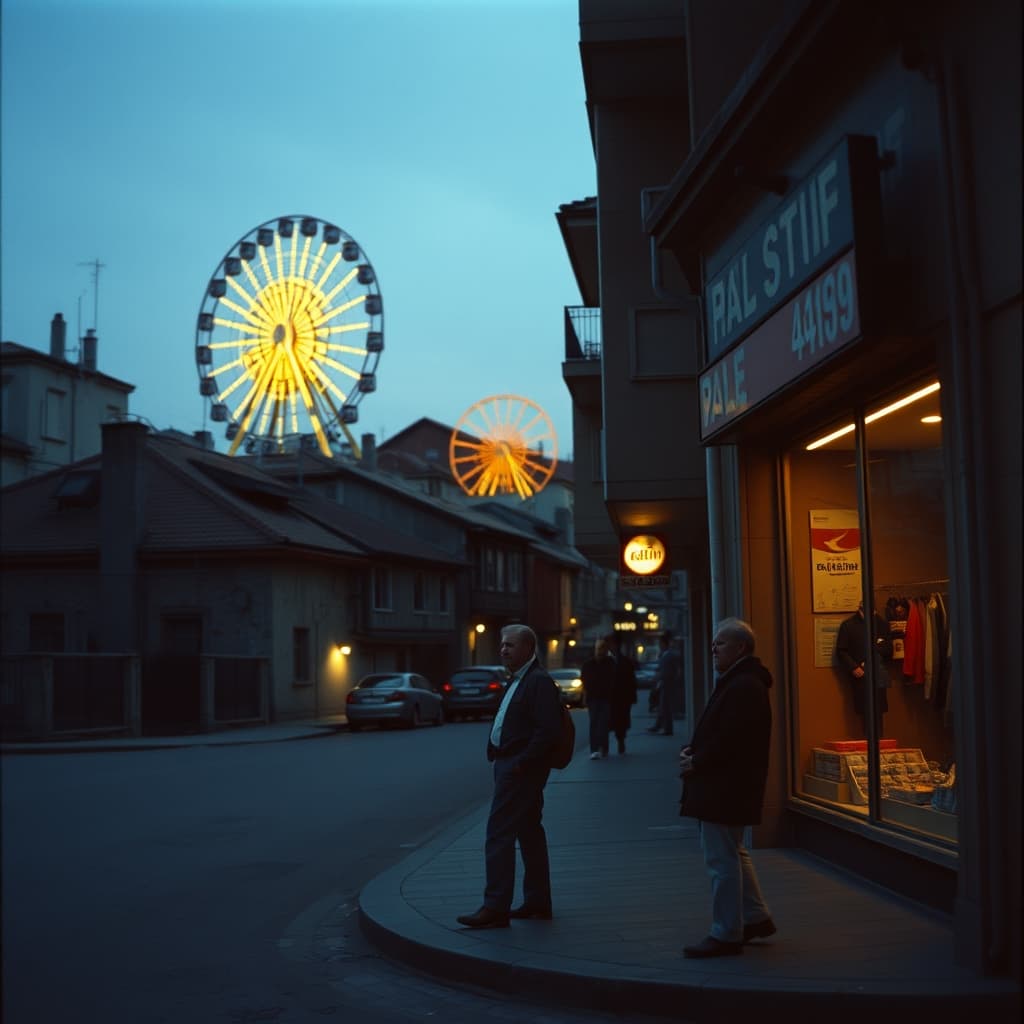
You did not always need a ticket to carry an amusement park home in memory. From a street corner, a bus window or the gap between buildings, its lights could appear for a few seconds and then vanish. A bright outline moved above a roof; coloured reflections touched a window. The park became part of the city before the observer entered it, and sometimes without entering at all.
The view depended on the actual site. A large permanent park, a modest neighbourhood lunapark and a travelling collection of rides offered different outlines. A remembered wheel or rotating light should not be assigned to a named attraction without evidence. What can be explored carefully is how a luminous place became recognisable through repeated encounters along ordinary routes.
The Roofline Hid the Ride and Kept the Colour
From outside, buildings and walls removed much of the machinery from view. The upper section of a ride might remain visible while its passengers, queue and operator disappeared. This partial view made the light seem detached from the effort below it. A child could remember a moving crown of colour without knowing the name of the machine that carried it.
Sightlines changed as the observer moved. A few steps could close the gap; another turn could reveal the same lights from a new angle. Familiarity came from learning where to look. The corner was memorable because something briefly appeared there, much as a distant clock tower can mark a route without becoming its destination.
A Passing Window Made a Small Moving Picture
Seen from a vehicle, illumination arrived in fragments. Glass added reflections from inside, and motion shortened the encounter. A person looking away could miss it entirely. When recollections describe a sudden flash of the park, the brevity may belong to the journey rather than to the lighting system.
The window also mixed private and public scenes. A passenger’s face could sit over the coloured outline in reflection. A shop window might return a dimmer version to the pavement. Such layered views explain why an evening image can remain vivid without being a clear record of the park itself.
Watching Outside Was Its Own Experience
Some people waited nearby for friends, watched while walking home or stood where the rides rose into view. Others had no wish or means to enter. Being able to see the lights did not make admission equally accessible, but it did allow the attraction to occupy a wider field of attention than its ticketed area.
Those outside also heard or saw different things from customers. A resident might find the repeated brightness intrusive; a passer-by might enjoy one brief glimpse. Both responses belong to the same urban scene. Describing the park as a shared pleasure should leave room for people whose windows received more light than they wanted.
The Dark Interval Made the Landmark Noticeable
When the lights were off, the park could retreat behind walls and roofs. Its daytime structures might seem smaller or less coherent than their illuminated outline. Maintenance, opening hours and seasonal use changed that presence. A dark evening therefore cannot be taken as proof that a site had closed permanently.
Photographs are useful when they include the surrounding street as well as the attraction. Record the viewpoint, direction and known date, then compare building heights and obstructions. Exposure can intensify or smear the lights, so an image should not be treated as a measurement of what an unaided eye saw.
The old lunapark left a mark on city memory partly because it exceeded its boundary. It accompanied journeys, appeared between roofs and gave an ordinary corner a second identity after dark. Remembering that outside view restores a modest kind of wonder: not the whole evening at the rides, but the moment someone knew where to glance and found the city briefly rearranged by colour.