 Eski Pano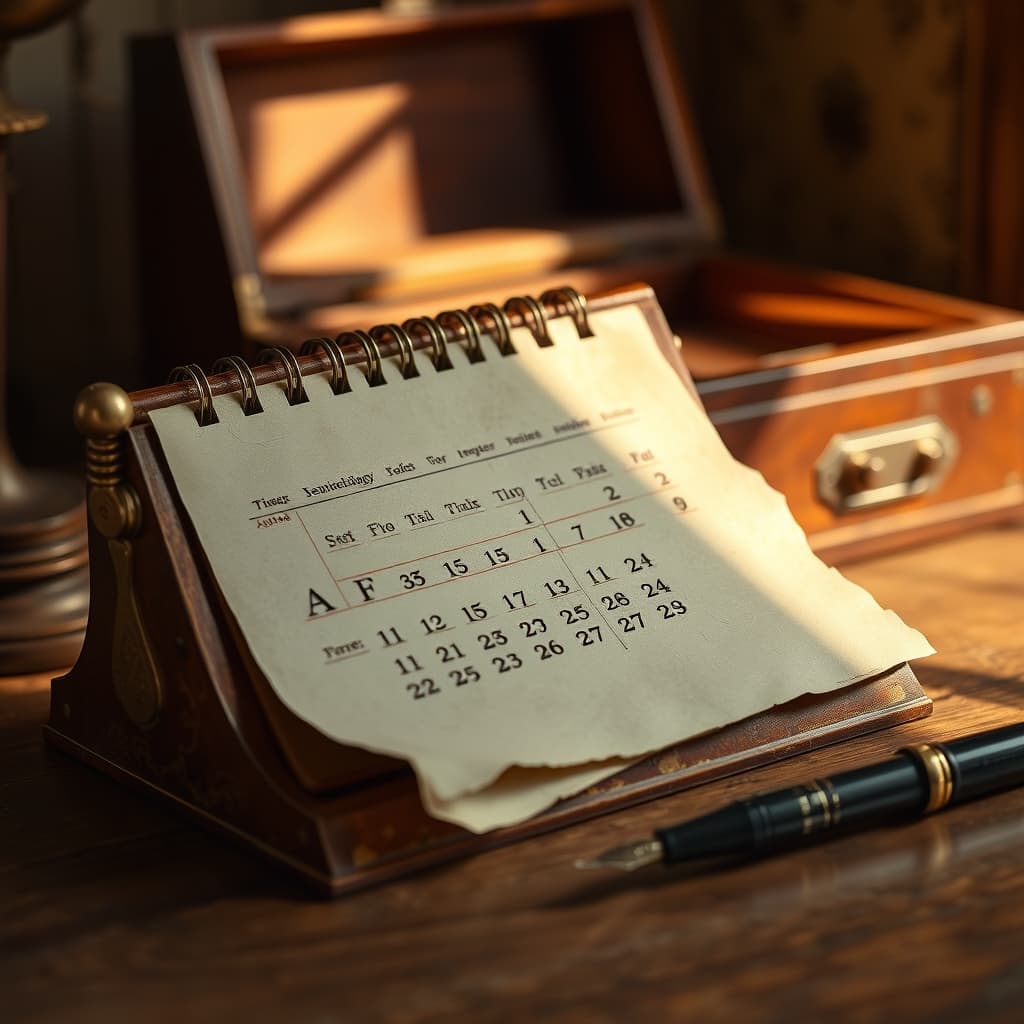
A desktop calendar holder found at the bottom of a chest can look insignificant beside jewellery, textiles, or formal documents. Yet this compact object once stood where dates became daily decisions. Its cards or paper leaves were turned by hand; appointments, paydays, journeys, school terms, and religious or public holidays were measured against it. Removed from the desk, it preserves not only a design but a working rhythm.
Calendar holders varied in material and mechanism. Some used metal frames, wooden blocks, card stands, rotating drums, or replaceable paper pads. Wear often appears where fingers changed the date, where a pen rested, or where the base rubbed against a desk. A surviving set may be incomplete, and a missing month or bent clip can reveal use more honestly than a perfectly restored example.
The Desk Gave the Object Its Meaning
On a shop counter, office table, teacher’s desk, or household writing surface, the calendar shared space with receipts, letters, stamps, spectacles, and keys. Its position made it public enough to consult but personal enough to collect small marks. A pencilled circle, faded telephone number, or ink stain may connect it to work without identifying an owner. Responsible interpretation distinguishes such material evidence from an invented biography.
Finding the holder in a chest introduces another chapter. It may have been stored because it was outdated, attractive, useful as a keepsake, or simply too solid to discard. Chests gathered objects for many reasons, so discovery alone does not prove sentimental importance. The surrounding papers, wrapping, dust patterns, and family recollections can help establish context, but uncertainty should remain visible when evidence is limited.
Renewed Interest Begins with Material Detail
Collectors and designers may value the holder for typography, proportions, mechanical ingenuity, or signs of use. Perpetual models remain functional because the day, date, and month can be rearranged; dated paper models instead preserve a particular year. Neither type should be cleaned aggressively. Water, polish, adhesive, or abrasive products can damage paper, patina, paint, and printing. Dry handling, stable storage, and advice suited to the material are safer starting points.
Digitising the object from several angles can record its construction and inscriptions, but photographs should not replace the original sequence of cards or parts. An inventory can note dimensions, materials, missing elements, and uncertain family information. If separate pieces are removed for scanning, their order should be documented first. Small archival decisions protect the evidence that makes one example different from another.
A Calendar Without Today’s Date Still Keeps Time
The renewed appeal of these holders is not simply a rejection of digital calendars. A physical calendar makes time visible through touch, repetition, and limited space. It asks someone to advance the date and therefore leaves evidence of attention or neglect. Contemporary interest can arise from that interaction as much as from nostalgia: the object turns an abstract day into a small mechanical or paper action.
For a Digital Nostalgia Archive, the desktop calendar holder matters because it links design to routine. Found in a chest, it should not be treated as a mysterious treasure with an invented past. Its quieter evidence is enough: worn edges, movable parts, obsolete dates, and the scale of a hand reaching across a desk. Together they show how households and workplaces once maintained time one visible day at a time.