 Eski Pano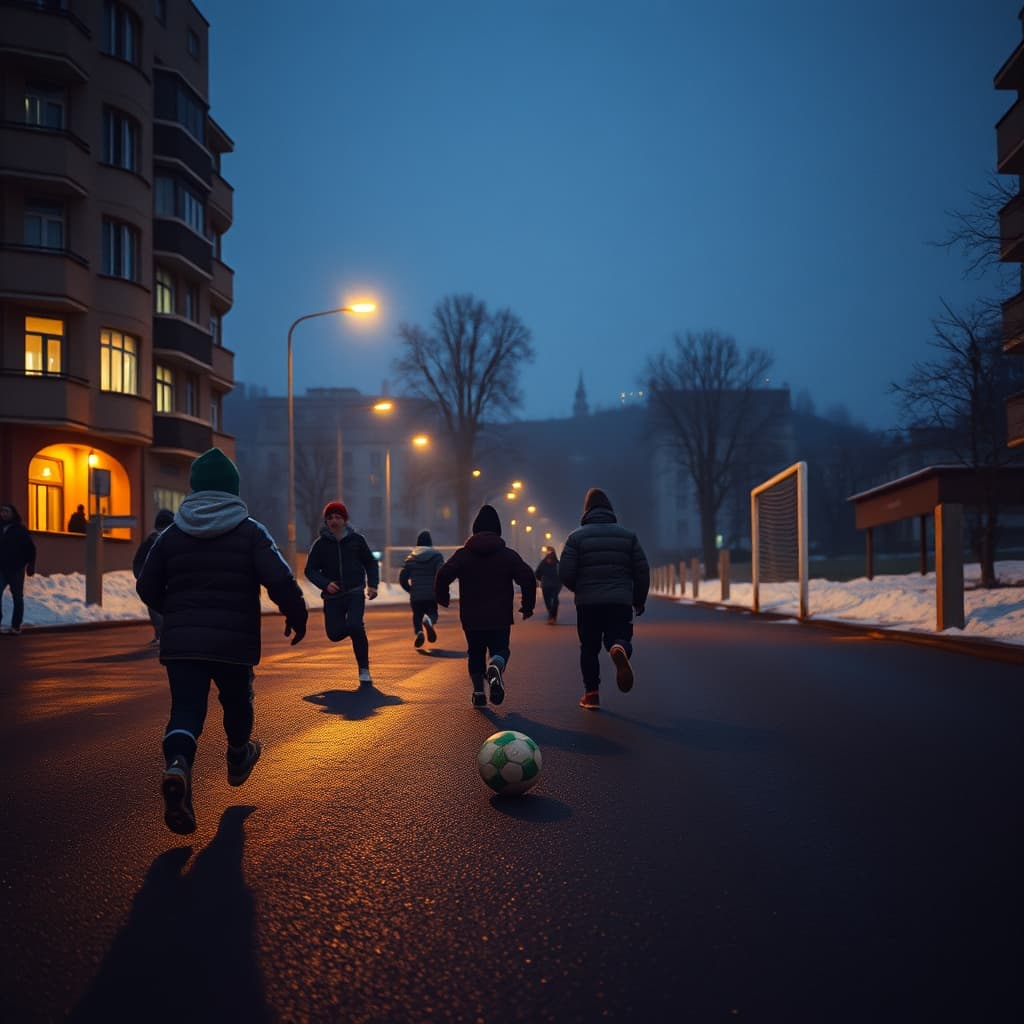
Winter-night football began by deciding whether there was enough light and enough time. A streetlamp, shop window, or apartment entrance might illuminate only part of the playing area, leaving the ball to disappear briefly at the edge. Children adjusted by choosing a shorter pitch, moving the goals, or agreeing that play would stop when traffic approached. The game’s remembered intensity came from these limits rather than from ideal conditions.
Goals could be marked by stones, schoolbags, coats, or two remembered cracks in a wall. Their width was disputed whenever a shot passed close to the imaginary post. Teams changed as children arrived from homework or left for dinner. Age, skill, friendship, and who owned the ball all influenced selection. Rules were rarely written, but they were argued, revised, and enforced by the group.
The Ball Had to Survive the Street
Cold changed both equipment and bodies. A hard ball stung the foot, wet ground made shoes heavy, and numb fingers complicated a throw-in. Puddles, kerbs, parked vehicles, windows, and passing pedestrians were obstacles with consequences. Someone fetched the ball from beneath a car; another apologised when it struck a door. Remembering freedom honestly also means remembering the responsibility and occasional conflict required to keep playing in shared space.
The street was not empty simply because children treated it as a pitch. Residents returned from work, shopkeepers needed clear entrances, and neighbours differed in their tolerance of noise. A warning from a window could lower voices for a few minutes. Broken property, dangerous traffic, or repeated disturbance could end a game. Informal permission had to be renewed each evening through behaviour, familiarity, and compromise.
Streetlights Changed the Sense of Time
Under yellow or white lamps, breath became visible and long shadows altered the apparent speed of play. Children measured the evening not by a clock but by the number of friends still outside, the cold inside their sleeves, and calls from balconies. One family summoned a child earlier; another allowed one final goal. The phrase “last attack” could be repeated several times before the group accepted that the match was over.
Returning home made the game tangible. Mud marked trouser legs, socks were damp, and the ball carried grit into the entrance. Adults dealt with wet clothing and delayed meals, so the remembered pleasure rested partly on labour performed indoors. The story told later—who scored, which decision was unfair, whose shot travelled furthest—continued the match after the street had emptied.
What Childhood Memory Keeps from the Match
Street football has not disappeared, but traffic, organised activities, screens, security concerns, and changes in public space have altered where and how it occurs. It would be inaccurate to declare every older neighbourhood safe or every child equally welcome. Girls, younger children, newcomers, or less skilled players could be excluded. Preserving the memory responsibly includes both belonging and the rules that limited it.
For a Digital Nostalgia Archive, the winter-night match matters because it shows children producing a temporary institution from almost nothing. A ball, two goal markers, borrowed light, and a sequence of arguments created teams, boundaries, penalties, and an ending. The scene remained vivid because children were not merely entertained; they negotiated a small public world. The final run after the ball carried friendship, rivalry, risk, and the approaching call home in the same few seconds.