 Eski Pano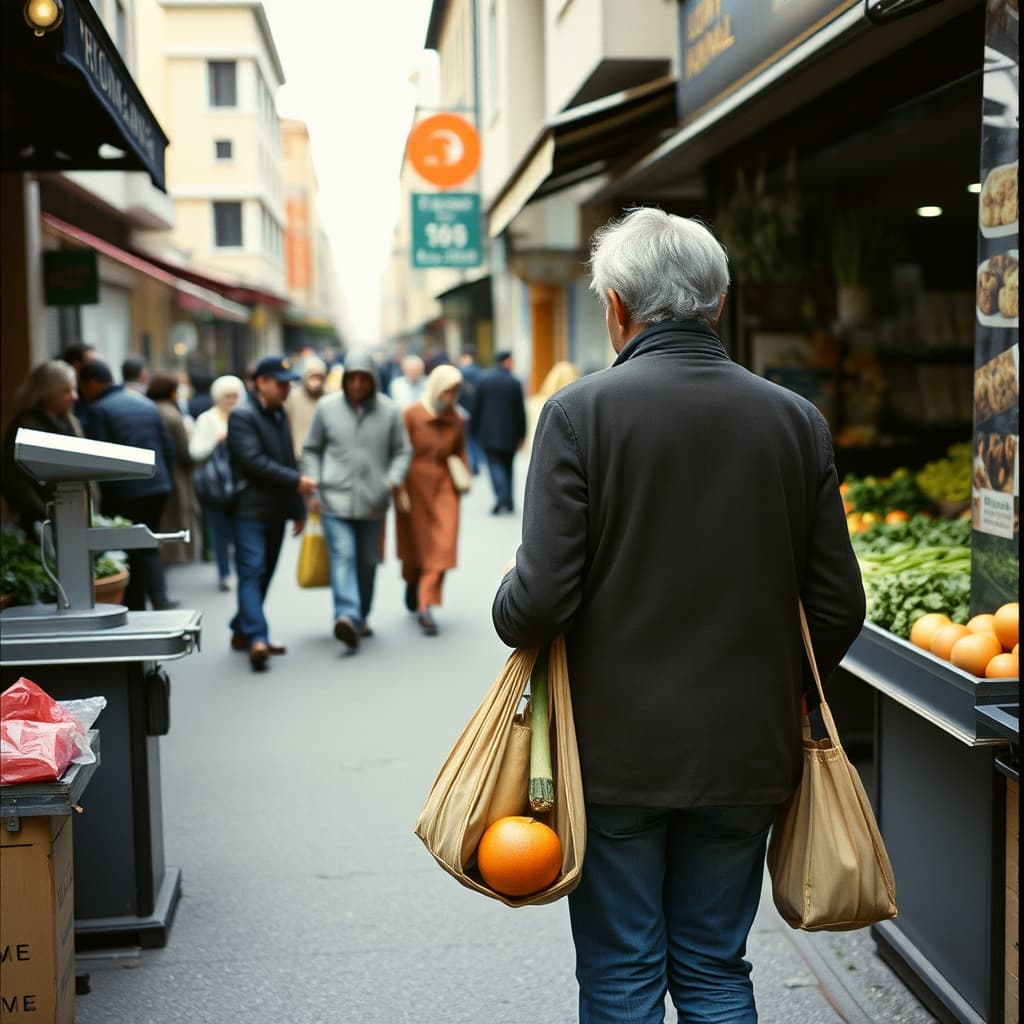
A string market bag looked modest when empty and transformed on the walk home. Tomatoes, greens, bread, fruit, cheese, and wrapped household goods stretched its mesh into a visible record of the day's choices. The return journey linked the open market to the grocer, baker, dairy shop, and doorstep, making shopping both domestic work and a repeated encounter with neighbourhood trade.
Shopping patterns differed by income, town, transport, season, household size, and period. Some families used woven reed baskets, cloth sacks, wheeled trolleys, or several nets rather than one file. Open markets and fixed shops did not simply compete: a household could compare produce at the stalls, then buy staples on account from a familiar grocer. Oral memory should be checked against price lists, receipts, licences, and photographs.
The Bag Made Selection Visible
Buyers judged ripeness, bruising, smell, size, and intended cooking time. A shopkeeper might recommend produce for that evening, reserve a preferred item, or warn that a cheaper choice needed quick use. This knowledge could reduce waste and build loyalty, although it also depended on honest information. Familiarity did not remove the customer's right to inspect goods and understand the price.
Scales sat at the centre of the exchange. Weights, calibration, unit prices, rounding, and the subtraction of packaging affected trust. Regulations and inspections protected both buyer and fair trader. Bargaining customs varied; not every price was negotiable, and social confidence influenced who felt able to ask. A nostalgic account should not turn unequal access or inaccurate weighing into harmless theatre.
Credit Joined Commerce to Reputation
A neighbourhood shopkeeper might keep a handwritten account until payday, record small deliveries, or allow a child to collect an agreed item. Such credit could help families bridge irregular income and reduce travel. It could also create embarrassment, dependency, dispute, or exposure of private finances. Ledgers contain sensitive personal data and require careful access, description, and publication decisions.
Trust grew through repeated correction as much as flawless service: returning the wrong change, replacing spoiled goods, clarifying debt, or admitting a supply problem. Shopkeepers were not uniformly generous, and customers were not a single harmonious community. Rent, wholesale prices, shortages, regulation, and long hours shaped behaviour behind the counter. Economic history keeps warmth and pressure in the same account.
Reuse Still Required Hygiene
A reusable net saved disposable packaging and folded into a pocket, but open mesh offered little protection from dirt or leakage. Raw meat, fish, dairy, bread, and ready-to-eat food need suitable separation and temperature control. Washable inner bags and dedicated containers reduce cross-contamination. Damaged cords and overloaded handles can fail suddenly on stairs or roads.
The labour of planning and carrying was uneven. Someone checked the pantry, calculated money, remembered preferences, queued, lifted weight, cleaned produce, stored it, and returned containers. Women and older children often performed much of this work without formal recognition. Recording only the cheerful market scene hides the time, physical effort, and budgeting knowledge that filled the bag.
Changes in supermarkets, refrigeration, packaging, traffic, card payment, delivery services, and urban redevelopment altered the route. Some neighbourhood shops disappeared; others adapted through local sourcing or telephone orders. Reusable bags returned under environmental concerns, but the old file should not be presented as a complete solution. Food systems also depend on transport, waste, labour conditions, and affordable access.
A Digital Nostalgia Archive can connect market bags with shopping lists, price boards, verified scales, account books, shop licences, packaging, recipes, street maps, and testimony from customers and traders. The bag strengthened neighbourhood ties because it returned people to the same counters with practical questions. Its memory is richest when exchange is shown as work: personal, regulated, sometimes generous, sometimes tense, and always shaped by what a household could carry home.