 Eski Pano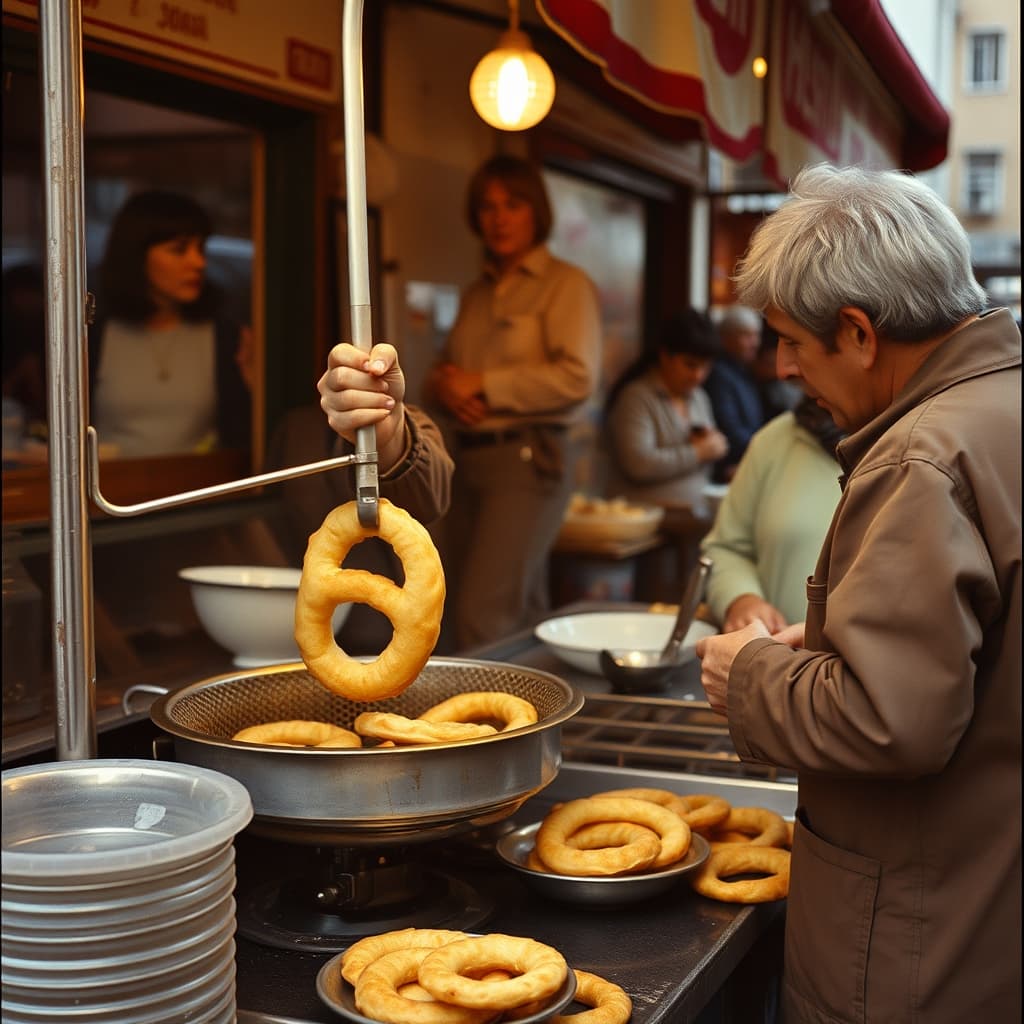
Halka tatlı announces itself through shape, shine, and sound. Rings of ridged dough enter hot oil, deepen in colour, and meet syrup before reaching a paper tray or family plate. The crisp exterior and syrup-soaked centre connect street vending with household celebration, but that connection is not one fixed recipe. It is a family of methods shaped by region, trade, occasion, and available ingredients.
Names and formulas overlap with other fried syrup sweets across Türkiye, the eastern Mediterranean, Balkans, Middle East, and beyond. Some doughs use semolina, flour, starch, eggs, dairy, or leavening in different proportions; others avoid certain ingredients. Shape may be a closed ring, loop, or ridged length. A responsible food history records the local name and maker's method rather than claiming a single origin from resemblance.
The Ridged Shape Was Functional
A strong piping tool and shaped nozzle produce grooves that increase surface area and help the exterior fry evenly. Dough consistency must allow controlled extrusion without splitting or collapsing. Vendors develop judgement through temperature, pressure, ring size, colour, and sound. That embodied skill deserves documentation, yet spectators should keep clear of equipment because hot dough, oil, and metal create serious burn risks.
Oil temperature affects texture. If too cool, dough absorbs excessive oil and may remain heavy; if too hot, the surface darkens before the centre cooks. Thermometers, suitable fryers, stable stands, guarded flames or electrical connections, and batch control improve consistency. Water near hot oil can cause violent spattering. Fire safety requires appropriate equipment and training, never water poured onto an oil fire.
Syrup Required Its Own Timing
Recipes coordinate the temperature and concentration of syrup with the heat of the fried sweet. The goal may be a crisp shell that takes up sweetness without becoming immediately soft. Sugar concentration, acidity, resting time, and batch size change the result. Reusing syrup exposed to crumbs or handling without temperature control can reduce quality and create hygiene concerns.
Family kitchens adapted professional techniques to smaller pots and familiar tastes. One household reduced sweetness, another added citrus, changed ring size, or served the sweet at a particular gathering. Such variations are evidence, not errors. The recipe should include quantities, sequence, equipment, yield, and the cook's own sensory cues, while clearly separating remembered practice from a method tested under current conditions.
Street Trust Was Built in Public
Customers could often see the frying, colour of the oil, cleanliness of tools, pace of sales, storage, and handling of money. Visibility helped reputation, but a busy queue did not guarantee safety. Vendors need clean water, protected ingredients, pest control, safe waste disposal, suitable storage, hand hygiene, licences where required, and separation between cash handling and ready-to-eat food.
Oil quality matters. Repeated overheating and extended reuse degrade frying oil, affecting flavour and potentially creating unwanted compounds. Colour alone is not a sufficient test. Food businesses should follow applicable rules for monitoring, filtering, replacement, storage, and disposal. Used oil should enter authorised collection rather than drains, soil, or ordinary street waste.
Allergen information must reflect the actual recipe and shared equipment. Wheat, egg, milk, sesame, nuts, or other ingredients may be present directly or through cross-contact. People managing diabetes or other dietary conditions also need honest portion and ingredient information; heritage language should not turn a very sweet fried food into a health claim. Enjoyment and cultural importance can be described without disguising composition.
A Digital Nostalgia Archive can connect halka tatlı with vendor carts, piping tools, nozzles, recipe notebooks, permits, oil tins, price photographs, family celebrations, and interviews with makers and customers. The sweet belongs to both street and table because professional rhythm and household adaptation continually influenced each other. Preserving that history means naming skill, variation, labour, and pleasure while treating hot oil, hygiene, allergens, and evidence with equal seriousness.