 Eski Pano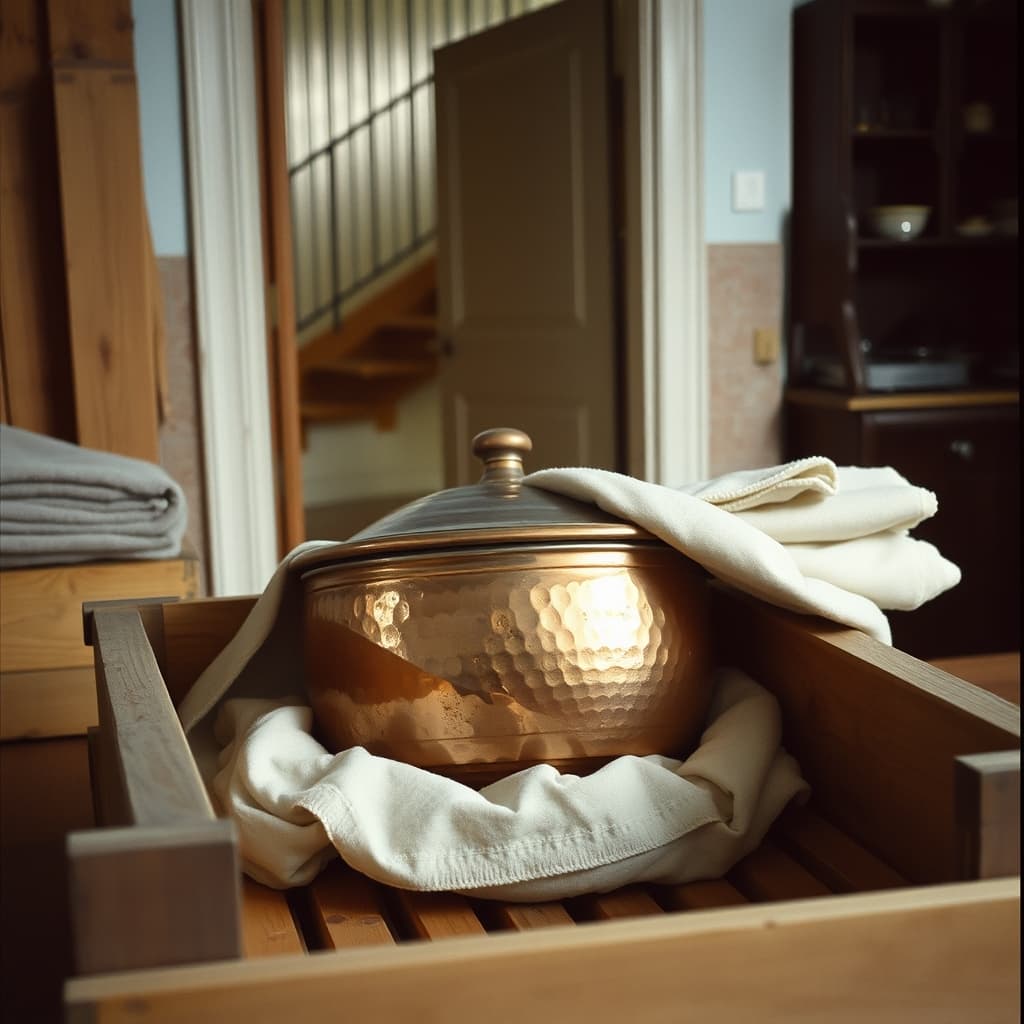
A copper sahan could cross several thresholds without losing its place in the household. Wrapped in cloth for a move, stacked beside plates, or hung on a new kitchen wall, the shallow vessel carried traces of meals and addresses. Its warm colour could signal hospitality and taste, yet its real history lies in manufacture, maintenance, use, and the people who decided it was worth packing again.
The word sahan covers vessels that vary in diameter, depth, rim, handles, alloy, decoration, and purpose. Some were used for cooking or serving; others became display pieces. Hammered texture may record hand forming, later repair, or deliberate decoration. Maker stamps, workshop style, metal analysis, family testimony, and regional comparison are safer guides than assigning an exact date from appearance alone.
Making Left a Readable Surface
A coppersmith shaped sheet through repeated heating, hammering, raising, planishing, trimming, and joining where necessary. Regular marks demonstrate controlled blows, but not every irregularity is proof of age. Rims could be strengthened, handles riveted, and motifs chased or punched. Tool marks should be photographed under raking light before cleaning changes the surface.
Copper workshops formed supply and repair networks. A vessel might return for straightening, a new handle, patching, or tinning. These interventions were part of its working life, not automatically damage to erase. Distinguishing original manufacture from later repair can reveal travel between towns, changes in household economy, and the continuing value of skilled maintenance.
Tinning Was a Safety Practice
Many copper cooking vessels carried an interior tin lining that separated food from reactive copper. Worn, flaking, or heavily exposed interiors need assessment by a qualified professional before food use. Acidic foods can increase metal migration. Decorative pieces of uncertain alloy, solder, repair history, or lining condition should not return to cooking merely because a family remembers them on the stove.
Re-tinning requires appropriate materials, ventilation, heat control, surface preparation, and specialist knowledge. Unverified home methods, abrasive power tools, or unknown solder can create hazards and destroy evidence. After professional treatment, users should follow current food-safety guidance, avoid damaging abrasives, and inspect the lining regularly. Heirloom status does not replace safe practice.
Moving Turned the Vessel into a Marker
During a house move, families selected what deserved limited box space. The sahan might survive because it served guests, belonged to a parent, fitted a holiday recipe, or represented a craft admired in the new home. Scratches from stacking and old wrapping paper can support that story, although memory should be recorded with the speaker's name and uncertainty rather than converted into fact.
Display also reflected changing taste. Copper moved between stove, table, cabinet, and wall as kitchens modernised. A polished surface could express care and prosperity, while dark patina later became fashionable as evidence of age. Neither finish is neutral. Before polishing, owners should ask whether inscriptions, plating, tool marks, or residues would be permanently lost.
For storage, a clean and dry environment, stable support, non-abrasive wrapping, and separation from damp or reactive materials are preferable. Handles should not carry the vessel's full weight if joints are weak. Documentation should include both sides, dimensions, mass, marks, repairs, lining condition, owners, addresses, recipes, and dates of treatment. Gloves may help during archival handling, but secure grip matters most.
A Digital Nostalgia Archive can connect the copper sahan with coppersmith directories, workshop photographs, receipts, moving lists, kitchen plans, recipes, and family voices. It reflected a period's taste because craft, usefulness, shine, and inherited attachment met on one surface. Its journey between homes becomes meaningful when the archive preserves not only the glow, but also repair, risk, changing function, and named labour.