Eski Pano
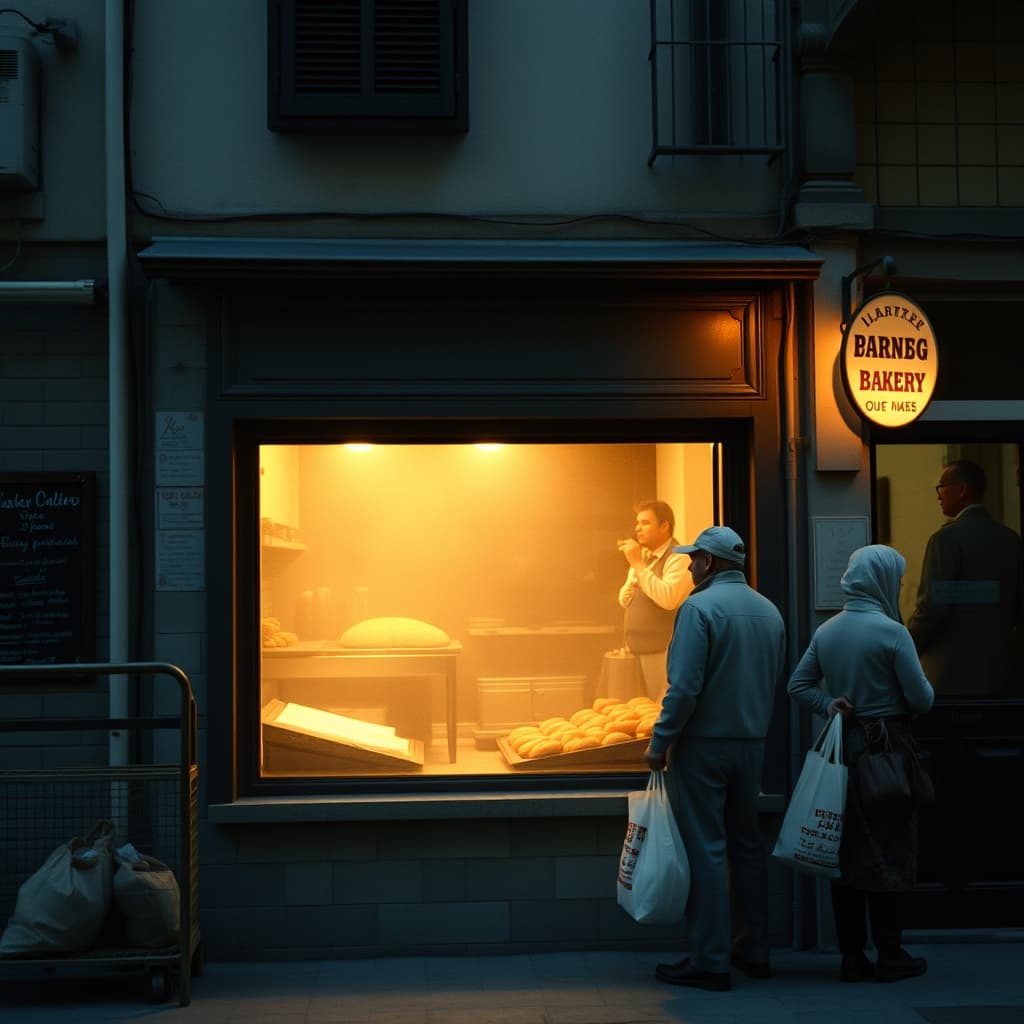
There was a time when one of the most reliable signs of morning was the queue slowly lengthening in front of the neighborhood bakery. Before the street had fully warmed, the heat of loaves browning behind the bakery's fogged window reached all the way outside, and the smell of bread and flatbreads turned the corner before the people themselves did. With shopping nets, newspapers, or small coins in hand, people took their places in line; the waiting was not only for bread, but also for beginning the day together with the neighborhood. Children leaned against their mothers, those hurrying to work watched the clock while speaking in brief exchanges, and the sound of the baker's peel scraping the stone floor joined the rhythm of the street. That is why the queue before the neighborhood bakery is remembered as something rooted in the heart of old city life: because what became visible there was not merely hunger, but daily belonging.
From the perspective of neighborhood culture, the bakery queue was far more than a simple act of purchase. In old urban life, places such as the bakery, the grocer, and the public fountain were not only practical stops, but shared spaces where the language of neighborliness was formed, news circulated, and the pulse of the day was taken. While waiting for bread, one person mentioned an engagement, another asked after a sick neighbor, and someone else spoke about the children's school matters. In Ramadan the lines for hot pide grew longer, on holy nights the smell of special pastries spread through the streets, and on feast mornings the movement began early, showing how the social importance of the bakery shifted with seasons and occasions. What sank into the memory of the streets behind fogged glass was precisely this feeling of common life. The queue placed people, for a few minutes, inside the same rhythm and around the same smell.
Old bakeries had a stage of their own. Inside, flour dust, browned dough, and the scent of wood fire mingled; outside, an unwritten etiquette formed among those waiting. Who had arrived first, whose child had been sent ahead, which elderly woman should be allowed to rest her heavy bag for a moment, all these were decided less by strict rules than by neighborhood conscience. The line was a small school of patience and mutual attentiveness within urban life. The relation between baker and customer was also rarely purely commercial. The baker knew who liked thinner loaves, who bought an extra sesame ring for the children, and who would put the purchase on the household notebook until later. In this way the bakery became not only a place where warm food emerged, but a neighborhood institution where people read and remembered one another.
Another reason the bakery queue settled so deeply in the heart is the strong bond that daily life forms with smell. The scent of bread can make even the simplest moment unforgettable. Fresh simit in the morning chill, newly baked pide, or the smell of pastry resting on a tray speaks not only to hunger, but to childhood and to belonging. That is why someone encountering a similar smell in another city years later may suddenly return to the street of their own neighborhood. The waiting in line gains meaning around that shared smell. People are there not only to obtain something, but to be included in a common morning feeling. Against the speed and anonymity of the modern city, the neighborhood bakery remained a place where faces were still recognized and where a familiar scent called everyone into the same memory.
Today many things arrive packaged, hurried, and arranged according to private screens. Yet the bakery queue that settled into the heart of old city life reminds us how valuable shared time once was. That line relieved the hunger carried from night into morning, but it also refreshed the bond between people and street. The bakers seen behind the fogged window, the peels, floury counters, and figures waiting at the door together defined the warm meaning of what we call a neighborhood. That is why the scene remains unforgettable. In front of the bakery, old city life distributed not only bread, but greetings, patience, sharing, and the feeling of waking together.
Why Did the Queue in Front of the Neighborhood Bakery Take Its Place in the Heart of Old City Life While Sinking into the Memory of the Streets Behind Fogged Glass