Eski Pano
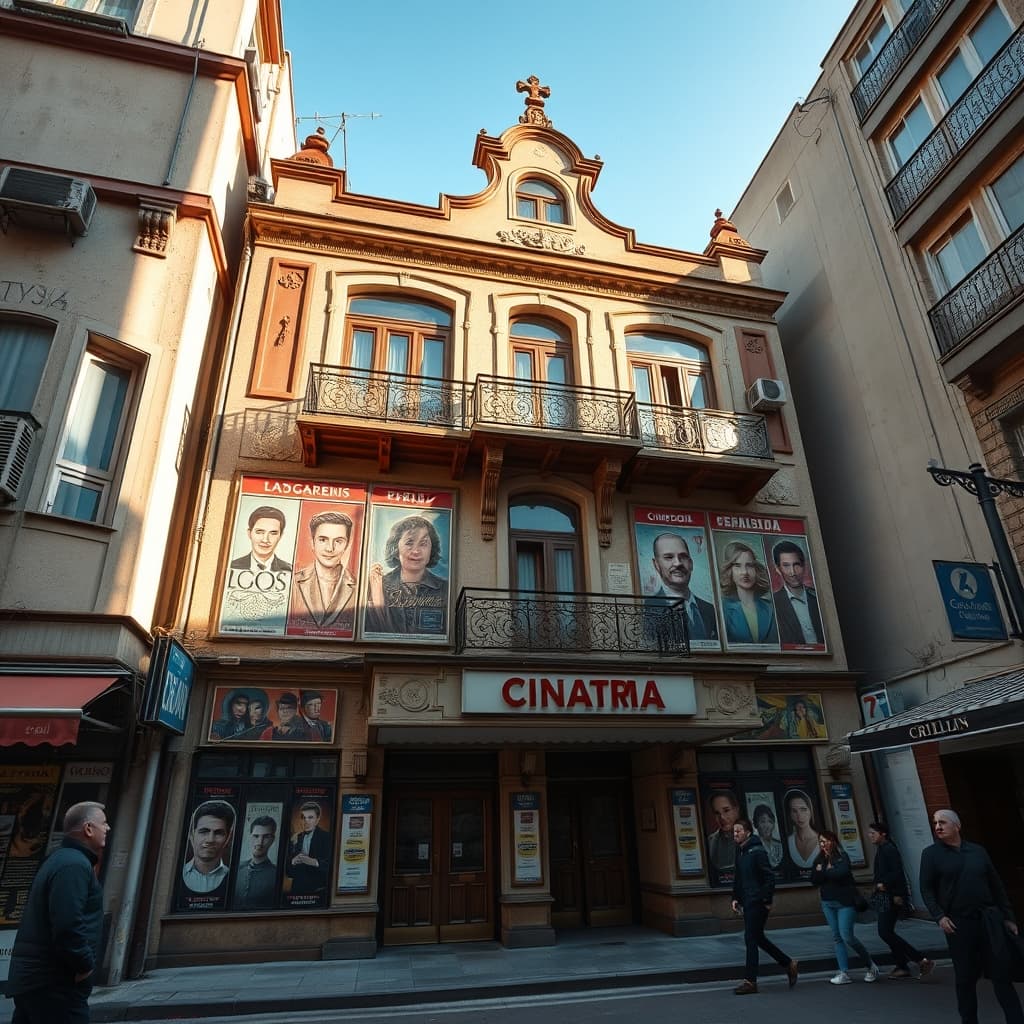
There are some mornings that people remember first by sound rather than by light. On the streets where old mansion cinemas stood, morning used to open exactly like that. As shutters slowly rose, the star-filled posters that had remained on the walls through the night caught the first sunlight like faces being awakened, and anyone opening a window found their eyes drawn toward those bright sheets of paper. Even after the crowd of the previous evening had disappeared, the posters still seemed full of motion: film titles written in oversized letters, famous actors turning their gaze toward the street, dramatic gestures, perhaps a cowboy hat, perhaps an embroidered evening dress. Children on their way to school lifted their heads for a moment, adults going down to buy bread slowed before the display, and even the unopened cinema door managed to gather the street around itself.
Seen along the trail of time, these mansion cinemas were never only entertainment venues. They were cultural markers that helped set the daily rhythm of urban life. From the 1950s through the 1980s, in many Anatolian towns and city districts, the cinema building was as recognizable as the municipality office, the pastry shop, the photographer, or the pharmacy. In newspaper listings, the films of the day appeared in small boxed advertisements, and in neighborhood conversations words like matinee and afternoon screening came naturally. The poster on the wall, the printed notice in the paper, and the trailer voice drifting from a loudspeaker formed one complete cultural circuit. For that reason, opening a window in the morning and seeing the poster was not merely learning about a new film. It was understanding that the city still held together, that the familiar life of the neighborhood was continuing its own ceremony.
The starry posters of the cinema were the liveliest part of the invisible bridge between street and auditorium. The man hanging them would lean a ladder against the wall, stretch the paper carefully into place, and leave faint traces of paste in the corners. He would remove the previous week's film, creating a brief emptiness on the wall before fixing the new image there. All of this belonged to the everyday aesthetics of the city. Those posters were examples of graphic craft, but they were also windows into the public imagination. The large-eyed woman of a melodrama, the sword raised in a historical epic, the bright colors of a comedy all interrupted the morning seriousness of the street. People might not even plan to attend that day, yet after looking at the poster they silently set aside a small place in themselves for the evening. In that way the city widened through hours not yet lived.
Another reason those mornings remain so vivid is that the cinema brought social variety together on one façade. Apprentice tailors, high school students, teachers, grocers' assistants, retired grandfathers all looked at the same poster and carried away a different story. One searched for the name of a beloved actor, another wondered whether the film was suitable for the whole family, another simply watched how the colors altered the street. The cinema produced a shared expectation before its doors even opened. Unlike today's digital displays, that call was material and slow. The paper shifted slightly in the wind, its colors changed as the sun rose, and by evening it acquired a different mood in shadow. The poster did not only carry an image. It lived through the day along with the light of the city.
Domestic life, too, was quietly shaped around these posters. Over morning tea someone would say, "A new film starts today." If there were guests in the afternoon, the evening plan would be adjusted around that possibility. Children would promise good behavior in hopes of earning a Sunday matinee. Going to the cinema was a pleasure, but also a carefully chosen expense within the family budget. That is why the poster held the excitement of a ticket not yet bought. A mother opening the window might remember an actor from her own youth, a father might add that the star had long been admired, and children might become curious about the colorful swords or dance scenes. These were the small cultural habits that lifted an ordinary morning beyond routine.
Today many of those old cinemas are closed, and some have become wedding halls, shops, or blank facades. Yet the force of those star-filled posters that once made people open their windows still has not left memory. The point was never only to watch a film. It was to imagine alongside the city. A poster hanging on a wall mixed possibility, elegance, and another world into everyday life. The cultural heritage of a city does not always survive in its grand monuments. Sometimes it remains in those paper surfaces shining in the morning sun. Mansion cinemas did not only show stories. They taught people that the street itself could become a stage, and that even opening a window could turn into a small act of culture. That is why those mornings remain vivid: because a city rarely stops looking at the posters it once loved.
When Mansion Cinemas in Old City Life Called the Street with Star-Filled Posters: Why Do Those Window-Opening Mornings Still Live So Vividly in Memory?