Eski Pano
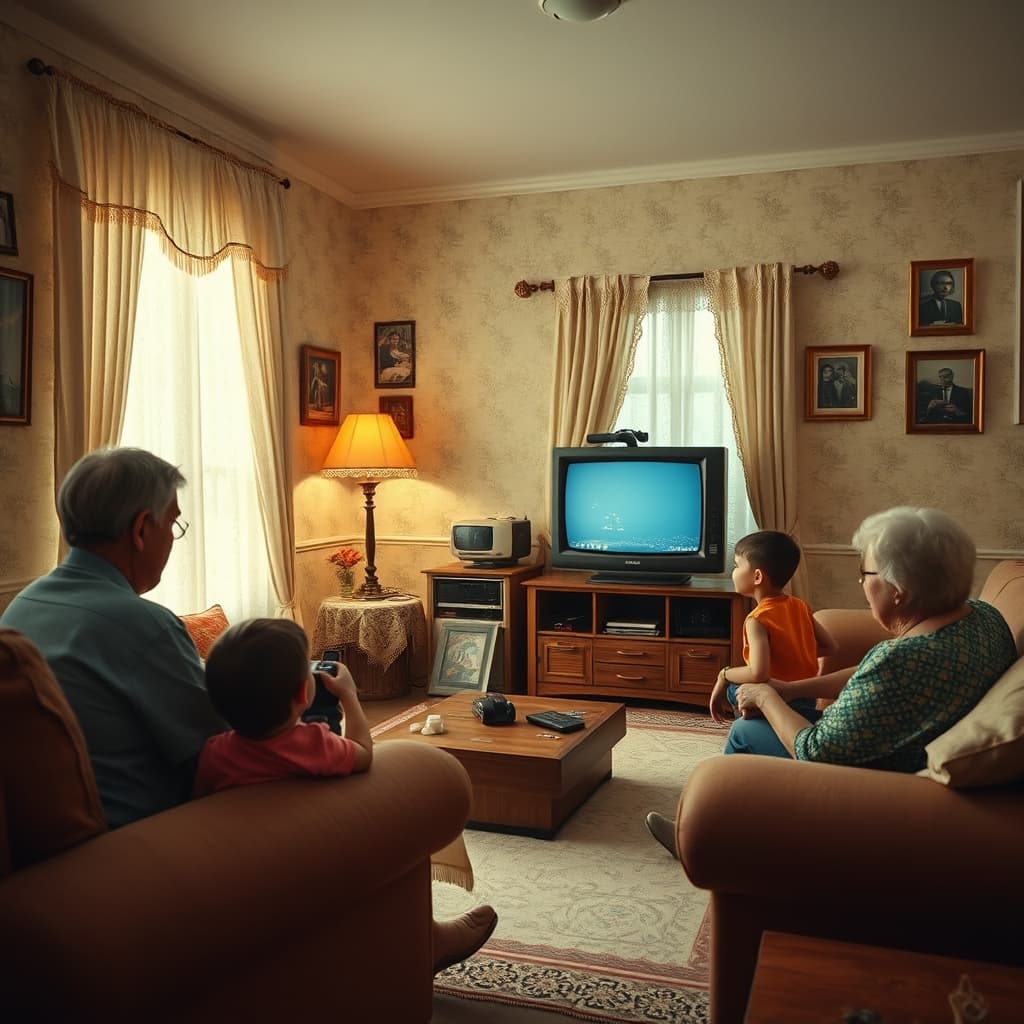
Some technologies enter a home not merely as devices, but with the order of a small ceremony. The game console is remembered exactly that way. When the experience took place in the heavy-curtained living room of grandmother's house, with framed family photographs on the wall and a television carrying the emotional glow of old films, turning on a game became almost ritual in itself. First the box was carefully taken out, the cables were untangled without knots, dust was blown off the cartridge, the correct television channel was found, and then everyone lowered their voice a little. The person holding the controller was not the only participant. Those watching were equally part of the moment. The quiet excitement filling the room was not only about the score. It was about different generations of a household gathering side by side around a new technology for the first time.
Seen as technological heritage, the console represents one of the earliest collective forms of digital experience inside the home during the 1980s and 1990s. Unlike the individual screen habits of today, gaming in those years was often lived in one person's hands and many people's gaze. The faint electronic hum when the console switched on, the first colors appearing on the television, the plastic feel of the joystick in the hand were not only technical details. They were signs of family curiosity taking shape. The shadow of grandmother's house matters here because such houses were not just physical places. They were dense warehouses of social memory. Lace covers, crystal glasses behind the cabinet door, magazines under the table, perhaps a calendar page on the wall. New technology entered that established order quietly, without breaking it.
That is why playing the console was less a hurried amusement than a prepared session. The phrase in the light of old films is no empty image. In many homes, the television was already the common point of attention because of melodramas, news bulletins, and family series. When the same screen was claimed for a game in the late afternoon or evening, the meaning of the room shifted a little, but not completely. Older relatives might not fully understand the game, yet they still followed the movement on the screen, joined the children's delight or disappointment, and sometimes entered the rhythm with a simple "try once more." In those moments technology ceased to be a foreign machine. It became a household event, something spoken about, gathered around, and even shown to visitors.
One reason the console felt ceremonial was the balance between scarcity and care. Not every home had one, and even in homes that did, it was not used endlessly. Electricity, television time, homework, visiting hours, and adults' need for quiet all drew the limits of the experience. Because there were limits, the moment became more precious. The joystick passed from hand to hand in turns, cartridges were sometimes borrowed from neighbors, and the child who knew the game best half became a teacher, giving tactics to the others. Grandmother might knit in the corner, watching the screen from the edge of her eye and smiling at the character who kept falling. This gentle mixture, new technology standing beside the old discipline of the home, is exactly what leaves such a deep mark in memory. Around the console, people were not only playing a game. Family roles themselves were being rearranged in a quieter tone.
The cultural value of this memory also lies in how clearly it reveals the passage between analog and digital. On one side stood the feeling of old films, the lace cover on the television, the heavy furniture of the living room. On the other stood pixel motion, electronic sounds, and game logic. When those two worlds shared the same room without conflict, the memory of the home became richer. For the child, the scene framed future relations with technology in emotional terms: a device is not merely something used, but something around which a household can gather. For elders, the game offered a way to touch the younger generation's world from a respectful distance. That is why the console in grandmother's house was not only a nostalgic object. It was a silent translator between generations.
Today the world of games may belong more to portable screens, online connections, and personal accounts. Yet it remains clear why using a console in the quiet excitement of families gathered in the living room is remembered almost as ceremony. Technology had found a place there without insulting the household's everyday order. Every push of the power button carried preparation, watching, waiting, and togetherness. This is what is meant by the shadow of grandmother's house: a cultural threshold where objects and people accepted one another without hurry, and where the glow of old films blended softly into the new world of pixels. What made the console unforgettable was not only the game itself, but the silent ritual a whole household built so that the game could happen at all.
Why Using a Game Console Alongside the Quiet Excitement of Families Gathered in the Living Room Was a Ceremony in Itself in the Shadow of Grandmother's House and the Light of Old Films