Eski Pano
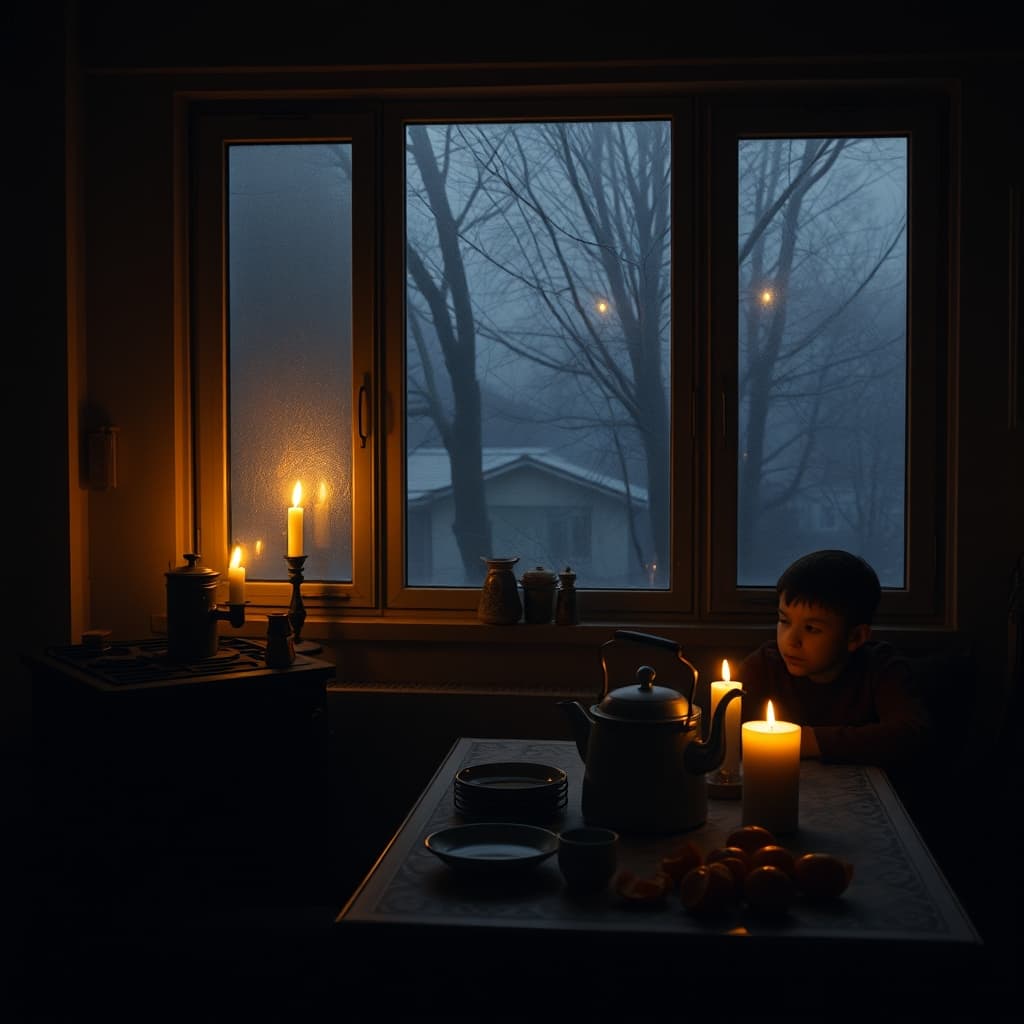
Winter evenings used to arrive early, laying a bluish darkness across the street while lights came on one by one inside the apartments. Then, without warning, the outage would come, bringing the whole neighborhood into the same hush. The hiss of television vanished, the refrigerator's hum withdrew, and only the soft crackle of the stove and the wind outside remained. For a few seconds children looked startled, while adults moved toward the window, saw the building opposite had also fallen into darkness, and understood immediately. Candles were taken from drawers, a match flashed briefly in the kitchen, and the living room seemed to rebuild itself as if it belonged to an older time. A power cut was not only a lack. It was a shared opening in the curtain of daily life, abruptly changing the rhythm of the evening.
Seen along the trail of time, those long outages tell more than a story of technical insufficiency in old city life. Energy problems were indeed common, yet neighborhood life filled that gap not only with complaint, but with another form of togetherness. Once the devices that covered daily haste fell silent, the sounds inside the home regained their value. A mother sent the scent of cinnamon tea from the kitchen, a father drew his chair closer to the stove, grandmothers opened stories about older winters. Conversation widened at once, moving from school grades to wedding news, from the price of firewood to memories of old tram lines. It was as though electricity did not only take away light; it also switched off urgency itself, allowing people to look at one another and shape longer sentences.
What keeps those evenings bright in memory is not simply the warmth of candlelight. The real glow lies in details made sharper by darkness: mist gathering on the window, the faint tremor on the lid of an enamel kettle, mandarin peels left on the coffee table, the shadows of siblings gathered beneath the same blanket. For children, an outage carried an element of play. Hands became shadow figures on the wall, stories were told in whispers, and distant lights were watched from the window to guess in which street power had returned first. For adults, these hours were pauses in which life exhaled. Neighbors called through half-open doors to ask whether the electricity had also gone out there, and sometimes the conversation spilled into the landing with tea glasses or a plate of warm pastries.
What is striking is that the outage changed not only the rooms, but also the memory of the gardens outside. Linden fragrance caught in summer branches seemed to rise again through winter dampness, and the darker the street became, the more clearly the scent of the outdoors entered the house. Without streetlamps, the trees at the window appeared more alive, and the movement of branches became easier to notice. When the past is recalled now, perhaps that is one reason the gardens seem brighter: once artificial light withdrew, the eyes adjusted to the tones of night and scent instead. Darkness did not diminish the world. It deepened sensation and tied people more attentively to the place they inhabited.
In today's age of uninterrupted screens, those outages may seem like inconvenience. Yet what remains in memory is not hardship, but the warmth left by conversation made fuller. The long winter cuts gathered the neighborhood into the same fragility, drew homes slightly closer to one another, and made everyday cultural inheritance visible. If a candle's smell, the sound of a stove, or linden steeping in a teapot can still call those evenings back at once, the reason is simple: darkness did not push people apart then. It gathered them more tightly around the same table.
In Those Old Hours That Revealed the Spirit of an Era, the Evenings When Lengthening Winter Power Outages Multiplied Conversation: Why Do the Gardens Turning into the Scent of Linden Seem Brighter in Hindsight?