 Eski Pano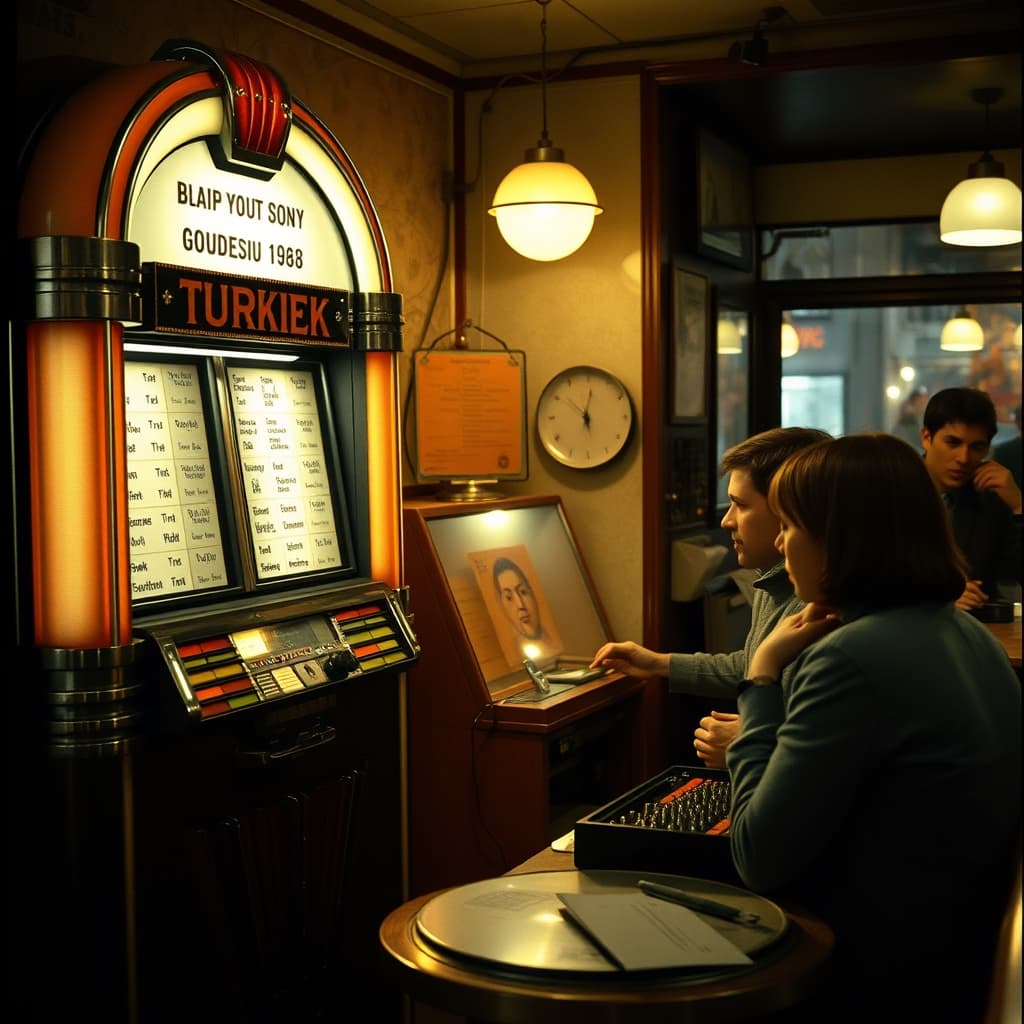
A coin-operated jukebox made one person's song choice audible to an entire café, youth club, or waiting room. A finger moved across title strips, a code was entered, and the machine turned private preference into public sound. The pause before the mechanism found the record was part of the excitement. Unlike a wind-up music box, this was a powered playback system built to select recordings on demand.
Jukeboxes varied by manufacturer, decade, record format, amplification, and selection system. Some played 78 rpm records, many later used 45 rpm singles, and still newer machines adopted compact discs or digital libraries. The Turkish phrase müzik kutusu can describe different objects, so model photographs, manuals, title cards, and venue records should establish which machine is meant.
Selection Was Mechanical Memory
A coin or token enabled credit. Buttons or keys translated a letter-number code into an instruction for relays, switches, cams, motors, and a record magazine. The mechanism located the requested side, moved it to the turntable, placed the stylus, played it, and returned it. A fault in any stage could produce the wrong song, repeated play, silence, or a jam.
Title strips were small catalogues. Venue owners decided which songs entered the machine, how often they changed, and which side was listed. Popular demand influenced selection, but distributors, record availability, censorship, and commercial agreements also shaped the soundtrack. The jukebox offered choice within a collection someone else had curated.
The Room Negotiated the Music
A chosen song could invite dancing, conversation, teasing, or disagreement. Volume suited one table and disturbed another. Young patrons learned taste through friends while staff managed noise, queues, and repeated selections. Gender, age, class, and venue rules affected who felt comfortable approaching the buttons. Public choice was not equally public for everyone.
The machine also changed attention. Listeners could study illuminated panels, watch the record move, or wait for their code. The visual performance separated it from an ordinary radio. Yet the device did not receive songs through an antenna like a broadcast receiver; it reproduced records stored inside. Any radio option or later network feature should be documented separately.
Repairers Kept the Sequence Honest
Technicians cleaned contacts, replaced belts, adjusted switches, serviced motors, checked amplifiers, aligned pickups, and diagnosed coin mechanisms. Electrical hazards, heavy cabinets, moving parts, glass, and aged components require qualified work. Excess oil, forced mechanisms, incorrect stylus pressure, or improvised wiring can damage records and equipment.
Records, title strips, coin boxes, service logs, and cabinet wear preserve the working history. Cleaning should respect plastics, chrome, paint, decals, and electrical isolation. A restored machine also raises music copyright and public-performance requirements. Mechanical operation does not remove legal responsibility for the recordings it plays.
Pricing shaped listening as well. One coin might buy one selection or several credits, and friends sometimes pooled money. The venue balanced revenue, maintenance, record wear, and customer patience. A jammed coin was therefore both a technical fault and an interruption to a small shared economy.
A Digital Nostalgia Archive can connect jukeboxes, keys, tokens, title cards, service manuals, venue photographs, distributor lists, and testimony from listeners, owners, and repairers. The habit remains unforgettable because choosing was a performance. One person paid, the mechanism answered, and a whole room briefly lived inside the consequences of that selection.