 Eski Pano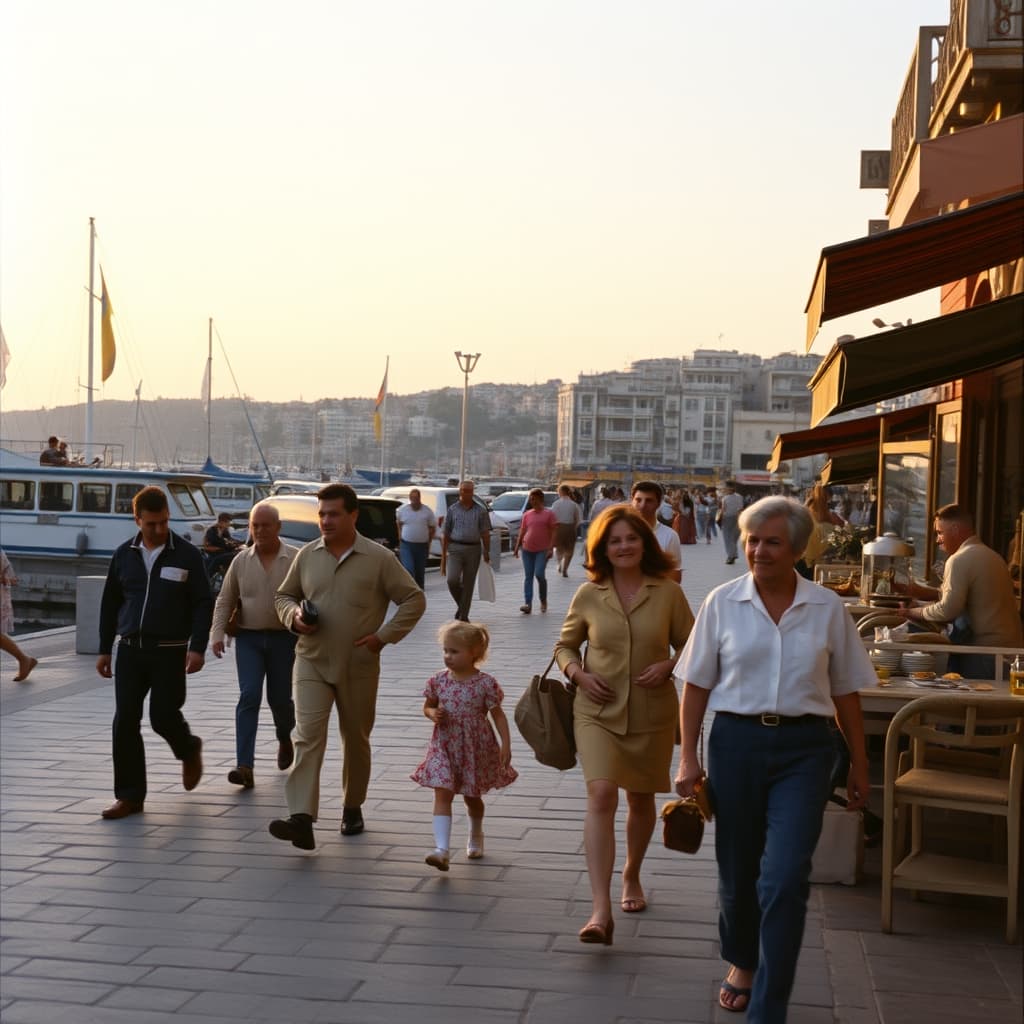
In a coastal town, the evening walk began when the day's heat released its hold on stone streets. Chairs moved toward doorways, families changed clothes, shop lights came on, and a familiar route opened between the centre and the waterfront. The walk had no urgent destination. Its purpose was to see the town change pace, meet known faces, feel the sea air, and stretch a summer evening into shared public time.
The custom varied by coast, decade, class, age, tourism, and local geography. A harbour road, town square, market street, pier, or garden could serve as the promenade. Some residents walked daily; others worked while visitors strolled. Photographs, municipal plans, shop advertisements, transport schedules, and oral histories help locate a remembered route rather than turning every coastal town into the same postcard.
The Route Was Socially Mapped
Families knew where to slow, which bench offered air, and where relatives were likely to appear. Children moved ahead and returned; older residents chose level sections and regular rests. Greetings could be brief or extend into conversation. Repetition turned buildings, trees, kiosks, and lamps into markers. The route recorded belonging through recognition rather than ownership.
Being visible also brought pressure. Clothing, companionship, gender expectations, and reputation shaped who could walk freely and how late. Young people negotiated supervision and privacy in a space where many adults recognised them. Women, disabled residents, workers, newcomers, and minorities did not necessarily experience the same safety or welcome. Warm communal memory should keep these differences in view.
The Promenade Was a Workplace
Ice-cream sellers, tea gardens, photographers, snack vendors, cafés, transport workers, cleaners, police, musicians, and shop staff served the evening crowd. Their work intensified when the air became pleasant for everyone else. Seasonal income depended on weather, tourism, rent, permits, and supply deliveries. The relaxed walk rested on long shifts and public services.
Food smells and street sounds joined the ritual, but public space needed rules. Waste, crowding, noise, traffic, and smoke affected residents and the shore. Vendors required hygienic service and fair licensing. Benches, toilets, lighting, shade, safe crossings, and accessible surfaces determined whether the promenade truly welcomed a broad public.
Sea Air Did Not Remove Risk
Waterfront edges, slippery stones, poor lighting, waves, and moving vehicles required attention, especially for children. Swimming after dark, climbing barriers, or approaching working harbour equipment could be dangerous. Familiarity with the coast is not a substitute for maintained railings, lifesaving provision, weather awareness, and adult responsibility.
Coastal development later changed many routes. Roads widened, cars occupied space, shorelines were filled, tourism expanded, or promenades were redesigned. Some improvements increased access and safety; others displaced small businesses or erased local texture. Preservation should not freeze a town against residents' needs, but it can retain scale, public passage, and evidence of older use.
A Digital Nostalgia Archive can connect family photographs, promenade maps, shop receipts, vendor permits, postcards, weather records, and testimony from residents and workers. Dates and locations should be verified. The evening walk appears brighter in memory because it made time visible. As heat faded from the stones, the whole town seemed to agree that the day was not finished yet.