 Eski Pano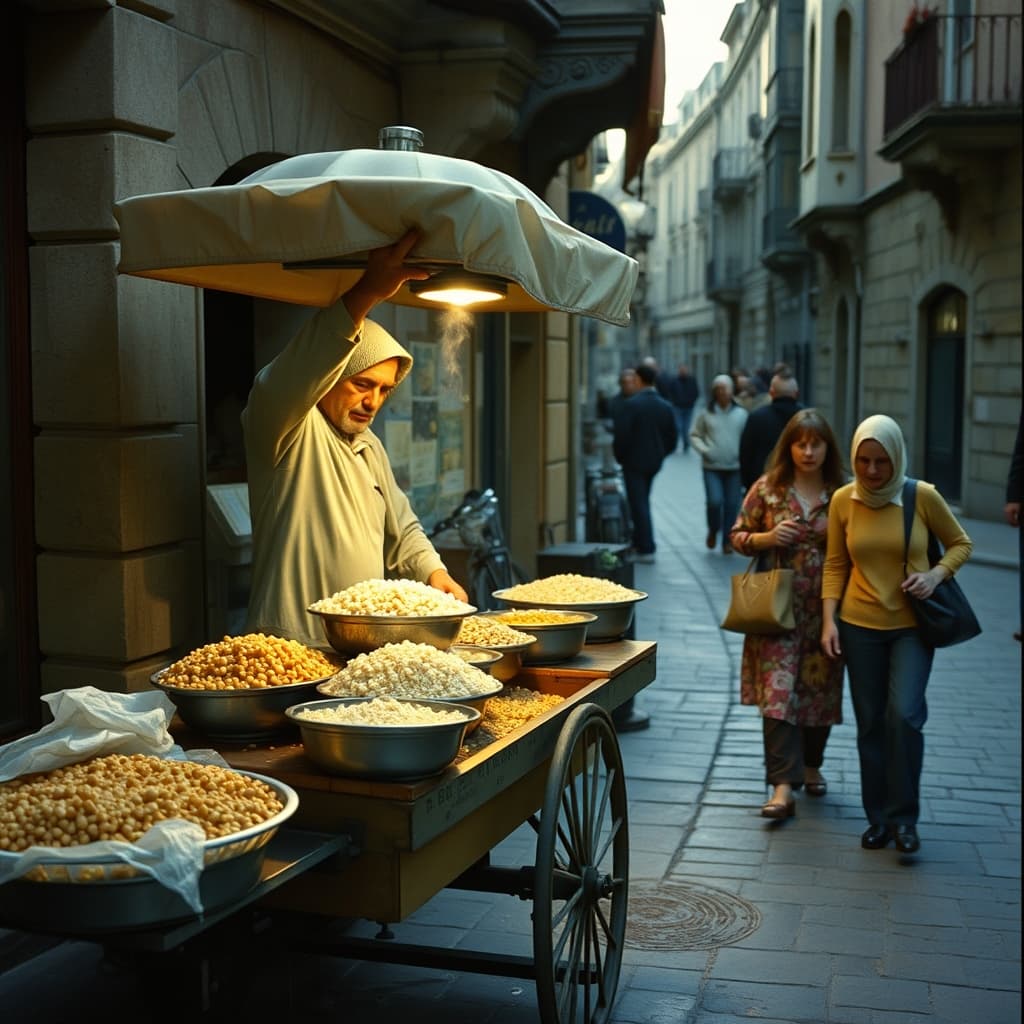
A street cart lifting its lid could release the smell of warm rice, chickpeas, butter or oil into an entire side street. The portion might be eaten standing nearby, carried home, or placed on the family table as a quick evening meal. Nohutlu pilav felt both public and domestic: prepared through vendor skill, then completed by the place, companions, pickles, ayran, or conversation surrounding it.
Recipes vary. Some rice is cooked in broth, some in water; fats, grain varieties, soaking methods, and seasoning differ. Chickpeas may cook separately and be folded through or placed on top. Chicken is common in some servings but not inherent in every chickpea pilaf. A food history should distinguish plain, chickpea, and chicken versions instead of blending them into one universal plate.
Texture Began Before the Cart
Rice was selected, measured, and often rinsed or soaked according to method. Chickpeas required sorting, soaking, and complete cooking. Liquid ratio, pot width, heat, and resting determined whether grains stayed separate. The large batch demanded consistency because one error affected many portions. Familiar aroma came from technique as much as ingredients.
Preparation also required clean water, sound ingredients, washed hands, sanitised utensils, and separation of raw and cooked foods. Dried chickpeas and rice need pest-free storage. Chicken, when used, must be handled apart from ready-to-eat components and cooked thoroughly. Historical popularity is not evidence that unsafe shortcuts were harmless.
Hot Holding Was Central to Safety
Cooked rice can support harmful bacterial growth when kept for long periods at unsafe temperatures. Vendors and households need effective hot holding, temperature monitoring, small-batch planning, protected service, and rapid cooling of any leftovers according to current local guidance. Reheating does not reliably correct every mistake made during slow cooling or prolonged warm storage.
A cart's steam is appealing but not a substitute for measurement and inspection. Clean serving spoons, covered containers, hand hygiene, safe drinking water, waste control, allergen information, and protection from dust and traffic matter. Customers deserve food that is both culturally familiar and professionally handled.
The Vendor Managed More Than a Pot
Street sellers bought ingredients, prepared early, transported heavy equipment, secured a location, served rapidly, made change, answered regulars, cleaned, and absorbed weather and price risk. Licences and inspection could recognise the trade while also creating barriers when rules ignored working realities. The vendor's call and shining cart belonged to labour, not scenery alone.
Price made the dish important. Rice and chickpeas offered a filling meal whose affordability varied with inflation, portion size, neighbourhood, and added chicken. Some customers depended on it during late shifts or travel; others treated it as an occasional pleasure. Oral histories should ask who ate, when, and why rather than assume a single class identity.
A Digital Nostalgia Archive can connect carts, ladles, permits, price boards, market receipts, recipes, neighbourhood photographs, and testimony from cooks and customers. Old food itself is not an archive object to taste. Chickpea rice pilaf filled the street because aroma announced a practical promise: a hot portion, served quickly, carrying the careful preparation and economic calculation of a whole working day.