 Eski Pano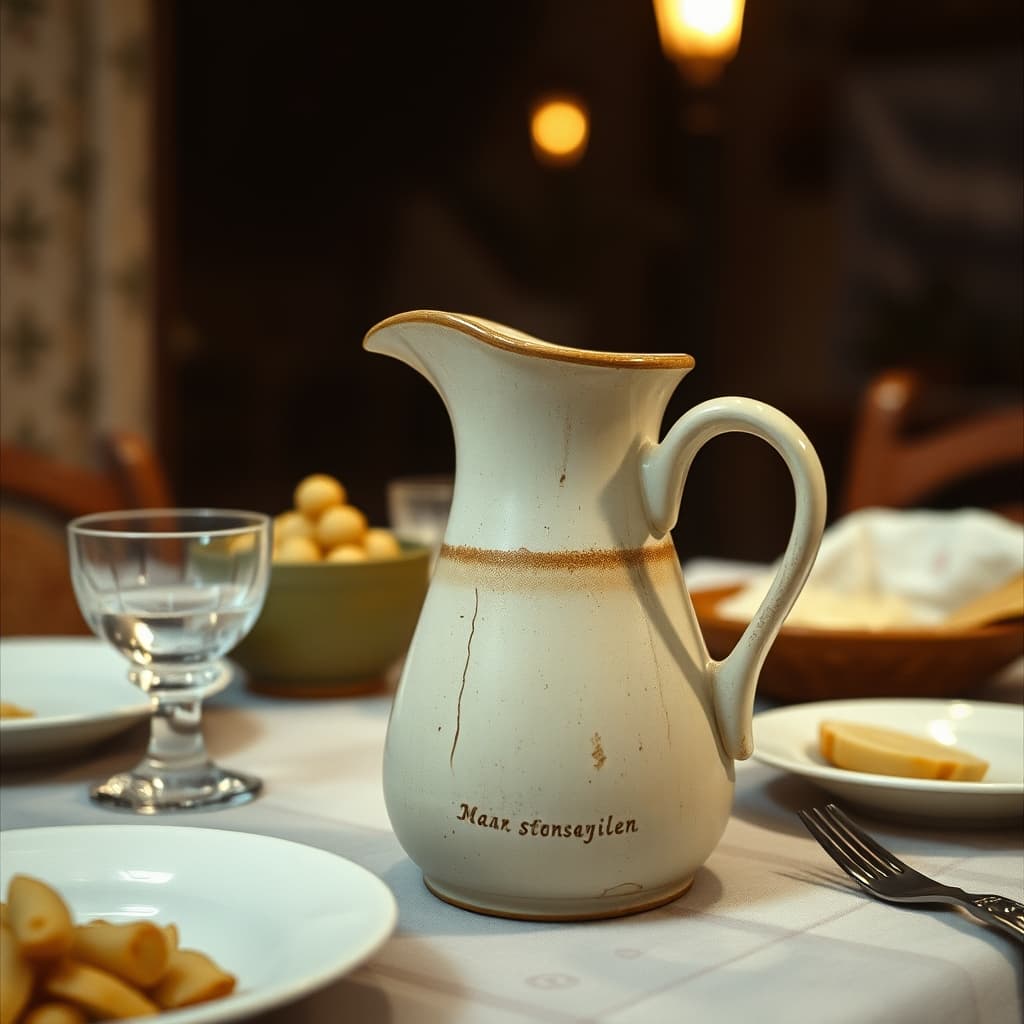
A ceramic pitcher can spend decades on a table without seeming remarkable. It carries water, ayran, sherbet, or another drink, returns to the kitchen, dries, and appears again. The traces are quiet: a dull patch where fingers held the handle, a mineral line inside, a small chip at the lip, or a darker repair. Daily repetition turns the vessel into a record even when nobody wrote down its history.
Pitchers vary in clay body, forming method, firing, glaze, decoration, capacity, and intended use. Earthenware, stoneware, porcelain, and industrial ceramic are not interchangeable terms. A maker mark or workshop tradition may help identify an object, but shape and painted motif alone rarely prove origin. Dimensions, weight, fabric, glaze, tool marks, and reliable provenance need comparison.
Use Appeared at Contact Points
The handle carried repeated stress, especially when the pitcher was full. Fine cracks near its joins, polished areas, or old adhesive reveal handling and repair. The rim met cups, utensils, and shelves. The foot ring collected abrasion. Interior deposits can indicate hard water or long standing, though a stain cannot by itself identify the liquid once held.
A chip is evidence and a potential hazard. Sharp edges can cut, cracks can harbour contamination, and porous bodies may absorb liquids. Old glazes can contain lead or other hazardous substances, while decorative surfaces may not have been designed for food contact. An heirloom pitcher should not return to drink service without appropriate professional testing and condition assessment.
The Table Gave It a Social Role
Someone filled the pitcher, placed it within reach, noticed when a guest's glass emptied, and carried it back for more. The vessel organised hospitality through capacity and position. Its weight influenced who could pour. Children might use both hands; an older person might ask for a smaller jug. Everyday design affected participation at the table.
Decoration also entered the room's visual language. A floral sprig, geometric band, plain cream glaze, or commercial transfer could match plates or stand apart as a favourite. Nostalgia can make one object seem exceptional because it survived. Comparison with catalogues and household inventories may reveal that it was once common, affordable, and widely distributed—facts that increase rather than reduce its social value.
Cleaning Can Erase the Record
Abrasive powders, bleach, dishwashers, soaking, and sudden temperature change can damage historic ceramics, repairs, paint, gilding, and porous cracks. Mineral deposits should not be attacked before material and stability are known. Conservators distinguish removable dirt from evidence and from changes integral to the glaze. A bright result is not always a better-preserved object.
Storage should support the base rather than suspend the pitcher by its handle. Lids, if present, need separate protection. Heavy objects should not be stacked inside. Photographs of all sides, underside, interior, damage, and repair establish condition. Family testimony should name users, place, date range, and uncertainty without inventing a single dramatic event.
A Digital Nostalgia Archive can connect the pitcher to maker catalogues, table photographs, purchase receipts, water practices, repair records, and voices of those who served from it. The vessel attracts collectors because ordinary use wrote slowly across its surface. Its beauty lies not only in glaze or pattern, but in the nearly invisible choreography of filling, pouring, washing, and returning it to the same shelf.