 Eski Pano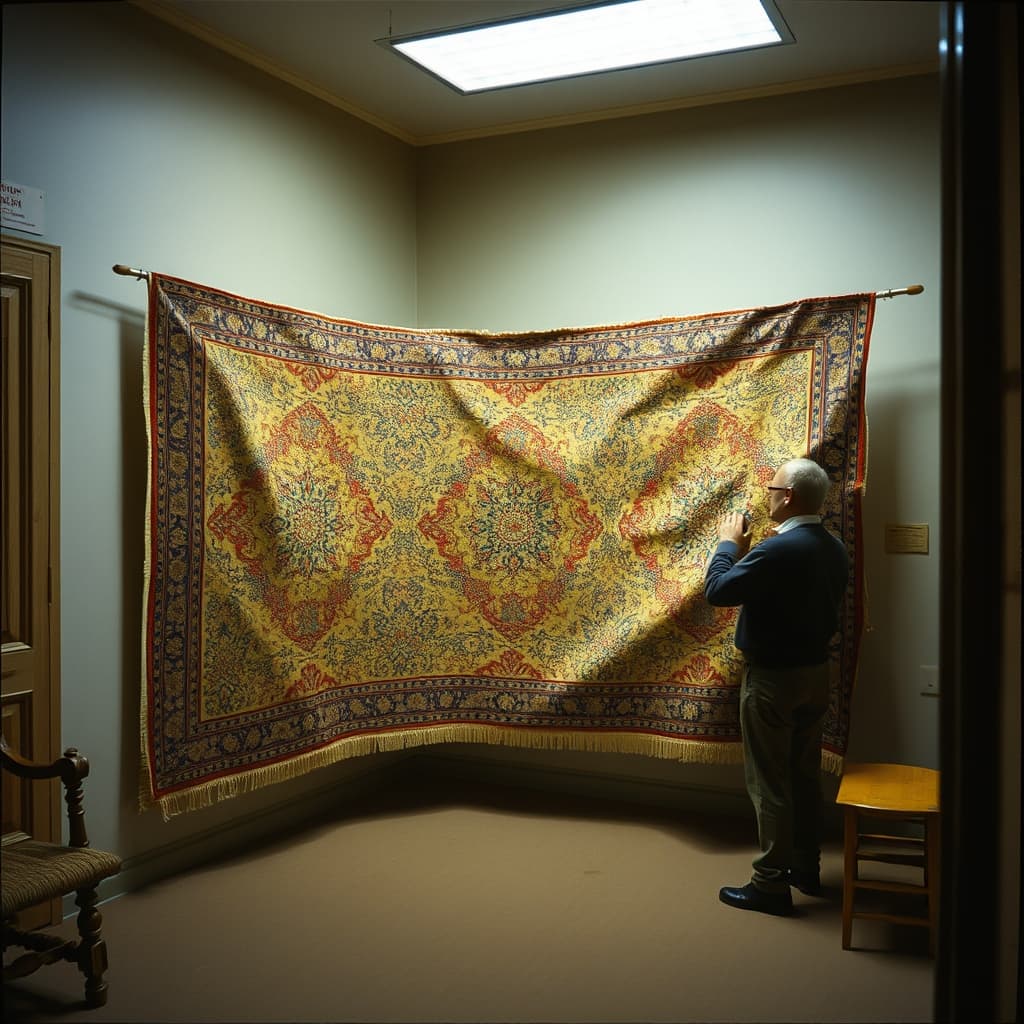
A wall carpet passed through a family can look stable because it has hung for decades, yet gravity, light, dust, insects, and old fixing methods may be weakening it quietly. Preservation starts by treating the textile as both a material object and a documented family possession. The aim is not to make it look new, but to understand how it was made, how it entered the household, and how it can remain supported without losing evidence.
Wall carpets include pile rugs, flatweaves, embroidered hangings, machine-made pictorial textiles, printed fabrics, and works adapted from floor use. Fibre, structure, dye, backing, fringe, repair, size, weight, and intended orientation differ. A label such as tapestry or kilim may describe appearance rather than technique. Close examination and specialist advice prevent the wrong care method from being applied.
Provenance Must Be Separated from Attribution
A family may remember that an aunt brought the carpet from a town, but that does not prove who wove it, where materials originated, or whether it was new at the time. Receipts, letters, dowry lists, photographs, maker labels, workshop records, oral histories, and comparable textiles can strengthen an account. Conflicting memories should remain attributed to their speakers.
Motifs and colour schemes can support research but rarely establish community, ethnicity, village, or date on their own. Dealers and inherited notes may use broad or outdated labels. A responsible catalogue records observable structure, traditional family terminology, research-based possibilities, and uncertainty separately. Named makers deserve credit when evidence exists, especially women whose labour was absorbed into a household story.
A Hanging System Must Distribute Weight
Nails, tacks, clips, rings, narrow rods, adhesive strips, and a few sewn loops concentrate stress and can tear edges. Heavy textiles require an engineered support that distributes weight across a broad area and suits the weave, condition, wall, and seismic or vibration risk. Conservators often design reversible systems, but no single method is correct for every object.
The wall itself matters. Damp, cold surfaces, condensation, leaking pipes, unstable plaster, fireplaces, radiators, kitchens, exterior walls, and direct sun can damage fibre and dye. Air should circulate without creating movement or abrasion. Fixings must suit the wall and total load. A falling textile can injure people as well as destroy the object.
Light and Dust Change the Surface Slowly
Daylight and strong artificial light fade dyes and weaken fibres cumulatively; the damage cannot be reversed by resting in darkness. Blinds, filtered glazing, lower light levels, limited display periods, and rotation reduce exposure. A photograph of the original colour balance helps monitor change, but camera settings and screen differences must be documented.
Dust is abrasive and feeds some pests, but household vacuuming can pull fibres, fringes, or loose repairs. A conservator may recommend low-suction cleaning through a screen after condition assessment. Beating, washing, steam, carpet shampoo, scent, baking soda, stain remover, and dry-cleaning without specialist evaluation can cause bleeding, shrinkage, distortion, or residue.
Webbing, holes, larvae, cast skins, frass, or fresh loss may indicate insects. Isolate the textile and inspect nearby wool, fur, feathers, upholstery, and stored cloth. Pesticide sprays can harm people and materials. Integrated pest management uses identification, cleaning, monitoring, environmental control, and targeted professional treatment rather than routine poison.
A Digital Nostalgia Archive can link the carpet with high-resolution front and back images, measurements, weave analysis, family testimony, acquisition documents, condition map, hanging design, light log, pest monitoring, and conservation decisions. Becoming an heirloom is not a magical quality acquired through age. It is a documented relationship sustained by attribution, consent, careful support, and honest acknowledgement of what the family knows and what remains uncertain.