 Eski Pano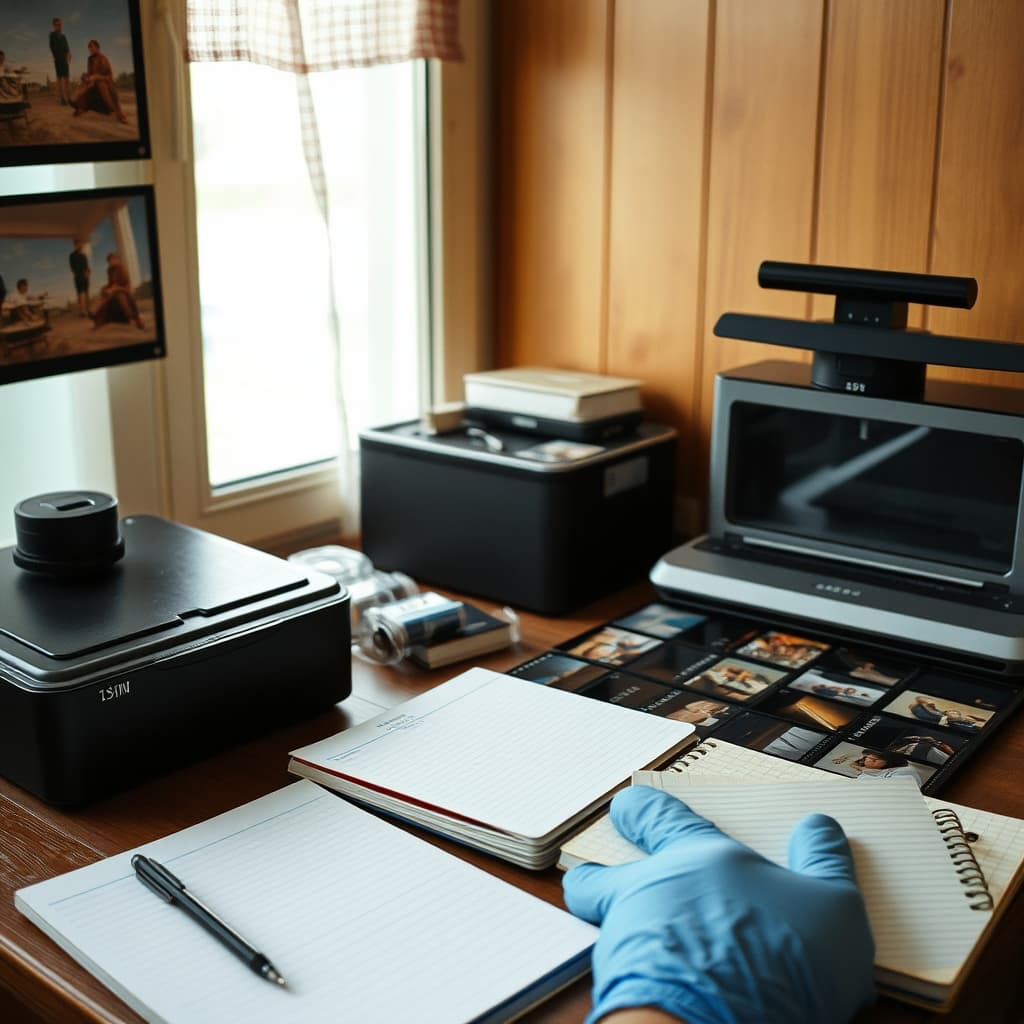
The glow of a slide projector can make family history feel immediate, but repeated projection is not the safest way to preserve a collection. Lamps produce heat and intense light, mechanisms can jam, and fingerprints or dust become part of every viewing. Digitisation can reduce handling and broaden access, provided it records the physical slides carefully instead of replacing them with disconnected image files.
Family slides may include different colour and black-and-white films, formats, mounts, laboratories, cameras, dates, and processing histories. A carousel, magazine, box, envelope, or handwritten list may preserve the original sequence. Before cleaning or scanning, assign identifiers and photograph containers, labels, mount fronts, mount backs, and existing order. Removing everything into a new arrangement can erase the evening's narrative structure.
Condition Determines the Workflow
Inspect slides in a clean, dry area with gentle transmitted light. Look for dust, fingerprints, scratches, warped mounts, broken glass, adhesive failure, colour shifts, fading, condensation, insects, and suspected mould. Active mould should be isolated and assessed by a conservator; blowing, brushing, or projecting it can spread spores and damage softened emulsion. Household glass cleaner and water are not safe universal treatments.
Film bases and dyes age differently. Some colour materials shift toward red, magenta, blue, or yellow, while density and contrast change. A digital correction can improve legibility, but it should not become the only record. Preserve a neutral master scan and document any restoration applied to access copies. Colour reference targets and calibrated displays make adjustment more repeatable.
Scanning Is a Capture Decision, Not a Magic Repair
Dedicated film scanners, camera-copy systems, and professional services each have strengths. Resolution should match the detail in the original, not an arbitrary large number. Bit depth, dynamic range, focus, flatness, cropping, infrared dust removal, sharpening, and compression affect results. Glass-mounted slides and unusual formats may require specialist equipment.
Capture the full image area and enough border to show that nothing was accidentally cropped. Save a preservation master in a stable, lossless format with embedded colour profile, then create smaller derivatives for browsing. File names should use the unique object identifier rather than only a guessed event or person's name. The physical slide remains the source object and should not be discarded after scanning.
Metadata Gives Digital Images a Place
Useful fields include identifier, box and sequence number, photographer if known, date or range, place, people, event, film stock, processor, mount inscriptions, condition, scanner, settings, capture date, operator, rights, and uncertainty. Family members may identify people differently; record contributors and confidence instead of forcing agreement. A caption should distinguish what is visible from what is remembered.
Privacy and copyright remain important. Domestic slides may show children, private homes, medical situations, military service, religious practice, workplaces, or people who never expected public circulation. The photographer or heirs may hold copyright, while depicted people have privacy interests. A family archive needs access levels, consent decisions, takedown procedures, and a reasoned public-use policy.
One hard drive is not preservation. Keep multiple verified copies in separate locations, monitor checksums, migrate storage, document folder structures, and test recovery. Cloud services can add resilience but introduce cost, account dependency, jurisdiction, and privacy questions. Printed indexes or contact sheets can help relatives browse without exposing an entire archive online.
A Digital Nostalgia Archive can connect each scan to the original mount, container, sequence, condition report, technical capture record, contributor statements, permissions, and backup history. The excitement around a projector came from light, order, narration, and gathering. Responsible digitisation preserves those relationships while reducing heat and handling, making corrections transparent, protecting private lives, and ensuring that a future viewer can trace every image back to a real object.