 Eski Pano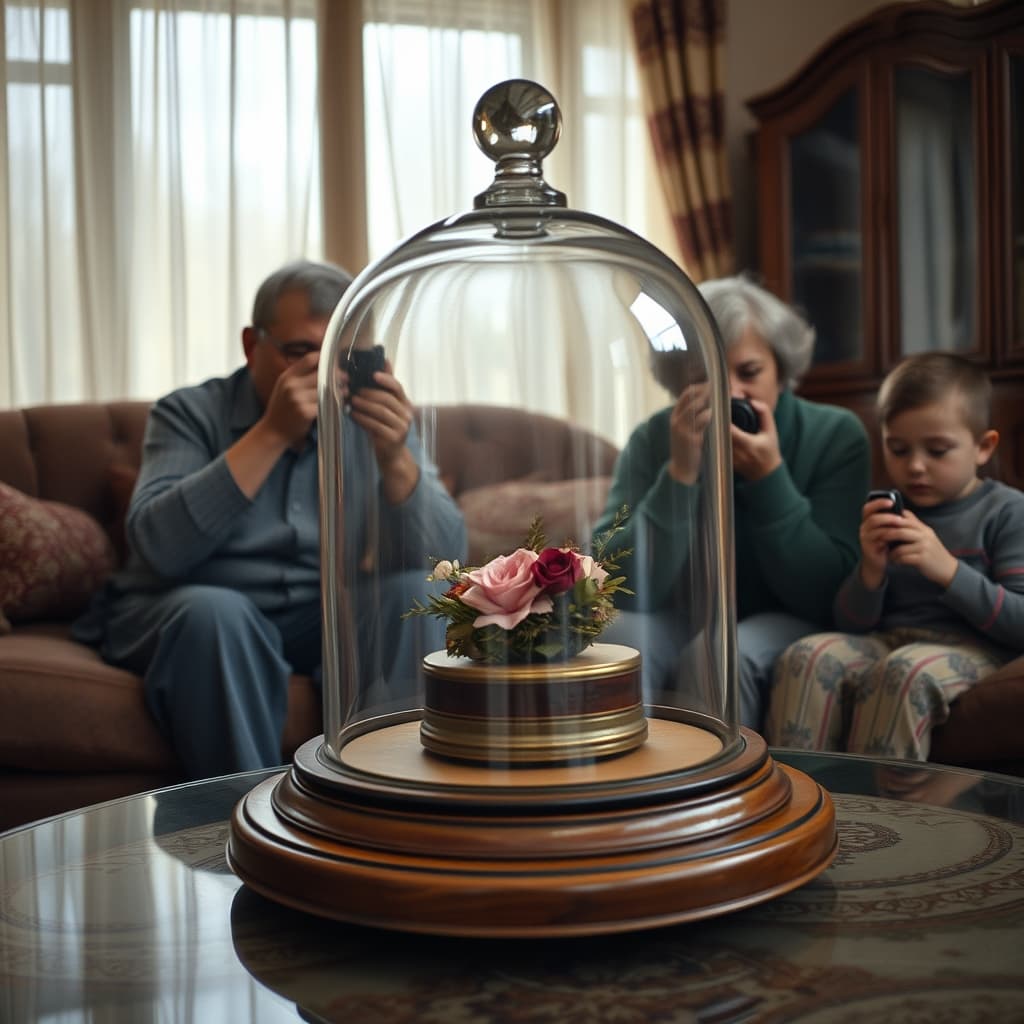
A glass display dome in a grandmother's unchanging corner could turn one household object into a small museum exhibit. Beneath the curved surface might sit artificial flowers, a clock, wax ornament, religious keepsake, wedding souvenir, textile, photograph, or arrangement assembled by hand. The dome carried patience because cleaning, positioning, and protecting the contents were repeated acts rather than a single decorative choice.
Glass domes vary in manufacturing method, thickness, colour, bubbles, seams, rim, dimensions, and base. Some are hand blown, some moulded, and some modern replacements. Bell jars made for scientific use can resemble domestic covers but have different histories. The dome, base, contents, labels, photographs, receipts, and oral testimony should be documented as one assemblage before identifying origin or date.
The Dome Changed How an Object Was Seen
Curved glass separated the contents from touch while magnifying, reflecting, and sometimes distorting them. The wooden or fabric-covered base created a stage. Placement on a high shelf, cabinet, mantel, or corner table signalled value and controlled who could approach. A familiar object became ceremonial because its boundary was visible.
The arrangement might commemorate marriage, military service, travel, bereavement, faith, craft, or family status. Later generations can misread it if objects were rearranged or replaced. Photographs showing the same corner across years help trace change. Uncertainty should remain explicit when the maker, original contents, or reason for display is unknown.
A Dome Is Not a Perfect Conservation Environment
Glass reduces direct handling and some dust, but it does not automatically control humidity, temperature, ultraviolet light, insects, off-gassing, or condensation. A tight dome over damp material can trap moisture. Wood, adhesives, paint, foam, fabric, wire, and artificial flowers may release chemicals or stain one another. Direct sun can overheat the interior and fade contents.
Cleaning the outside with excess liquid can drive moisture under the rim. Household glass cleaner may affect painted decoration, metal mounts, wood finish, or labels. The dome should not be lifted by a knob unless designed for it, and thin glass can crack from twisting, impact, or temperature change. Two hands, a cleared surface, and support from the base reduce risk.
The Fixed Corner Needs a Material-Specific Plan
Before moving the assemblage, photographs should record every side, reflections controlled as far as possible, object positions, spacers, fasteners, dust lines, base construction, damage, and room location. Each component may need different expertise: glass, wood, metal, textile, paper, wax, plant material, or plastic. One cleaning method cannot safely serve all.
A broken dome has sharp, unstable edges and should be isolated. Gluing historic glass with household adhesive can stain, misalign, and complicate later treatment. A conservator can advise whether to stabilise, replace for display while retaining fragments, or create a support. New covers should be labelled as replacements rather than presented as original.
Digitisation can use diffuse lighting, polarisation, multiple angles, detail images, scale, and colour reference. Removing contents for a clearer photograph may destroy arrangement evidence; it should happen only after documentation and with appropriate support. Family consent matters when the dome contains sacred items, portraits, mourning objects, or private inscriptions.
A Digital Nostalgia Archive can connect the dome with its base, contents, corner photographs, furniture plans, shop receipts, repair history, cleaning routines, and interviews with the people who arranged and cared for it. It became a household museum because protection and display were practised together. Preserving that meaning means keeping beauty beside material incompatibility, dust, humidity, light, breakage, uncertain provenance, and the careful hands that maintained an apparently unchanged corner.