🇹🇷 Türkçe | Bayram Öncesi Parlayan Yemek Termosu: Kullanışlı Bir Eşyadan Aile Mirasına Uzanan Hikâye
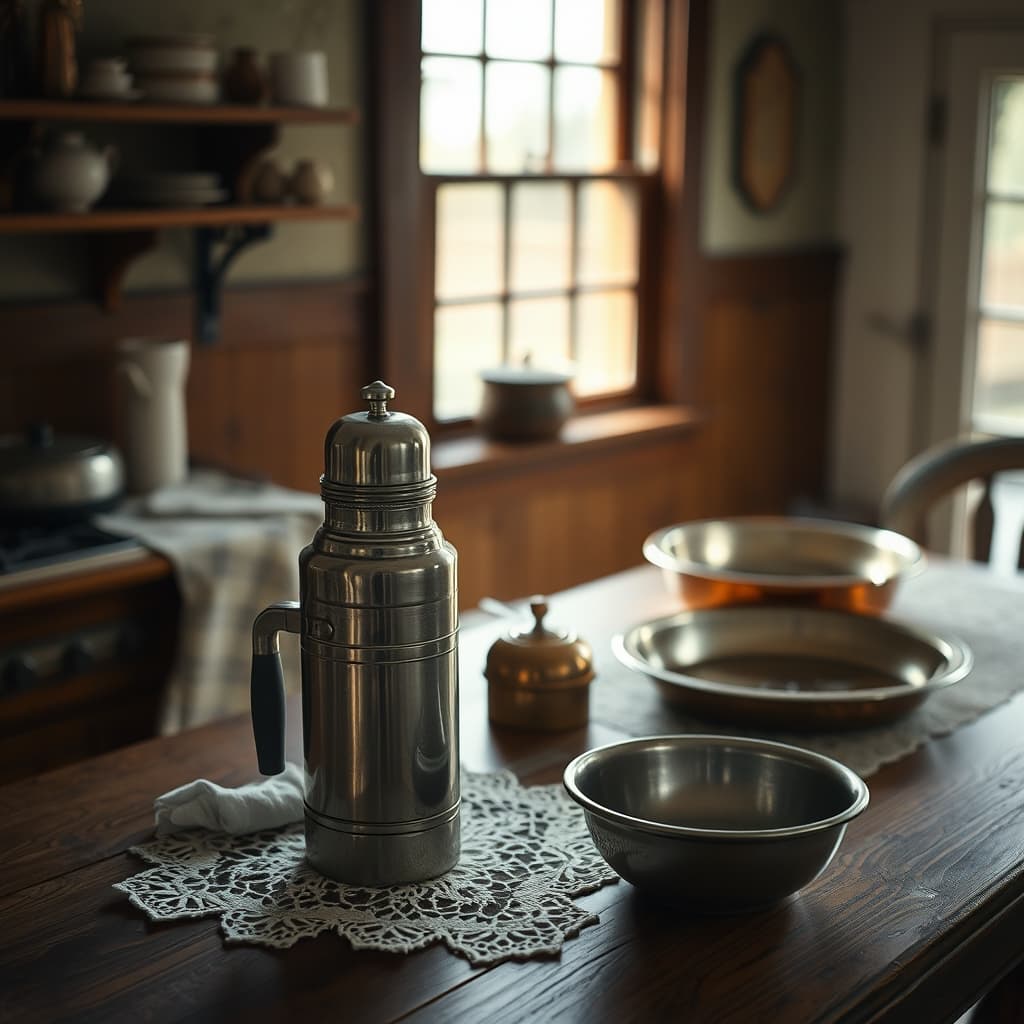
Bayramdan birkaç gün önce evin düzeni değişirdi. Halılar silkelenir, perdeler yıkanır, vitrin rafları tek tek silinirdi. Bu büyük temizlikte mutfak dolabının üst rafından dikkatle indirilen eşyaların başında çoğu zaman yemek termosu gelirdi. Metal gövdesi yumuşak bir bezle ovalanır, kapağı sıcak suyla temizlenir, yılların matlığı bir anda ışığa dönerdi. O an, bir eşyanın yalnız kullanıldığını değil, aile içinde hatırlanarak korunduğunu gösterirdi.
Yemek termosu, özellikle kalabalık aile düzeninde pratik bir ihtiyaçtan doğmuştu. İşe giden babaya sıcak çorba götürmek, köyden şehre gelen misafire hazırlanan yemeği sıcak tutmak, komşuya gönderilen ikramın ısısını korumak için kullanılırdı. Fakat zamanla bu işlevin ötesine geçti. Termos, ev içi dayanışmanın dolaşan objesine dönüştü. Bir gün bir akrabaya gider, ertesi gün geri döner; her dönüşünde yeni bir hikâye getirirdi.
Bayram temizliğinde parlatılması tesadüf değildi. Çünkü bayram, yalnız misafir ağırlamak değil, evin belleğini de tazelemekti. Dantel örtüler serilirken, bakır tepsiler cilalanırken, termos da aynı özenle hazırlanırdı. Çocuklar bu hazırlığı izlerken “buna iyi bakın, annenannenizden kaldı” cümlesini duyar, bir eşyanın fiyatıyla değil geçmişiyle değer kazandığını öğrenirdi. Böylece gündelik bir mutfak aracı, kuşaktan kuşağa aktarılan sembolik bir bağa dönüşürdü.
Obje hikâyeleri açısından yemek termosunun cazibesi, tasarım ve kullanımın dengesinde saklıdır. Kalın cam haznesi ısıyı uzun süre tutar, metal kabuk darbeye karşı koruma sağlar, taşıma kulpu onu hareketli yaşamın parçası yapardı. Estetik olarak sade görünse de yüzeyindeki çizikler, kapağındaki küçük aşınmalar, içine sinen baharat kokusu onu kişisel kılardı. Yeni bir eşya kusursuz olabilir; ama eski bir termosun kusurları çoğu zaman aile tarihinin dipnotlarıydı.
Mahalle hayatında da bu objenin sosyal bir dolaşımı vardı. Doğum yapan komşuya sıcak yemek gönderilirken, hasta ziyareti için çorba hazırlanırken, cenaze evine destek taşınırken termos sessizce görev alırdı. Bu hareket, yalnız yemek değil dayanışma taşırdı. “Boş göndermeyelim” anlayışıyla geri dönen termosun içine bazen tatlı, bazen meyve konurdu. Böylece metal bir kap, karşılıklı hatırın ve inceliğin taşıyıcısı hâline gelirdi.
Bugün paketli servis, tek kullanımlık kaplar ve hızlı tüketim düzeni sayesinde işlerin çoğu daha kolay. Ancak bu kolaylık, bazı objelerin kurduğu duygusal bağları da zayıflattı. Yemek termosuna duyulan nostalji, yalnız eski bir mutfak malzemesine özlem değildir. Asıl özlem, emekle hazırlanan yemeğin bir aileden diğerine sıcak ulaşmasını önemseyen ilişki biçiminedir. Termosun kapağı açıldığında yükselen buhar, çoğu zaman “yalnız değilsin” mesajını taşırdı.
Bu yüzden bayram temizliğinde yeniden parlayan yüzü hafızada kalır. Çünkü o parlaklık, metalin değil birlikte yaşamanın ışığıdır. Yemek termosu bugün vitrin köşesinde dursa bile hâlâ bir çağrışım üretir: paylaşmak, saklamak, devretmek. Aile mirası bazen büyük sandıklar ya da değerli mücevherler değildir; çoğu zaman sofradan sofraya taşınan, elde yıpranan ama anlamı büyüyen gündelik objelerdir. Termosun hikâyesi de tam burada, sıcaklığını yıllar sonra bile koruyan bir kültürel hafıza olarak yaşamaya devam eder.
🇬🇧 English | The Food Thermos Polished Before Holidays: How a Practical Object Became Family Heritage
A few days before holidays, the order of the house shifted. Carpets were beaten, curtains were washed, and glass cabinets were cleaned shelf by shelf. In that deep cleaning, one of the carefully lowered items from the top kitchen shelf was often the food thermos. Its metal body was rubbed with a soft cloth, the lid washed in hot water, and years of dullness turned into shine. That moment showed not only that an object was used, but that it was remembered and cared for within family life.
The food thermos began as practical necessity in crowded households. It carried hot soup to a father at work, kept meals warm for visiting relatives, and preserved temperature for food sent to neighbors. Over time, though, it exceeded function. The thermos became a circulating object of domestic solidarity. It left home in one direction and returned in another, often carrying a new story each time.
Its polishing before holidays was no coincidence. Holiday preparation was not only about receiving guests; it was also about refreshing household memory. Lace cloths were laid out, copper trays were polished, and the thermos was prepared with equal care. Children heard lines like “take care of this, it came from your grandmother,” and learned that value could come from continuity, not price. A simple kitchen container became an intergenerational symbol.
From an object-story perspective, the thermos is compelling because it balances design and use. The thick glass interior keeps heat, the metal shell protects against impact, and the handle supports movement through daily routes. It appears plain, yet scratches on its body, wear near the lid, and traces of spice scent make it personal. New objects may be flawless; old thermoses are meaningful because their imperfections are notes in family history.
In neighborhood life, this object also had social circulation. It carried soup to a house with a newborn, warm food to someone ill, and support meals to mourning families. In these trips, it transported more than food; it transported care. The unwritten rule was not to return it empty. Sometimes dessert came back inside, sometimes fruit. In this way, a metal container became a vessel of reciprocity and social grace.
Today, delivery systems, disposable packaging, and speed-oriented routines make many tasks easier. Yet this convenience weakened some emotional bonds once built through shared objects. Nostalgia for the food thermos is not merely attachment to old kitchenware. It is longing for a relational culture where warm food reaching another home still mattered. When the lid opened and steam rose, it often carried a message: you are not alone.
That is why its renewed shine before holidays remains memorable. The brightness was not only on metal; it reflected collective living. Even if a thermos now sits quietly in a display corner, it still calls up practices of sharing, preserving, and passing on. Family heritage is not always trunks and jewelry. Often it is everyday objects worn by hands and enlarged by meaning from table to table. The story of the food thermos continues as cultural memory whose warmth endures far beyond its original use.
🇧🇷 Português (Brasil) | O Termos de Comida Polido Antes do Feriado: Como um Objeto Prático Virou Herança Familiar
Alguns dias antes do feriado, a ordem da casa mudava. Tapetes eram batidos, cortinas lavadas, prateleiras do armário de sala limpas uma a uma. Nessa faxina grande, um dos objetos retirados com cuidado do alto do armário da cozinha era o termos de comida. O corpo metálico era lustrado com pano macio, a tampa lavada em água quente, e o aspecto opaco de anos voltava a brilhar. Esse gesto mostrava que o objeto não era apenas usado, mas lembrado e preservado.
O termos surgiu como necessidade prática em famílias numerosas. Servia para levar sopa quente ao trabalho, manter a comida aquecida para visitas, enviar refeições ao vizinho sem perder temperatura. Com o tempo, porém, passou da função técnica para o valor afetivo. O termos virou objeto circulante da solidariedade doméstica. Ia para uma casa, voltava de outra, e em cada retorno trazia uma pequena história.
O brilho renovado na limpeza de feriado não era acaso. Preparar o feriado não era só arrumar para receber convidados; era atualizar a memória da casa. Enquanto toalhas rendadas eram colocadas e bandejas de cobre polidas, o termos recebia o mesmo cuidado. Crianças ouviam frases como “isso era da sua avó” e aprendiam que valor nem sempre vem de preço, mas de continuidade. Um utensílio comum virava elo entre gerações.
Na lógica das histórias de objetos, o termos chama atenção pelo equilíbrio entre design e uso. O interior de vidro espesso conserva calor, o corpo metálico protege impactos, a alça facilita o transporte. À primeira vista parece simples, mas riscos, marcas de uso e até o cheiro de tempero acumulado o tornam único. Objetos novos podem ser perfeitos; os antigos ganham força justamente nas imperfeições que registram o tempo.
No bairro, esse objeto também tinha vida social. Ia com sopa para a casa de quem acabara de ter bebê, com comida quente para visita a doentes, com refeição de apoio em velórios. Ele carregava mais que alimento: carregava cuidado. Havia a regra implícita de não devolver vazio. Às vezes voltava com doce, às vezes com fruta. Assim, um recipiente metálico se tornava veículo de reciprocidade e delicadeza.
Hoje, aplicativos, embalagens descartáveis e rotinas aceleradas facilitam muito o dia a dia. Mas essa facilidade também enfraqueceu vínculos afetivos criados por objetos compartilhados. A saudade do termos não é apenas saudade de utensílio antigo. É saudade de uma cultura relacional em que entregar comida quente à outra casa tinha peso simbólico. Ao abrir a tampa e ver o vapor subir, a mensagem era clara: você não está sozinho.
Por isso o brilho do termos antes do feriado ficou tão vivo na memória. Não era brilho apenas de metal, e sim da vida em comum. Mesmo quando hoje ele fica num canto do armário, ainda convoca ideias de partilha, cuidado e transmissão. Herança familiar nem sempre é joia ou baú antigo. Muitas vezes é objeto cotidiano, gasto pelas mãos e ampliado em significado de mesa em mesa. A história do termos segue como memória cultural de calor duradouro.