 Eski Pano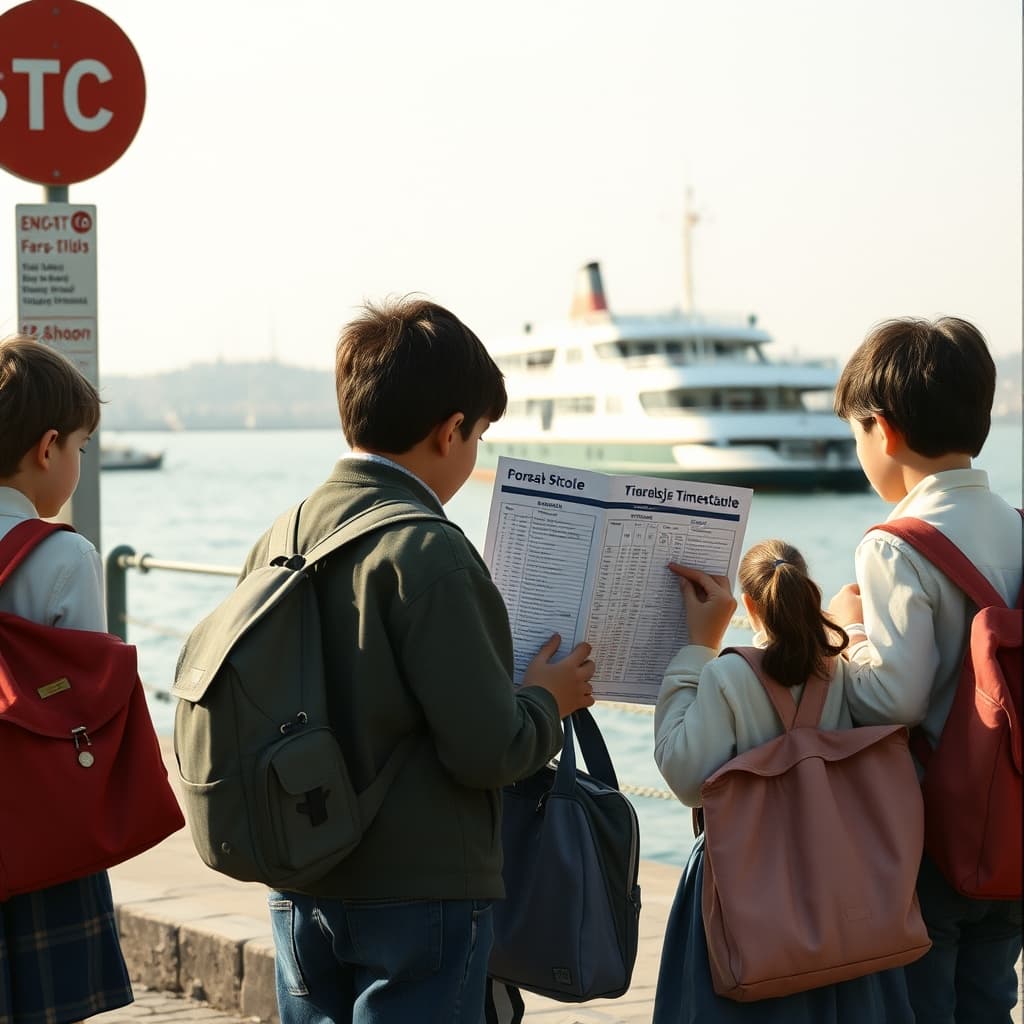
A city ferry journey could become memorable before the vessel left the landing. A pupil returning after the school bell had to know which departure was useful, how long the walk to the pier would take and what connection waited on the other side. The water crossing offered views and sounds, but the deeper urban lesson was practical: a timetable turned separate districts into a sequence that could be learned.
Routes, ticket systems and vessels changed over time. The phrase “city lines” can refer to a service network rather than one universal experience, so a reliable account identifies the landing, approximate period and direction of travel. A remembered school route should not be expanded into a claim about every passenger or every ferry in the fleet.
The Timetable Began at the School Gate
The printed departure time acquired meaning through distance on foot. Leaving class a few minutes late could change which sailing was possible. Friends might walk together and separate at a junction; a queue at the landing could make the margin visible. The timetable was therefore read against the body’s pace and the city’s obstacles, not as an abstract list.
Missing a departure did not always mean disaster, but it could alter a transfer, delay arrival home or require waiting in an exposed place. Families built expectations around broad routines. The child learned whom to inform when plans changed, where to wait and which alternative was acceptable. These details belong to mobility history as much as the vessel itself.
A Landing Was a Point of Translation
At the pier, street movement became maritime movement. Signs, gates, ticket windows, announcements and the behaviour of other passengers helped a newcomer understand what to do. Procedures varied, and not every remembered object remained in use for the whole period. A surviving ticket or timetable should be dated before it is used to reconstruct a routine.
Boarding also required attention to changing surfaces, gaps, crowds and instructions. Nostalgia for sea air should not obscure accessibility or safety. Children, older passengers, people carrying bags and those with mobility needs did not experience the same transition in the same way.
The Crossing Was Travel Time, Not Empty Time
Passengers used the interval differently. A pupil might review a notebook, watch the shoreline, talk with a classmate or simply recover from the day. Weather and crowding altered those choices. The journey’s warmth in memory can come from repetition and recognition without requiring an invented scene of everyone sharing one mood.
The vessel offered a moving view of the city that streets could not. Landmarks changed position, one shore receded and another became detailed. That visual sequence helped passengers understand distance and relation. Yet an archive should distinguish a remembered view from a photograph taken on another route or date.
Transfers Completed the Geography Lesson
Arrival rarely ended the trip. A bus, tram, walk or another ferry might follow. Successful travel depended on fitting schedules together and allowing for delay. This knowledge was often learned through accompaniment before it became independent habit. Asking when a child first made the route alone can reveal how urban confidence was gradually entrusted.
To document the journey, collect a route sketch, landing names, approximate departure, ticket evidence and oral testimony. Mark uncertainty rather than selecting a modern timetable as a substitute. Current maps can locate places, but they may conceal former entrances, service patterns or walking conditions.
The ferry entered city memory because it made geography repeatable. Every school-day crossing joined a bell, a walk, a departure and a transfer into one navigable chain. What endured was not simply the vessel’s romance. It was the satisfaction of learning how to move through a complicated city—and knowing, by the time the opposite shore approached, where the rest of the journey would begin.