 Eski Pano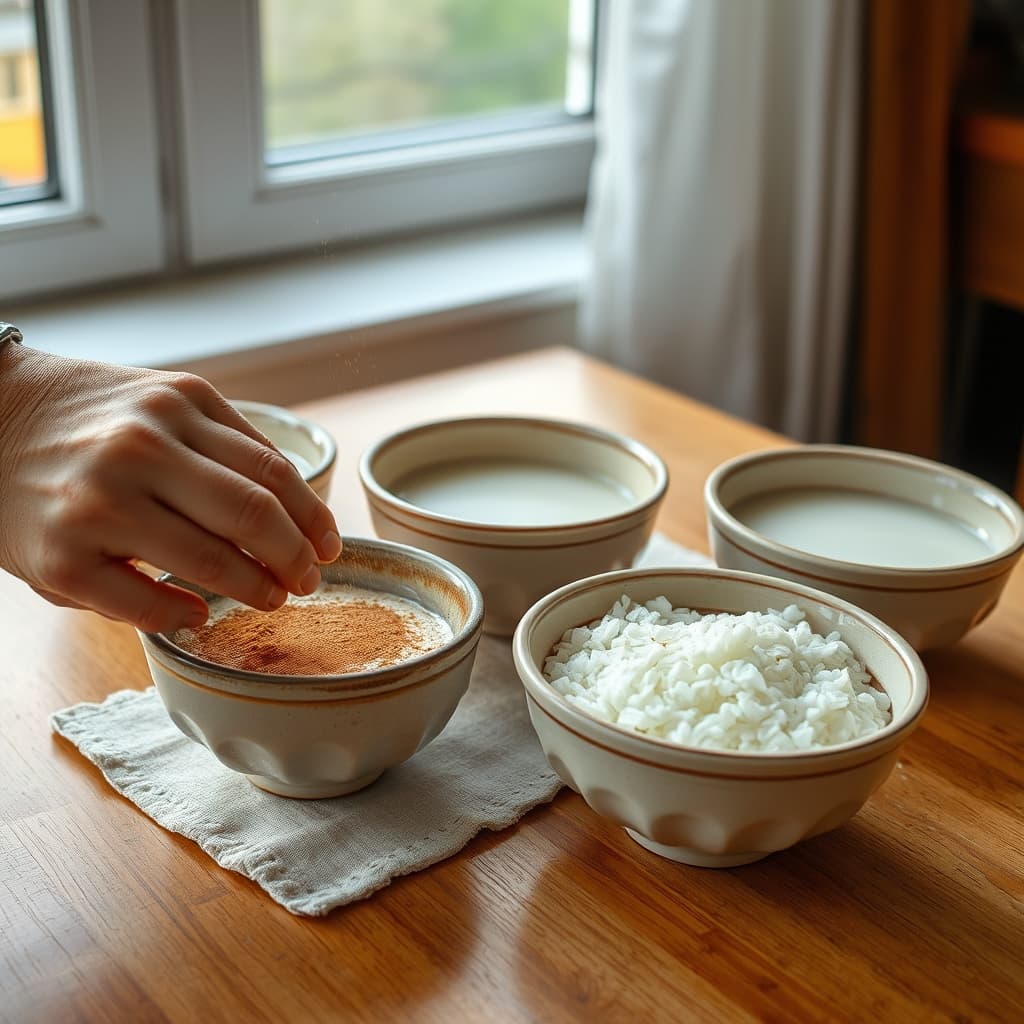
Cinnamon announces sütlaç before the spoon breaks its surface. The aroma sits above the milk and rice, often in a pattern that identifies the person who finished the bowls. Yet that familiar dusting is not a decorative afterthought. Its timing, amount and contact with a warm or cool surface affect how the dessert is first smelled and seen.
Sütlaç varies between regions and households in rice texture, sweetness, thickness, cooking method and presentation. Some versions are served warm, others cooled; some acquire a baked surface, while others remain pale. Cinnamon belongs to many memories but not to every bowl. The aim is to document one family practice, not assemble all variations into a supposed definitive recipe.
Cooling Began Before Serving
When the cooked mixture was divided into bowls, vessel size and material influenced how it cooled and how the surface formed. A shallow bowl offered a different proportion of surface to soft interior than a deep one. Bowls placed in a row also reveal domestic organisation: portions counted, space cleared and the serving time anticipated.
As sütlaç rested, a skin could form. Some diners valued it, others stirred it away. That preference is part of food memory, not evidence that one texture is correct. Covering, moving or refrigerating the bowls changed the result, and today dairy desserts should be handled according to current food-safety guidance rather than uncertain remembered habits.
Cinnamon Could Be a Signature
A pinch from the fingers, a spoon or a simple stencil produced different distributions. Added while the surface was warm, cinnamon could darken or absorb moisture; added later, it might remain more distinct. These observations should be recorded from the actual preparation. A photograph of a pattern cannot identify the cook without testimony.
The spice’s presence also depended on preference, availability and household custom. A child might request less, an adult more, or one bowl none. Treating the entire tray as identical hides these negotiations. Individual bowls can preserve the social detail of who was expected at the table and how their tastes were remembered.
Rice Texture Carried the Kitchen Method
The rice could remain visibly distinct or soften into the milk. Thickness at the stove was not necessarily the thickness at the table, because cooling continued to change the dessert. A cook judged this transition through experience, but the archive should not invent exact measurements when a family recalls only appearance and feel.
Stirring, heat and ingredient choices all mattered, though a cultural article need not become a recipe. Ask which signs indicated readiness, who portioned the bowls and whether the pot’s last serving was treated differently. The residue on a wooden spoon or the small portion left for the cook may reveal labour and custom when supported by testimony.
The Kitchen Aroma Had a Sequence
Milk, cooked rice and cinnamon did not become perceptible at exactly the same time. The room changed as the pot cooked, the bowls cooled and the spice was added. Remembering “cinnamon-scented sütlaç” compresses that sequence into one phrase. Reconstructing it carefully helps explain why the smell can recall a kitchen even before the taste is imagined.
For documentation, photograph the undecorated surface, the act of adding cinnamon and the finished individual bowls, with consent. Record bowl material, serving temperature and variations in words used by the cook. Label present-day reconstructions and avoid presenting a styled image as an untouched historical scene.
The old kitchen habit preserved here is not simply sprinkling spice. It is the attention paid between pot and table: choosing bowls, judging cooling, remembering preferences and deciding the final touch. Cinnamon’s scent carries that sequence because it arrived near the end, when separate portions were becoming a shared dessert. Keeping those decisions visible gives sütlaç a richer history than nostalgia for sweetness alone.