 Eski Pano
When one arrived at the ferry pier early in the morning, the day found its own scent before it had fully opened. The smell of damp wood, sea salt, tea, and fresh simit mingled together, while a lightness of summer moved over the shoulders of those waiting before the ticket booth. For someone leaving the neighborhood, boarding a ferry was not merely crossing to the other shore. That trip was a small ceremony opening from the home toward the world, a sign of vacation felt before it had truly begun. The rustle of simit paper, the thin sound of a tea glass, the quiet bustle of families settling onto benches, and the wind cooling the face could turn an ordinary morning into memory.
From the perspective of time, ferry trips held a special place in the shared calendar of old city life. Newspapers printed departure hours, pier crowds, and summer timetables, but the real story was hidden in the emotion people attached to those hours. In the neighborhood, people knew who took which ferry to work, who was setting out toward a summer place, and who was crossing for a family visit. For that reason, the ferry was not only a means of transportation, but an emotional bridge between city and neighborhood. As one shore remained behind and the other approached, a person moved away from daily obligations for a brief interval. The smell of simit became one of the simplest and strongest signs of that passage.
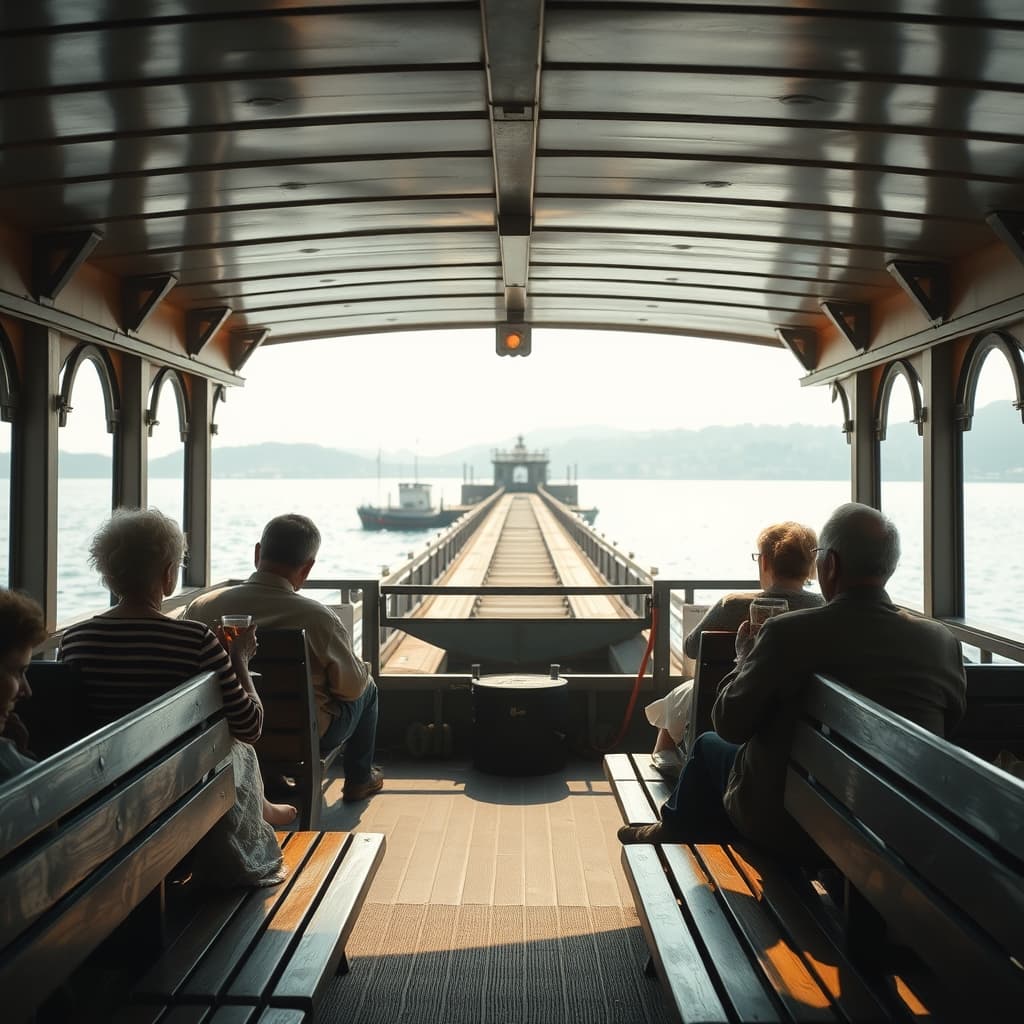
The reason vacation-scented days are remembered together with ferries lies in the waiting produced by the journey itself. Children watched the water without leaning too close to the railings, adults shared simit, one person tried to carry tea without spilling it, and another checked the towels or return tickets inside a bag. Although the trip had barely begun, the mind already drifted toward the beach, a picnic, a relative’s house, or a long summer afternoon. The ferry’s slow departure, the pier falling away, and simit crumbs left in the hand were small but reliable signs that summer was about to begin. That is why those trips remained in memory like scenes that never disappeared from the neighborhood calendar.
What makes us remember them today like an ache is not only the beauty of the past, but the fact that this beauty was shared. On the ferry, everyone might seem like a stranger, yet they shared the same morning coolness, the same smell of simit, and the same rhythm of travel. People seated side by side on benches, waiting in the tea line, or silently looking out by the window became part of the same city feeling. In those years, travel was not a distance consumed at speed, but an interval lived through the senses. The road from neighborhood to pier and from pier to ferry gave city dwellers both a sense of belonging and a brief chance to move away.
It is therefore unsurprising that we still remember the trips where the smell of simit mixed into the day on ferries. They were moments when summer and the city were felt at once, when neighborhood life met the sea, and when an ordinary journey turned into a small celebration. If vacation-scented days leave a slight ache in memory, it is not only because they will not return, but because they show how complete we once felt with simple things. A simit, a glass of tea, a ferry bench, and a pier receding behind us were enough to express one of the deepest emotions of old city life.
The Trips Where the Smell of Simit on Ferries Mixed into the Day as a Scene Never Falling from the Neighborhood Calendar: Why Vacation-Scented Days Are Still Remembered Like an Ache Even Today