Eski Pano
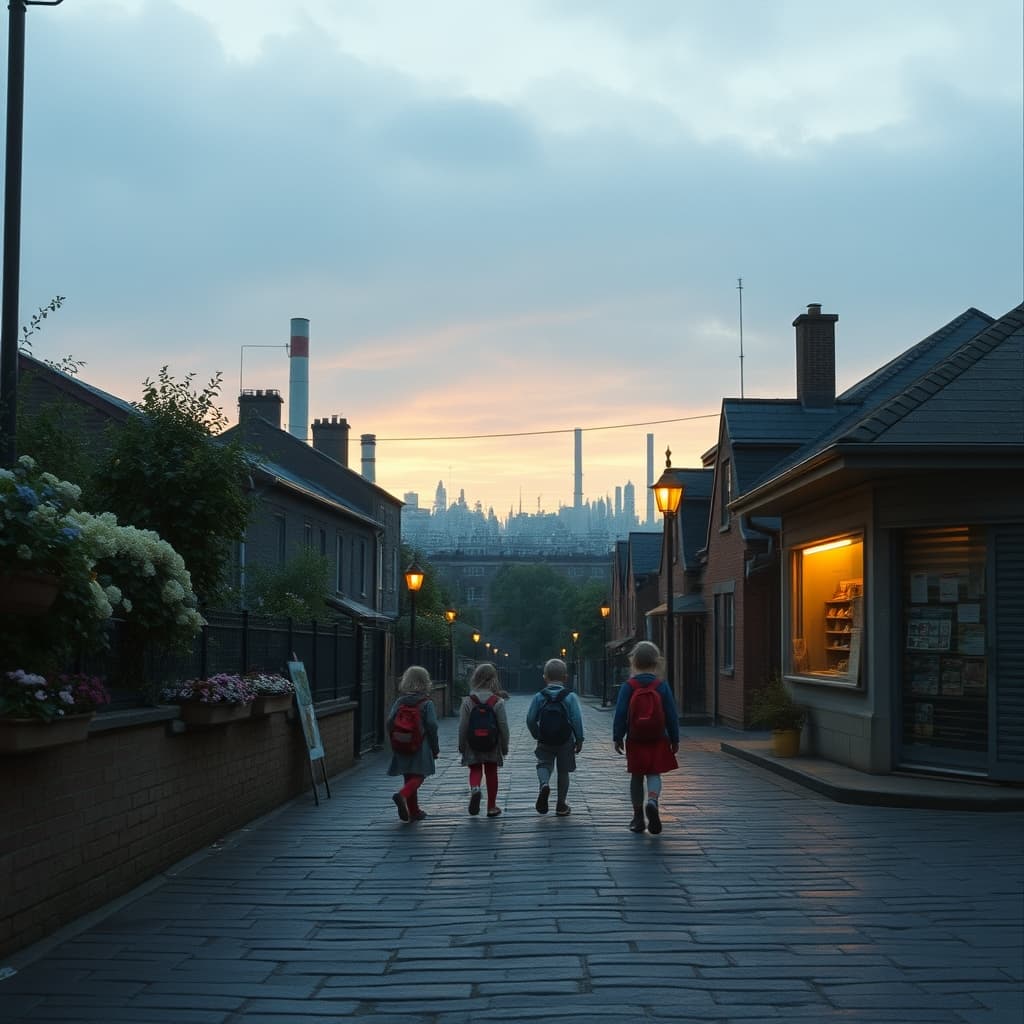
There was a time when morning began not with the cold glow of phone screens, but with the slowly waking sound of the street. Before the street lamps that had drawn pale yellow circles through the night were fully switched off, the coolness spread over the pavements kept company with the first footsteps in the neighborhood. From houses with half-open windows came the sound of water boiling for tea, and through thin curtains one could sense mothers already moving quickly in the kitchen. Then, from a distance, the factory whistle rose like a signal that tied not only workers but the whole district to the same minute. As children slipped schoolbags onto their shoulders, the grocer lifted his shutter halfway, and the simit seller settled his tray at the corner, that sound built the skeleton of the day. The flower-scented streets wrapped a softer spirit around that skeleton; jasmine, honeysuckle, and damp soil drifting over garden walls made even the seriousness of the early hour feel more humane.
Seen through the trace of time, the factory whistle is a vivid detail showing how industrialization shaped not only working life, but the order of the neighborhood as well. In certain parts of the city, people understood the hour less from clocks than from that sound. Fathers leaving for work, mothers stepping out after folding an apron, children heading toward school, and the cats appearing after the milkman all moved beneath the same audible sign. This common rhythm gave daily life an invisible discipline. Yet what made those old mornings unforgettable was not discipline alone. The streets held hardness and tenderness at once. On one side stood the call of production, the weight of labor, and the necessity of rising early; on the other stood geraniums on windowsills, neighbors sprinkling water before their doors, and the faint quiet left on stones that had spent the night beneath the street lamps. That contrast created the emotional texture that makes those mornings linger so deeply in memory.
What remains most vividly from those scenes are the small details. A child on the way to school with a handkerchief tucked into the pocket of an apron, an aunt hurrying to market with a net bag in hand, a shopkeeper glancing at the pavement before opening for the day, all of them are figures placed inside that hour. Some streets carried the scent of flowers not only from garden walls, but from open windows: toast browning for breakfast in one home, jam simmering on the stove in another, the warm cloth smell of a school shirt being ironed in a third. While the factory whistle made time official, those smells and images domesticated the morning. That is why, when we look back, those streets speak not only of labor history but of ordinary forms of care. The sharper lines of working life were balanced by the softer habits of neighborhood life.
The reason we remember those mornings with longing is not merely the search for a nostalgic image. Flower-scented streets remind us that life once moved within a collective rhythm. Everyone heard the factory whistle at the same time, yet each answered it from within a different life: one rushed for the service bus, another waved a child off to school, another opened a shop, another parted the curtain and looked out. Forgotten details matter precisely there: the late fading of a street lamp, the creak of an iron gate, the morning dampness on ivy climbing a garden wall, the shoe shiner setting his box into place. These fragments from the past build not only the physical architecture of a district, but its emotional one. Perhaps that is why, looking back on those mornings now, we search less for what was lost than for the warmth of a rhythm once shared. The flower-scented streets still whisper the feeling of common time that modern speed has worn away.
Mornings When Factory Whistles Set the Rhythm of the Neighborhood in Memories Grown Beneath Street Lamps: What Do Flower-Scented Streets Tell Us with Their Forgotten Details?